Updates

  1. Person pages list letters, writing, profiles and links as sortable tables with filters, and show each person's companies as links; Fund letters show each letter's description in its own column.
  2. Experts show a checked job title and a short description of each person; 30 more people have photographs.
  3. Every company, fund, university and publication the experts work for has a page listing the people there.
  4. Fund letters show each letter's thesis and filter by it; 225 person pages list the essays, columns and newsletter issues the person wrote.
  5. Person pages list every essay and newsletter issue a person wrote, and their own books as a table in List view.
  6. Recommends shows the five largest kinds of book and the rest under More; browse pictures load sooner.
  7. Podcasts and talks link the original episode, filter by Audio and video or Press, and list each publisher once.
  8. Pages are wider, Recommends has List and Grid, and a filter clicked again turns off.
  9. Book cards sit in a ruled grid with Open Library and Goodreads links and each book's one-line note.
  10. Funds is now Investors; each investor's styles are buttons that filter the table.
  11. Podcasts and talks on a person's page filter by year and publisher and show as a list or a grid of pictures.
  12. Quotes show only people's own words: 472 summaries written by list sites are gone.
  13. Country pages open from Browse again, and every link on the shelf lands on a page.
  14. Subject and person pages show their sections as tabs, and each book appears once on a person's page.
  15. Book cards show the quote, who said it and the source; grids show five cards to a row.
  16. On a phone, a menu holds the sections, search, Updates, Feedback and dark mode.
  17. Feedback takes a screenshot of the page with no browser prompt, opens a screenshot full size when you click it, and clears itself once sent.
  18. Book cards are centred, search names the topic each book sits in, and any text cut short shows whole on hover.
  19. Search groups its results by kind: people, companies, geographies, subjects, topics, books, funds, fund letters and papers.
  20. The Books table lists who recommended each book by name, and the browser tab names the section you are in.
  21. Feedback can take a screenshot of the page, or one you paste or choose, and opens in the corner beside Updates.
  22. Each rail button reopens its section where you left it, and Browse, Table and People show on every book and subject page.
  23. Filters grey out choices that hold nothing instead of hiding them, and Books › People filters by authors or recommenders.
  24. Feedback takes a subject line and up to three screenshots.
  25. Biographies are grouped by the person they are about: 41 new pages, from Abraham Lincoln to Lee Kuan Yew.
  26. Sport splits into 23 sports, and Religion into one topic per faith.
  27. Book lists show as cards: the cover, one recommendation quote and every recommender by name.
  28. Seventeen subjects that had two or three pages under different names now have one page each.
  29. Every page lists its Experts as authors and recommenders, with a link to them on the Experts tab.
  30. Economics, Financial history, Financial panics and Accounting are subjects of their own, with one page per financial crisis.
  31. Book, person and subject pages open inside the app, so the tabs stay in view.
  32. 996 more book covers, and photographs or logos for 227 more people and companies.
  33. Books › Browse shows every subject as cards, and the rail holds Fund letters, Papers, Experts, Books and Funds.
  34. Every topic over 150 books splits into narrower topics, each with a page of its own.

Send feedback

What is it?
Screenshots, up to 3 (optional)
or paste one with Ctrl+V

We use your email only to reply to you.

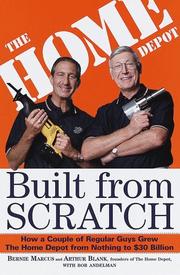
Built from Scratch

Built from Scratch

Bernie Marcus, Arthur Blank
1999
T2 332 pages · about 5h 32m to read Open Librarygoodreads

Home Depot's founders on building the big-box hardware category

Summary

Marcus and Blank tell the story of Home Depot from their firing by Handy Dan Improvement Centers in 1978 through the company's growth to a national chain. The book is written with Bob Andelman and alternates between the two founders' accounts.

The business model is the substance. They built warehouse-format stores stocking far more items than conventional hardware retailers, priced low enough to change where customers shopped, and staffed with people who had trade experience and could advise customers on projects. Their argument is that the advice was the product, since a customer who could not complete a project would not return regardless of price, and that this is what distinguished them from other discount formats that competed only on price.

The operational material covers the early cash constraints, the decision to accept lower gross margins in exchange for volume, the inventory depth that made the format work, the training investment, and the deliberate policy of allowing store managers to overrule head office on local decisions. The founding story includes the firing that started it, the initial financing from Ken Langone, and the near-failure of the first Atlanta stores.

The book is a founders' account of their own success and reads as such. The subsequent period, including the Nardelli tenure that changed the staffing model substantially and damaged the customer proposition, is outside its scope. Marcus writes with strong political opinions in later sections. The argument that service capability rather than price was the actual differentiator in a discount format is the transferable point.

Key takeaways 8

  1. The warehouse format combined low prices with inventory depth that conventional hardware retailers could not match.
  2. Staff with trade experience who could advise customers on projects were the actual product, since a customer who cannot complete a project does not return.
  3. Accepting lower gross margins in exchange for volume was the deliberate decision that made the price position sustainable.
  4. Training investment in store staff was treated as the core operating expense rather than as overhead to be minimised.
  5. Store managers were permitted to overrule head office on local decisions, on the argument that they had information the centre did not.
  6. The founders were fired from a conventional hardware chain and built the format that displaced it, which they treat as inseparable events.
  7. The first stores nearly failed and required the founders to give away merchandise to build traffic, which they describe candidly.
  8. Competing on price alone in a discount format is copyable, and the service capability is what made the position defensible.

Who should read it

Retail and physical operators who want a founders' account of combining a discount format with a service proposition.

Who recommended it 4 · 1 direct

David Cancelreported
Frank Blakereported

Similar books 6

Chosen by shared topics, the entries that hold them, and the people who recommended both.

Sam Walton, John Huey · 1992

How Walmart grew from one Arkansas store by cutting costs and prices.

Brad Stone · 2013

Amazon's first two decades, from an online bookshop to selling nearly everything.

Bob Ortega · 1998

First major critical history by a WSJ Walmart reporter.
Marc Levinson · 2011

How A&P became the world's largest retailer and the political fight it set off.

Recommended by: Patrick Collison

Phil Knight · 2016

How a running-shoe importer became Nike, surviving one cash crisis after another.

“…books I've recommended, highlighted to death, or forced on friends.” — Andrew Wilkinson

Source: Andrew Wilkinson's Bookshelf, neverenough.com

Recommended by: Andrew Wilkinson, Bill Gates, Mohnish Pabrai and 25 others
Marc Benioff, Carlye Adler · 2009

How Salesforce was built, set out as 111 plays on marketing, sales and growth.

Where it sits in the reference 2

Business models
Industries

Topics

Company HistoriesEntrepreneurship and StartupsFounder Memoirs