Updates

  1. Person pages list letters, writing, profiles and links as sortable tables with filters, and show each person's companies as links; Fund letters show each letter's description in its own column.
  2. Experts show a checked job title and a short description of each person; 30 more people have photographs.
  3. Every company, fund, university and publication the experts work for has a page listing the people there.
  4. Fund letters show each letter's thesis and filter by it; 225 person pages list the essays, columns and newsletter issues the person wrote.
  5. Person pages list every essay and newsletter issue a person wrote, and their own books as a table in List view.
  6. Recommends shows the five largest kinds of book and the rest under More; browse pictures load sooner.
  7. Podcasts and talks link the original episode, filter by Audio and video or Press, and list each publisher once.
  8. Pages are wider, Recommends has List and Grid, and a filter clicked again turns off.
  9. Book cards sit in a ruled grid with Open Library and Goodreads links and each book's one-line note.
  10. Funds is now Investors; each investor's styles are buttons that filter the table.
  11. Podcasts and talks on a person's page filter by year and publisher and show as a list or a grid of pictures.
  12. Quotes show only people's own words: 472 summaries written by list sites are gone.
  13. Country pages open from Browse again, and every link on the shelf lands on a page.
  14. Subject and person pages show their sections as tabs, and each book appears once on a person's page.
  15. Book cards show the quote, who said it and the source; grids show five cards to a row.
  16. On a phone, a menu holds the sections, search, Updates, Feedback and dark mode.
  17. Feedback takes a screenshot of the page with no browser prompt, opens a screenshot full size when you click it, and clears itself once sent.
  18. Book cards are centred, search names the topic each book sits in, and any text cut short shows whole on hover.
  19. Search groups its results by kind: people, companies, geographies, subjects, topics, books, funds, fund letters and papers.
  20. The Books table lists who recommended each book by name, and the browser tab names the section you are in.
  21. Feedback can take a screenshot of the page, or one you paste or choose, and opens in the corner beside Updates.
  22. Each rail button reopens its section where you left it, and Browse, Table and People show on every book and subject page.
  23. Filters grey out choices that hold nothing instead of hiding them, and Books › People filters by authors or recommenders.
  24. Feedback takes a subject line and up to three screenshots.
  25. Biographies are grouped by the person they are about: 41 new pages, from Abraham Lincoln to Lee Kuan Yew.
  26. Sport splits into 23 sports, and Religion into one topic per faith.
  27. Book lists show as cards: the cover, one recommendation quote and every recommender by name.
  28. Seventeen subjects that had two or three pages under different names now have one page each.
  29. Every page lists its Experts as authors and recommenders, with a link to them on the Experts tab.
  30. Economics, Financial history, Financial panics and Accounting are subjects of their own, with one page per financial crisis.
  31. Book, person and subject pages open inside the app, so the tabs stay in view.
  32. 996 more book covers, and photographs or logos for 227 more people and companies.
  33. Books › Browse shows every subject as cards, and the rail holds Fund letters, Papers, Experts, Books and Funds.
  34. Every topic over 150 books splits into narrower topics, each with a page of its own.

Send feedback

What is it?
Screenshots, up to 3 (optional)
or paste one with Ctrl+V

We use your email only to reply to you.

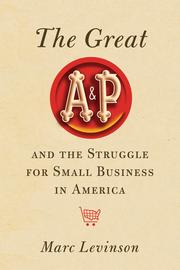
The Great A&P and the Struggle for Small Bus

The Great A&P and the Struggle for Small Business in America

Marc Levinson
2011
T2 371 pages · about 6h 11m to read Open Librarygoodreads

The first everyday-low-price chain, and the political backlash it drew.

Summary

Levinson tells the history of the Great Atlantic and Pacific Tea Company, which became the largest retailer in the world and at its peak sold more groceries than any company on earth, and uses it to examine the American political fight over chain stores. The Hartford brothers built A&P by removing every cost between producer and consumer: they bought direct, manufactured their own products, ran cash-and-carry economy stores with almost no service, and accepted margins a fraction of what independent grocers needed.

The political half is the more original contribution. Levinson documents the anti-chain movement of the 1920s and 1930s, the state chain store taxes, the Robinson-Patman Act which made it illegal to give volume discounts that could not be cost-justified, and the federal antitrust prosecution of A&P which effectively punished the company for charging low prices. He shows that the political case against A&P was made on behalf of independent wholesalers and retailers rather than consumers, and that the legislation succeeded in slowing the productivity gains that chain distribution produced.

For investors and operators the book is a study of how a low-cost operating model works, what it requires in vertical integration and volume commitment, and how it eventually loses. A&P declined because it failed to move to supermarkets fast enough, could not adapt to suburbanisation, and had a management succession that preserved the old model. Levinson writes as an economic historian and his sympathies are with the efficiency argument, which some reviewers found tilts the treatment of the small-business case.

Key takeaways 7

  1. A&P built its advantage by eliminating wholesalers and manufacturing its own goods, which let it operate on gross margins competitors could not survive.
  2. The economy store format succeeded by removing credit, delivery and service, which were the costs that made independent grocers expensive.
  3. American antitrust law was used in the 1930s and 1940s to punish low prices, because the political constituency was independent retailers rather than consumers.
  4. The Robinson-Patman Act was written specifically to prevent chains from obtaining volume discounts, and it raised consumer prices as intended.
  5. Vertical integration into manufacturing gave A&P a cost floor its competitors could not match and a fixed asset base that later slowed its adaptation.
  6. A&P declined because it delayed the shift to the supermarket format and to suburban locations, not because of competition on price.
  7. Retail productivity gains come from changing the distribution structure rather than from operating the existing structure better.

Who should read it

Retail and consumer operators studying low-cost operating models, and anyone interested in how competition policy has treated scale distributors.

Who recommended it 1 · 1 direct

Similar books 6

Chosen by shared topics, the entries that hold them, and the people who recommended both.

Sam Walton, John Huey · 1992

How Walmart grew from one Arkansas store by cutting costs and prices.

Bernie Marcus, Arthur Blank · 1999

How two fired executives built Home Depot into a national chain.

Bob Ortega · 1998

First major critical history by a WSJ Walmart reporter.

Brad Stone · 2013

Amazon's first two decades, from an online bookshop to selling nearly everything.

Leon Harris · 1979

The Jewish families behind America's great department stores.
Alfred D. Chandler Jr. · 1990

Why big industrial firms in the US, Britain and Germany rose or lagged, 1880 to 1940.

Where it sits in the reference 4

Business models
Business models
Business themes
Industries

Topics

Company HistoriesGeneral HistoryEconomic and Business History