Updates

  1. Person pages list letters, writing, profiles and links as sortable tables with filters, and show each person's companies as links; Fund letters show each letter's description in its own column.
  2. Experts show a checked job title and a short description of each person; 30 more people have photographs.
  3. Every company, fund, university and publication the experts work for has a page listing the people there.
  4. Fund letters show each letter's thesis and filter by it; 225 person pages list the essays, columns and newsletter issues the person wrote.
  5. Person pages list every essay and newsletter issue a person wrote, and their own books as a table in List view.
  6. Recommends shows the five largest kinds of book and the rest under More; browse pictures load sooner.
  7. Podcasts and talks link the original episode, filter by Audio and video or Press, and list each publisher once.
  8. Pages are wider, Recommends has List and Grid, and a filter clicked again turns off.
  9. Book cards sit in a ruled grid with Open Library and Goodreads links and each book's one-line note.
  10. Funds is now Investors; each investor's styles are buttons that filter the table.
  11. Podcasts and talks on a person's page filter by year and publisher and show as a list or a grid of pictures.
  12. Quotes show only people's own words: 472 summaries written by list sites are gone.
  13. Country pages open from Browse again, and every link on the shelf lands on a page.
  14. Subject and person pages show their sections as tabs, and each book appears once on a person's page.
  15. Book cards show the quote, who said it and the source; grids show five cards to a row.
  16. On a phone, a menu holds the sections, search, Updates, Feedback and dark mode.
  17. Feedback takes a screenshot of the page with no browser prompt, opens a screenshot full size when you click it, and clears itself once sent.
  18. Book cards are centred, search names the topic each book sits in, and any text cut short shows whole on hover.
  19. Search groups its results by kind: people, companies, geographies, subjects, topics, books, funds, fund letters and papers.
  20. The Books table lists who recommended each book by name, and the browser tab names the section you are in.
  21. Feedback can take a screenshot of the page, or one you paste or choose, and opens in the corner beside Updates.
  22. Each rail button reopens its section where you left it, and Browse, Table and People show on every book and subject page.
  23. Filters grey out choices that hold nothing instead of hiding them, and Books › People filters by authors or recommenders.
  24. Feedback takes a subject line and up to three screenshots.
  25. Biographies are grouped by the person they are about: 41 new pages, from Abraham Lincoln to Lee Kuan Yew.
  26. Sport splits into 23 sports, and Religion into one topic per faith.
  27. Book lists show as cards: the cover, one recommendation quote and every recommender by name.
  28. Seventeen subjects that had two or three pages under different names now have one page each.
  29. Every page lists its Experts as authors and recommenders, with a link to them on the Experts tab.
  30. Economics, Financial history, Financial panics and Accounting are subjects of their own, with one page per financial crisis.
  31. Book, person and subject pages open inside the app, so the tabs stay in view.
  32. 996 more book covers, and photographs or logos for 227 more people and companies.
  33. Books › Browse shows every subject as cards, and the rail holds Fund letters, Papers, Experts, Books and Funds.
  34. Every topic over 150 books splits into narrower topics, each with a page of its own.

Send feedback

What is it?
Screenshots, up to 3 (optional)
or paste one with Ctrl+V

We use your email only to reply to you.

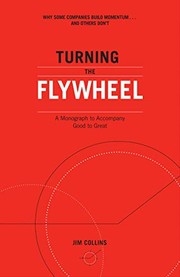
Turning the Flywheel

Turning the Flywheel

Jim Collins
2019
T4 47 pages · about 47m to read Open Librarygoodreads

Monograph companion to Good to Great

Summary

Jim Collins expanded the flywheel concept from Good to Great into this short monograph. The idea is that durable organisational momentum comes from a set of activities arranged in a loop, where each step drives the next and the loop returns to reinforce the first.

Collins argues that the flywheel is specific to an organisation rather than generic, that it must be discovered from what has actually worked rather than designed in advance, and that identifying it correctly is the strategic question. He works through examples: Amazon's loop, in which lower prices draw customers, which draws sellers, which improves selection, which draws more customers, which produces scale, which lowers cost structure, which permits lower prices; Vanguard's, in which mutual ownership permits lower fees, which produces better returns, which builds client loyalty and assets, which lowers cost per unit further; and several others including Intel, Amgen and a school system.

His practical instruction is to identify the loop from the organisation's own history by listing what it has done that worked and what failed, then finding the sequence that connects the successes. He warns against doom loops, in which organisations react to disappointing results by changing direction repeatedly and never accumulate momentum. The monograph is short and the concept is genuinely useful for articulating a business model as a self-reinforcing sequence. Collins's method throughout his work, of selecting successful companies and identifying common features, has the selection problem that his critics have consistently raised.

Key takeaways 7

  1. Durable momentum comes from a set of activities arranged in a loop where each step drives the next and returns to reinforce the first.
  2. An organisation's flywheel is specific to it and must be discovered from what has actually worked rather than designed in advance.
  3. Amazon's loop connects lower prices, customer traffic, third-party sellers, selection, scale and cost structure back to lower prices.
  4. Vanguard's loop runs from mutual ownership through lower fees to better returns to asset growth and back to lower unit costs.
  5. Doom loops occur when organisations react to disappointing results by changing direction before momentum can accumulate.
  6. Identifying the loop correctly is the strategic question, since every subsequent decision either reinforces it or does not.
  7. Collins's method of selecting successful companies and finding common features carries the selection problem his critics identify.

Who should read it

Executives and founders who want a way to articulate their business model as a self-reinforcing sequence rather than as a list of initiatives.

About Jim Collins

Management researcher; Stanford Graduate School of Business faculty 1988-1995, since then an independent researcher running a management laboratory in Boulder, Colorado

Built to Last and Good to Great are the primary research sources the enduring-company literature builds on and argues with.

Stanford Graduate School of Business

Similar books 6

Chosen by shared topics, the entries that hold them, and the people who recommended both.
Jim Collins, Jerry I. Porras · 1994

What eighteen long-lived companies did differently from close rivals in their fields.

Jim Collins · 2001

What eleven companies did to turn fifteen ordinary years into fifteen great ones.

Jim Collins · 2005

Good to Great's principles applied to non-profits and the public sector.

Recommended by: Mohnish Pabrai
Jim Collins, Morten T. Hansen · 2011

What companies that beat their industries tenfold in turbulent times did differently.

Jim Collins · 2009

The stages by which great companies decline, and how to spot and reverse them early.

Recommended by: Alfred Lin
Peter F. Drucker · 2003

Selections on community and society

Where it sits in the reference 3

Strategists
Business themes
Business themes

Topics

Business and Management