Good to Great and the Social Sectors
Monograph companion to Good to Great
Summary
Collins wrote this short monograph after Good to Great in response to questions from non-profit and public sector leaders about whether the framework applied to them. His answer is that the principles apply but the mechanisms differ, and that the differences matter.
His central corrective is that the social sectors should not aim to become more businesslike, because most businesses are mediocre and the relevant distinction is between great and good rather than between business and non-business. He then works through five issues. Defining greatness without profit requires identifying an output measure the organisation can be held to, which is harder and must be done rather than avoided. Level five leadership operates differently where power is diffuse and a leader cannot simply decide, so the required skill is legislative rather than executive, meaning building coalitions and conditions rather than issuing decisions. Getting the right people matters more where compensation cannot be used as a lever, which makes selection and the ability to remove people the critical constraints. The hedgehog concept must replace the profit denominator with a resource engine covering time, money and brand. And building momentum in the social sectors depends on demonstrating results that attract resources, since money follows evidence rather than preceding it.
The monograph is short and dense. Its evidence base is the same as Good to Great, which has been criticised for selecting successful companies and identifying shared features without a control group. The observations about diffuse power and about brand as a resource engine are the most useful and least dependent on that method.
Key takeaways 7
- Social sector organisations should not aim to become more businesslike, since most businesses are mediocre and the relevant comparison is between great and good.
- Greatness without profit requires identifying an output measure the organisation can be held to, which is harder than a financial measure and cannot be avoided.
- Where power is diffuse, leadership is legislative rather than executive, meaning building conditions and coalitions rather than issuing decisions.
- Selection and the ability to remove people become the critical constraints where compensation cannot be used as a lever.
- The resource engine in a social sector organisation is time, money and brand together, which replaces the profit denominator in a commercial one.
- Money follows demonstrated results rather than preceding them, which means building momentum requires producing evidence before resources arrive.
- Brand reputation is the mechanism through which a social sector organisation attracts both resources and volunteer time, which makes it an operational asset.
Who should read it
Leaders of non-profit, public sector and mission-driven organisations adapting business management frameworks to diffuse power structures.
About Jim Collins
Management researcher; Stanford Graduate School of Business faculty 1988-1995, since then an independent researcher running a management laboratory in Boulder, Colorado
Built to Last and Good to Great are the primary research sources the enduring-company literature builds on and argues with.
Who recommended it 1 · 1 direct
Similar books 6
Chosen by shared topics, the entries that hold them, and the people who recommended both.
What eleven companies did to turn fifteen ordinary years into fifteen great ones.
Recommended by: Brian Armstrong, Mohnish Pabrai, Nat Eliason and 16 others

What companies that beat their industries tenfold in turbulent times did differently.
Recommended by: Mohnish Pabrai, Tony Hsieh, Alfred Lin

The stages by which great companies decline, and how to spot and reverse them early.
Recommended by: Alfred Lin
What eighteen long-lived companies did differently from close rivals in their fields.
Recommended by: Mohnish Pabrai, Drew Houston, Ev Williams and 3 others
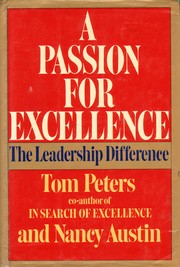
Recommended by: Mohnish Pabrai
Where it sits in the reference 3
Topics