Updates

  1. Person pages list letters, writing, profiles and links as sortable tables with filters, and show each person's companies as links; Fund letters show each letter's description in its own column.
  2. Experts show a checked job title and a short description of each person; 30 more people have photographs.
  3. Every company, fund, university and publication the experts work for has a page listing the people there.
  4. Fund letters show each letter's thesis and filter by it; 225 person pages list the essays, columns and newsletter issues the person wrote.
  5. Person pages list every essay and newsletter issue a person wrote, and their own books as a table in List view.
  6. Recommends shows the five largest kinds of book and the rest under More; browse pictures load sooner.
  7. Podcasts and talks link the original episode, filter by Audio and video or Press, and list each publisher once.
  8. Pages are wider, Recommends has List and Grid, and a filter clicked again turns off.
  9. Book cards sit in a ruled grid with Open Library and Goodreads links and each book's one-line note.
  10. Funds is now Investors; each investor's styles are buttons that filter the table.
  11. Podcasts and talks on a person's page filter by year and publisher and show as a list or a grid of pictures.
  12. Quotes show only people's own words: 472 summaries written by list sites are gone.
  13. Country pages open from Browse again, and every link on the shelf lands on a page.
  14. Subject and person pages show their sections as tabs, and each book appears once on a person's page.
  15. Book cards show the quote, who said it and the source; grids show five cards to a row.
  16. On a phone, a menu holds the sections, search, Updates, Feedback and dark mode.
  17. Feedback takes a screenshot of the page with no browser prompt, opens a screenshot full size when you click it, and clears itself once sent.
  18. Book cards are centred, search names the topic each book sits in, and any text cut short shows whole on hover.
  19. Search groups its results by kind: people, companies, geographies, subjects, topics, books, funds, fund letters and papers.
  20. The Books table lists who recommended each book by name, and the browser tab names the section you are in.
  21. Feedback can take a screenshot of the page, or one you paste or choose, and opens in the corner beside Updates.
  22. Each rail button reopens its section where you left it, and Browse, Table and People show on every book and subject page.
  23. Filters grey out choices that hold nothing instead of hiding them, and Books › People filters by authors or recommenders.
  24. Feedback takes a subject line and up to three screenshots.
  25. Biographies are grouped by the person they are about: 41 new pages, from Abraham Lincoln to Lee Kuan Yew.
  26. Sport splits into 23 sports, and Religion into one topic per faith.
  27. Book lists show as cards: the cover, one recommendation quote and every recommender by name.
  28. Seventeen subjects that had two or three pages under different names now have one page each.
  29. Every page lists its Experts as authors and recommenders, with a link to them on the Experts tab.
  30. Economics, Financial history, Financial panics and Accounting are subjects of their own, with one page per financial crisis.
  31. Book, person and subject pages open inside the app, so the tabs stay in view.
  32. 996 more book covers, and photographs or logos for 227 more people and companies.
  33. Books › Browse shows every subject as cards, and the rail holds Fund letters, Papers, Experts, Books and Funds.
  34. Every topic over 150 books splits into narrower topics, each with a page of its own.

Send feedback

What is it?
Screenshots, up to 3 (optional)
or paste one with Ctrl+V

We use your email only to reply to you.

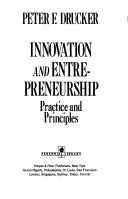
Innovation and Entrepreneurship

Innovation and Entrepreneurship

Peter F. Drucker
1985
T1 277 pages · about 4h 37m to read Open Librarygoodreads

Includes Drucker's typology of pricing and delivery strategies.

Summary

Drucker argues that innovation is a discipline that can be learned and practised systematically rather than a matter of inspiration or personality, and that entrepreneurship is a specific management behaviour available to existing institutions as well as to new ventures.

His central contribution is the seven sources of innovative opportunity, ordered by reliability. The first four are internal to an industry or institution: the unexpected, meaning unexpected success, failure or outside event; the incongruity between what is and what everyone assumes; process need, where a step in an existing process is known to be weak; and changes in industry or market structure. The last three are external: demographics, which he calls the most reliable because the data exists and the timing is knowable; changes in perception, meaning a shift in how people understand a situation without any change in the facts; and new knowledge, which he ranks last because the lead times are longest and the failure rate highest despite its prestige.

He gives principles for practice, including that innovation should be simple and focused on one thing, should start small, and should aim at leadership in a defined market. The entrepreneurial strategies section covers being first with the most, creative imitation, entrepreneurial judo which attacks incumbents where their assumptions leave them exposed, ecological niches including toll gate positions, and changing the economic characteristics of an existing product.

The examples date from before 1985. The claim that new knowledge is the least reliable source will strike technology readers as wrong, though Drucker's point about lead times and failure rates is defensible. The seven sources remain the most systematic checklist available for finding opportunity.

Key takeaways 8

  1. Innovation is a discipline that can be practised systematically rather than a matter of inspiration or personality.
  2. There are seven sources of innovative opportunity, and they differ substantially in reliability and in the lead time required.
  3. Unexpected success is the most neglected source, because organisations investigate failures and dismiss successes they did not plan.
  4. Demographic change is the most reliable source because the data exists and the timing is knowable years in advance.
  5. Innovation based on new knowledge has the longest lead times and the highest failure rate despite carrying the most prestige.
  6. An innovation should do one thing, should be simple enough to explain, and should start small enough to be corrected.
  7. Entrepreneurial judo attacks incumbents where their assumptions leave them exposed rather than where they are strong.
  8. Changing the economic characteristics of an existing product, including how it is priced or delivered, is an innovation without any technical change.

Who should read it

Founders and executives looking systematically for opportunity who want a checklist of where innovations actually come from.

About Peter F. Drucker

Management writer and consultant; professor at Bennington, NYU and Claremont Graduate University

He invented management as a field of study, and The Practice of Management and The Effective Executive remain the primary sources every later writer builds on.

NYU, Claremont Graduate University

Who recommended it 3 · 1 direct

Similar books 6

Chosen by shared topics, the entries that hold them, and the people who recommended both.

Peter F. Drucker · 2008

Knowledge workers must run their own careers by knowing their strengths and values.

Mark W. Johnson · 2010

Business-model innovation as a discipline, with a profit-formula framework.

Peter F. Drucker · 1969

Four breaks with the postwar world, from a global economy to knowledge as capital.

Recommended by: Patrick Collison
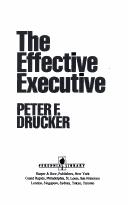
Peter F. Drucker · 1967

Effectiveness is learned practice: manage time, pick priorities, decide well.

Peter F. Drucker · 2003

Selections on community and society

Where it sits in the reference 5

Strategists
Business models
Business themes
Business themes
Business themes

Topics

Entrepreneurship and StartupsBusiness and Management