Updates

  1. Person pages list letters, writing, profiles and links as sortable tables with filters, and show each person's companies as links; Fund letters show each letter's description in its own column.
  2. Experts show a checked job title and a short description of each person; 30 more people have photographs.
  3. Every company, fund, university and publication the experts work for has a page listing the people there.
  4. Fund letters show each letter's thesis and filter by it; 225 person pages list the essays, columns and newsletter issues the person wrote.
  5. Person pages list every essay and newsletter issue a person wrote, and their own books as a table in List view.
  6. Recommends shows the five largest kinds of book and the rest under More; browse pictures load sooner.
  7. Podcasts and talks link the original episode, filter by Audio and video or Press, and list each publisher once.
  8. Pages are wider, Recommends has List and Grid, and a filter clicked again turns off.
  9. Book cards sit in a ruled grid with Open Library and Goodreads links and each book's one-line note.
  10. Funds is now Investors; each investor's styles are buttons that filter the table.
  11. Podcasts and talks on a person's page filter by year and publisher and show as a list or a grid of pictures.
  12. Quotes show only people's own words: 472 summaries written by list sites are gone.
  13. Country pages open from Browse again, and every link on the shelf lands on a page.
  14. Subject and person pages show their sections as tabs, and each book appears once on a person's page.
  15. Book cards show the quote, who said it and the source; grids show five cards to a row.
  16. On a phone, a menu holds the sections, search, Updates, Feedback and dark mode.
  17. Feedback takes a screenshot of the page with no browser prompt, opens a screenshot full size when you click it, and clears itself once sent.
  18. Book cards are centred, search names the topic each book sits in, and any text cut short shows whole on hover.
  19. Search groups its results by kind: people, companies, geographies, subjects, topics, books, funds, fund letters and papers.
  20. The Books table lists who recommended each book by name, and the browser tab names the section you are in.
  21. Feedback can take a screenshot of the page, or one you paste or choose, and opens in the corner beside Updates.
  22. Each rail button reopens its section where you left it, and Browse, Table and People show on every book and subject page.
  23. Filters grey out choices that hold nothing instead of hiding them, and Books › People filters by authors or recommenders.
  24. Feedback takes a subject line and up to three screenshots.
  25. Biographies are grouped by the person they are about: 41 new pages, from Abraham Lincoln to Lee Kuan Yew.
  26. Sport splits into 23 sports, and Religion into one topic per faith.
  27. Book lists show as cards: the cover, one recommendation quote and every recommender by name.
  28. Seventeen subjects that had two or three pages under different names now have one page each.
  29. Every page lists its Experts as authors and recommenders, with a link to them on the Experts tab.
  30. Economics, Financial history, Financial panics and Accounting are subjects of their own, with one page per financial crisis.
  31. Book, person and subject pages open inside the app, so the tabs stay in view.
  32. 996 more book covers, and photographs or logos for 227 more people and companies.
  33. Books › Browse shows every subject as cards, and the rail holds Fund letters, Papers, Experts, Books and Funds.
  34. Every topic over 150 books splits into narrower topics, each with a page of its own.

Send feedback

What is it?
Screenshots, up to 3 (optional)
or paste one with Ctrl+V

We use your email only to reply to you.

Seizing the White Space

Seizing the White Space

Mark W. Johnson
2010
T3 208 pages · about 3h 28m to read Open Librarygoodreads

Business-model innovation as a discipline, with a profit-formula framework.

Summary

Mark Johnson co-founded Innosight with Clayton Christensen and wrote this on business model innovation. The white space of the title is the range of opportunities a company cannot address with its current business model, which he distinguishes from opportunities requiring new products or new markets alone.

His framework has four elements. The customer value proposition specifies the job a customer needs done and how the offering does it. The profit formula specifies the revenue model, cost structure, margin model and resource velocity required to deliver that proposition profitably. Key resources are the people, technology, facilities and brand needed. Key processes are the recurring ways of working, including metrics, norms and rules. Johnson argues that these four interlock, that changing one requires changing the others, and that the profit formula is where most incumbents fail because their existing cost structure and margin expectations cannot accommodate a different model.

He treats the jobs to be done concept as the entry point, and argues that a company should start from an unsatisfied job rather than from its own capabilities. The prescription for incumbents is to build the new model in a separate organisational unit with its own metrics, because the existing organisation's processes and profit expectations will otherwise kill it. The cases include Hilti's shift to tool leasing, Dow Corning's Xiameter low-service channel, Tata's Nano and several others. The framework is clear and usable; the evidence is case-based and several of the examples have since performed less well than the book implies.

Key takeaways 7

  1. A business model consists of a customer value proposition, a profit formula, key resources and key processes, and the four must fit together.
  2. The profit formula is where incumbents fail, because their existing cost structure and margin expectations cannot accommodate a different model.
  3. Business model innovation starts from an unsatisfied customer job rather than from the company's existing capabilities.
  4. Resource velocity, meaning how fast assets turn over, is part of the profit formula and is frequently the element that must change.
  5. A new business model requires a separate organisational unit with its own metrics, because existing processes will suppress it.
  6. Johnson argues that most companies attempt business model innovation by adding products to an unchanged model, which does not work.
  7. Rules, norms and metrics become the hardest part of a business model to change because nobody states them explicitly.

Who should read it

Executives in established companies attempting to enter markets their current economics cannot serve, who need a structured way to specify what must change.

Similar books 6

Chosen by shared topics, the entries that hold them, and the people who recommended both.

Oded Shenkar · 2010

Why imitating others' innovations matters as much as innovating.

Recommended by: Mohnish Pabrai

Jay Samit · 2015

How to anticipate change and create your own opportunities in business.

Recommended by: Tom Bilyeu
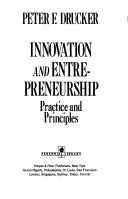
Peter F. Drucker · 1985

Innovation as a learnable discipline, with seven sources of opportunity to search.

Where it sits in the reference 4

Business models
Business themes
Business themes
Business themes

Topics

Business and ManagementEntrepreneurship and Startups