Updates

  1. Person pages list letters, writing, profiles and links as sortable tables with filters, and show each person's companies as links; Fund letters show each letter's description in its own column.
  2. Experts show a checked job title and a short description of each person; 30 more people have photographs.
  3. Every company, fund, university and publication the experts work for has a page listing the people there.
  4. Fund letters show each letter's thesis and filter by it; 225 person pages list the essays, columns and newsletter issues the person wrote.
  5. Person pages list every essay and newsletter issue a person wrote, and their own books as a table in List view.
  6. Recommends shows the five largest kinds of book and the rest under More; browse pictures load sooner.
  7. Podcasts and talks link the original episode, filter by Audio and video or Press, and list each publisher once.
  8. Pages are wider, Recommends has List and Grid, and a filter clicked again turns off.
  9. Book cards sit in a ruled grid with Open Library and Goodreads links and each book's one-line note.
  10. Funds is now Investors; each investor's styles are buttons that filter the table.
  11. Podcasts and talks on a person's page filter by year and publisher and show as a list or a grid of pictures.
  12. Quotes show only people's own words: 472 summaries written by list sites are gone.
  13. Country pages open from Browse again, and every link on the shelf lands on a page.
  14. Subject and person pages show their sections as tabs, and each book appears once on a person's page.
  15. Book cards show the quote, who said it and the source; grids show five cards to a row.
  16. On a phone, a menu holds the sections, search, Updates, Feedback and dark mode.
  17. Feedback takes a screenshot of the page with no browser prompt, opens a screenshot full size when you click it, and clears itself once sent.
  18. Book cards are centred, search names the topic each book sits in, and any text cut short shows whole on hover.
  19. Search groups its results by kind: people, companies, geographies, subjects, topics, books, funds, fund letters and papers.
  20. The Books table lists who recommended each book by name, and the browser tab names the section you are in.
  21. Feedback can take a screenshot of the page, or one you paste or choose, and opens in the corner beside Updates.
  22. Each rail button reopens its section where you left it, and Browse, Table and People show on every book and subject page.
  23. Filters grey out choices that hold nothing instead of hiding them, and Books › People filters by authors or recommenders.
  24. Feedback takes a subject line and up to three screenshots.
  25. Biographies are grouped by the person they are about: 41 new pages, from Abraham Lincoln to Lee Kuan Yew.
  26. Sport splits into 23 sports, and Religion into one topic per faith.
  27. Book lists show as cards: the cover, one recommendation quote and every recommender by name.
  28. Seventeen subjects that had two or three pages under different names now have one page each.
  29. Every page lists its Experts as authors and recommenders, with a link to them on the Experts tab.
  30. Economics, Financial history, Financial panics and Accounting are subjects of their own, with one page per financial crisis.
  31. Book, person and subject pages open inside the app, so the tabs stay in view.
  32. 996 more book covers, and photographs or logos for 227 more people and companies.
  33. Books › Browse shows every subject as cards, and the rail holds Fund letters, Papers, Experts, Books and Funds.
  34. Every topic over 150 books splits into narrower topics, each with a page of its own.

Send feedback

What is it?
Screenshots, up to 3 (optional)
or paste one with Ctrl+V

We use your email only to reply to you.

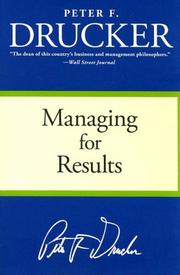
Managing for Results

Managing for Results

Peter F. Drucker
1964
T4 240 pages · about 4h to read Open Librarygoodreads

Summary

Peter Drucker published this in 1964 and later described it as the first book on what would come to be called business strategy. Its subject is the economic task of the business, meaning the decisions that determine what the firm sells, to whom, and with what resources.

The analytical apparatus is a set of questions and classifications. Drucker asks managers to identify their firm's actual results areas, which he insists exist only outside the business, and to classify products into categories including today's breadwinners, tomorrow's breadwinners, yesterday's breadwinners, repair jobs, unnecessary specialities and investments in managerial ego. He argues that resources concentrate naturally on problems and that management must force them onto opportunities instead. He introduces the observation, later associated with the Pareto principle in business, that a small number of products, customers and orders typically produce most of the revenue while costs are spread evenly across all of them.

He follows with the concentration decision: a business should identify its area of leadership, allocate its best people there, and abandon the rest. The abandonment argument is the book's most demanding and least followed recommendation. The specific product classifications now read as dated management vocabulary, and the analysis assumes a manufacturing firm of the period. The core arguments about concentration, about staffing opportunities rather than problems, and about the necessity of abandonment have been restated by every strategy writer since.

Key takeaways 7

  1. Results exist only outside the business, and everything inside it is a cost.
  2. Revenue concentrates in a small number of products, customers and orders while costs spread evenly across all of them.
  3. Resources drift toward problems, and management must deliberately allocate them to opportunities instead.
  4. The ablest people should be assigned to the largest opportunities rather than to the largest problems.
  5. Every business must decide what to abandon, and refusing to decide means abandoning by neglect.
  6. A business should concentrate on the area where it can achieve leadership, because leadership in something specific is the only defensible position.
  7. Economic results come from exploiting opportunities rather than from solving problems, and solving all a firm's problems only restores it to normal.

Who should read it

Executives making resource allocation and product portfolio decisions who want the original statement of concentration and abandonment as strategic disciplines.

About Peter F. Drucker

Management writer and consultant; professor at Bennington, NYU and Claremont Graduate University

He invented management as a field of study, and The Practice of Management and The Effective Executive remain the primary sources every later writer builds on.

NYU, Claremont Graduate University

Similar books 6

Chosen by shared topics, the entries that hold them, and the people who recommended both.

Peter F. Drucker · 2003

Selections on community and society

Peter F. Drucker · 1979

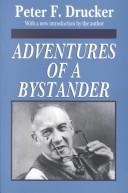
A memoir told through portraits of the people the author knew, from Vienna on.

Recommended by: Mohnish Pabrai, Stewart Brand

Peter F. Drucker · 2006

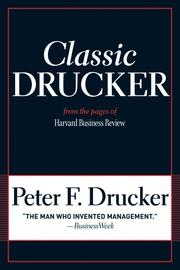
Posthumous HBR collection

Peter F. Drucker · 1946

Eighteen months inside General Motors: the large corporation as a social institution.

Where it sits in the reference 3

Strategists
Business themes
Business themes

Topics

Business and Management