Updates

  1. Person pages list letters, writing, profiles and links as sortable tables with filters, and show each person's companies as links; Fund letters show each letter's description in its own column.
  2. Experts show a checked job title and a short description of each person; 30 more people have photographs.
  3. Every company, fund, university and publication the experts work for has a page listing the people there.
  4. Fund letters show each letter's thesis and filter by it; 225 person pages list the essays, columns and newsletter issues the person wrote.
  5. Person pages list every essay and newsletter issue a person wrote, and their own books as a table in List view.
  6. Recommends shows the five largest kinds of book and the rest under More; browse pictures load sooner.
  7. Podcasts and talks link the original episode, filter by Audio and video or Press, and list each publisher once.
  8. Pages are wider, Recommends has List and Grid, and a filter clicked again turns off.
  9. Book cards sit in a ruled grid with Open Library and Goodreads links and each book's one-line note.
  10. Funds is now Investors; each investor's styles are buttons that filter the table.
  11. Podcasts and talks on a person's page filter by year and publisher and show as a list or a grid of pictures.
  12. Quotes show only people's own words: 472 summaries written by list sites are gone.
  13. Country pages open from Browse again, and every link on the shelf lands on a page.
  14. Subject and person pages show their sections as tabs, and each book appears once on a person's page.
  15. Book cards show the quote, who said it and the source; grids show five cards to a row.
  16. On a phone, a menu holds the sections, search, Updates, Feedback and dark mode.
  17. Feedback takes a screenshot of the page with no browser prompt, opens a screenshot full size when you click it, and clears itself once sent.
  18. Book cards are centred, search names the topic each book sits in, and any text cut short shows whole on hover.
  19. Search groups its results by kind: people, companies, geographies, subjects, topics, books, funds, fund letters and papers.
  20. The Books table lists who recommended each book by name, and the browser tab names the section you are in.
  21. Feedback can take a screenshot of the page, or one you paste or choose, and opens in the corner beside Updates.
  22. Each rail button reopens its section where you left it, and Browse, Table and People show on every book and subject page.
  23. Filters grey out choices that hold nothing instead of hiding them, and Books › People filters by authors or recommenders.
  24. Feedback takes a subject line and up to three screenshots.
  25. Biographies are grouped by the person they are about: 41 new pages, from Abraham Lincoln to Lee Kuan Yew.
  26. Sport splits into 23 sports, and Religion into one topic per faith.
  27. Book lists show as cards: the cover, one recommendation quote and every recommender by name.
  28. Seventeen subjects that had two or three pages under different names now have one page each.
  29. Every page lists its Experts as authors and recommenders, with a link to them on the Experts tab.
  30. Economics, Financial history, Financial panics and Accounting are subjects of their own, with one page per financial crisis.
  31. Book, person and subject pages open inside the app, so the tabs stay in view.
  32. 996 more book covers, and photographs or logos for 227 more people and companies.
  33. Books › Browse shows every subject as cards, and the rail holds Fund letters, Papers, Experts, Books and Funds.
  34. Every topic over 150 books splits into narrower topics, each with a page of its own.

Send feedback

What is it?
Screenshots, up to 3 (optional)
or paste one with Ctrl+V

We use your email only to reply to you.

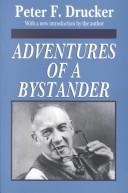
Adventures of a Bystander

Adventures of a Bystander

Peter F. Drucker
1979
T4 344 pages · about 5h 44m to read Open Librarygoodreads

Memoir in the form of portraits

Summary

Drucker's memoir is constructed as a series of portraits of people he knew rather than as an account of his own life. The subjects include his grandmother in Vienna, Freud glimpsed in childhood, Karl Polanyi, Henry Luce, Alfred Sloan, the Bennington College faculty, the journalists of interwar Germany, and various bankers, teachers and eccentrics.

Drucker uses the portraits to make arguments he makes nowhere else in his work. The Sloan chapter is the most cited by business readers: Drucker describes how Sloan ran General Motors through decision-making discipline, refused to make personnel decisions quickly, insisted on disagreement before commitment, and kept a deliberate distance from subordinates because he believed friendship would corrupt his judgement of their performance. The chapters on interwar Vienna and Weimar Germany describe the collapse of a civil society from inside, and Drucker is explicit that this experience shaped his conviction that functioning institutions rather than good intentions are what protect people.

The book is not management writing and readers looking for frameworks will not find them. Its value is as the source of Drucker's own account of where his ideas came from, and as an unusual view of the twentieth century by someone who watched it from the edges. Drucker was a self-conscious stylist and some of the portraits are shaped for effect. Historians have noted that several of his anecdotes cannot be verified and that his memory of Vienna is reconstructed decades later, so treat specific incidents as recollection rather than record.

Key takeaways 7

  1. Alfred Sloan deliberately took longer over personnel decisions than over any other kind, because the quality of people determined every later outcome.
  2. Sloan refused personal friendship with subordinates on the grounds that it would compromise his assessment of their performance.
  3. A decision should not be made until disagreement has been expressed, because agreement reached without dissent means the alternatives were never examined.
  4. Institutions rather than intentions are what protect a society, and Drucker drew this conclusion from watching Austrian and German civil society dissolve.
  5. Effective people are formed by a small number of individuals who set standards for them early, and organisations should be understood as places where such standards are or are not transmitted.
  6. Bureaucracy in a large organisation is not an accident but the accumulated residue of decisions that were never revisited.
  7. Observation from the margin produces better judgement about institutions than participation at the centre does.

Who should read it

Readers who want the personal origin of Drucker's management thinking, and specifically the Sloan portrait on decision-making and personnel.

About Peter F. Drucker

Management writer and consultant; professor at Bennington, NYU and Claremont Graduate University

He invented management as a field of study, and The Practice of Management and The Effective Executive remain the primary sources every later writer builds on.

NYU, Claremont Graduate University

Who recommended it 2 · 1 direct

Similar books 6

Chosen by shared topics, the entries that hold them, and the people who recommended both.

Peter F. Drucker · 2003

Selections on community and society

Peter F. Drucker · 2006

Posthumous HBR collection

Peter F. Drucker · 1946

Eighteen months inside General Motors: the large corporation as a social institution.

Peter F. Drucker, Isao Nakauchi · 1997

A dialogue conducted by correspondence

Where it sits in the reference 3

Strategists
Business themes
Business themes

Topics

Biography and MemoirBusiness and ManagementScientists, Doctors and Thinkers