Alfred D. Chandler Jr.
Business historian of the scale and management structures of modern corporations; won the Pulitzer Prize for History for The Visible Hand (1977). Died in 2007.
 Harvard Business School
 Johns Hopkins University
Strategy and Structure established that firms adopt the multidivisional form once they diversify, and The Visible Hand showed how salaried managers displaced market coordination inside large American enterprises - the source texts for how conglomerates and holding companies are analysed. Scale and Scope extends the comparison to Britain and Germany and explains why different ownership patterns produced different corporate structures.
4 books of their own
Start here
- Strategy and StructureAlfred D. Chandler Jr., 1962
- The Visible HandAlfred D. Chandler Jr., 1977
- Scale and ScopeAlfred D. Chandler Jr., 1990

How DuPont, GM, Standard Oil and Sears built the multidivisional firm.
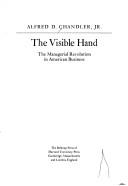
How salaried managers replaced markets in coordinating US business, 1840 to 1920.
Recommended by: Paul Graham
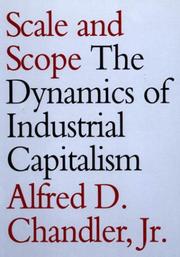
Why big industrial firms in the US, Britain and Germany rose or lagged, 1880 to 1940.

The decentralised structure and financial controls that ran General Motors.
Recommended by: Mohnish Pabrai, Patrick Collison and 1 other
 Strategy and Structure | How DuPont, GM, Standard Oil and Sears built the multidivisional firm. | 1962 | T1 | – |
 The Visible Hand | How salaried managers replaced markets in coordinating US business, 1840 to 1920. | 1977 | T1 | Paul Graham |
 Scale and Scope | Why big industrial firms in the US, Britain and Germany rose or lagged, 1880 to 1940. | 1990 | T1 | – |
 My Years with General Motors | The decentralised structure and financial controls that ran General Motors. | 1963 | T1 | Mohnish Pabrai, Patrick Collison, Ben Horowitz |
| Alfred D. Chandler Jr., a Business Historian, Dies at 88 Paywall | The New York Times | 2007 |
| Noted Economic Historian Alfred Chandler Jr., 88 Paywall | The Washington Post | 2007 |
| HBS Professor Alfred Chandler Jr., pre-eminent business historian, dead at 88 | Harvard Gazette | 2007 |