Updates

  1. Person pages list letters, writing, profiles and links as sortable tables with filters, and show each person's companies as links; Fund letters show each letter's description in its own column.
  2. Experts show a checked job title and a short description of each person; 30 more people have photographs.
  3. Every company, fund, university and publication the experts work for has a page listing the people there.
  4. Fund letters show each letter's thesis and filter by it; 225 person pages list the essays, columns and newsletter issues the person wrote.
  5. Person pages list every essay and newsletter issue a person wrote, and their own books as a table in List view.
  6. Recommends shows the five largest kinds of book and the rest under More; browse pictures load sooner.
  7. Podcasts and talks link the original episode, filter by Audio and video or Press, and list each publisher once.
  8. Pages are wider, Recommends has List and Grid, and a filter clicked again turns off.
  9. Book cards sit in a ruled grid with Open Library and Goodreads links and each book's one-line note.
  10. Funds is now Investors; each investor's styles are buttons that filter the table.
  11. Podcasts and talks on a person's page filter by year and publisher and show as a list or a grid of pictures.
  12. Quotes show only people's own words: 472 summaries written by list sites are gone.
  13. Country pages open from Browse again, and every link on the shelf lands on a page.
  14. Subject and person pages show their sections as tabs, and each book appears once on a person's page.
  15. Book cards show the quote, who said it and the source; grids show five cards to a row.
  16. On a phone, a menu holds the sections, search, Updates, Feedback and dark mode.
  17. Feedback takes a screenshot of the page with no browser prompt, opens a screenshot full size when you click it, and clears itself once sent.
  18. Book cards are centred, search names the topic each book sits in, and any text cut short shows whole on hover.
  19. Search groups its results by kind: people, companies, geographies, subjects, topics, books, funds, fund letters and papers.
  20. The Books table lists who recommended each book by name, and the browser tab names the section you are in.
  21. Feedback can take a screenshot of the page, or one you paste or choose, and opens in the corner beside Updates.
  22. Each rail button reopens its section where you left it, and Browse, Table and People show on every book and subject page.
  23. Filters grey out choices that hold nothing instead of hiding them, and Books › People filters by authors or recommenders.
  24. Feedback takes a subject line and up to three screenshots.
  25. Biographies are grouped by the person they are about: 41 new pages, from Abraham Lincoln to Lee Kuan Yew.
  26. Sport splits into 23 sports, and Religion into one topic per faith.
  27. Book lists show as cards: the cover, one recommendation quote and every recommender by name.
  28. Seventeen subjects that had two or three pages under different names now have one page each.
  29. Every page lists its Experts as authors and recommenders, with a link to them on the Experts tab.
  30. Economics, Financial history, Financial panics and Accounting are subjects of their own, with one page per financial crisis.
  31. Book, person and subject pages open inside the app, so the tabs stay in view.
  32. 996 more book covers, and photographs or logos for 227 more people and companies.
  33. Books › Browse shows every subject as cards, and the rail holds Fund letters, Papers, Experts, Books and Funds.
  34. Every topic over 150 books splits into narrower topics, each with a page of its own.

Send feedback

What is it?
Screenshots, up to 3 (optional)
or paste one with Ctrl+V

We use your email only to reply to you.

How to Lead

How to Lead

David M. Rubenstein
2020
T4 448 pages · about 7h 28m to read Open Librarygoodreads

Interviews with founders, CEOs and public figures.

Summary

Rubenstein, co-founder of the Carlyle Group, assembled edited transcripts of interviews he conducted for his television programme with figures including Jeff Bezos, Bill Gates, Warren Buffett, Phil Knight, Oprah Winfrey, Richard Branson, Ruth Bader Ginsburg, Colin Powell, Jack Nicklaus and others across business, government, sport and the arts.

The interviews are conversational rather than probing, and Rubenstein's approach is to ask about origins, decisions and habits rather than to challenge his subjects. He groups them loosely by type of leadership: visionaries, builders, transformers, commanders, decision makers and masters.

The recurring material across subjects concerns persistence through early failure, willingness to make decisions with incomplete information, obsessive focus on a single domain over decades, and the observation from several subjects that they were considered unlikely to succeed at the time they started. Bezos discusses the regret minimisation framework and the distinction between reversible and irreversible decisions. Buffett discusses circle of competence and temperament. Knight discusses the near-death financing episodes at Nike.

The form limits what the book can deliver. Subjects who have told their stories many times give polished versions, the interviews are short, and Rubenstein's access depends on not asking hard questions. There is no analysis, no attempt to identify what distinguishes these people from equally determined people who failed, and heavy selection on outcome. The book works as a source of individual observations rather than as a treatment of leadership. Anyone wanting the full version of these subjects' thinking should go to their own writing or to full-length biographies.

Key takeaways 7

  1. Bezos distinguishes reversible decisions, which should be made fast by individuals, from irreversible ones, which deserve deliberation.
  2. Several subjects report that they were considered unlikely to succeed at the point they committed to their eventual field.
  3. Extended focus on a single domain over decades appears more consistently across these subjects than any particular talent.
  4. Willingness to decide with incomplete information rather than waiting for certainty is a repeated theme across very different fields.
  5. Nike came close to financial failure repeatedly in its first decade, which the public record of its later success obscures.
  6. Interview subjects who have told their stories many times supply rehearsed accounts, which limits what the form can reveal.
  7. A collection selected entirely on outcome cannot distinguish the causes of success from characteristics shared with those who failed.

Who should read it

Readers who want short accessible interviews with well-known figures, rather than analysis of what produces leadership.

About David M. Rubenstein

Co-founder and co-chairman, The Carlyle Group, 1987-present; host, The David Rubenstein Show

Built one of the largest private equity firms and has become the most prolific interviewer of investors and leaders, turning those conversations into a widely read book series.

Similar books 6

Chosen by shared topics, the entries that hold them, and the people who recommended both.

Eric Schmidt, Jonathan Rosenberg, Alan Eagle · 2019

How Bill Campbell coached the leaders of Google, Apple and Intuit.

William J. O'Neil · 2003

Compiled from Investor's Business Daily profiles.

Jerry Colonna · 2019

Recommended by: Brad Feld, Kirsten Green

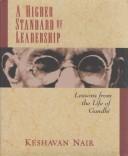
Keshavan Nair · 1994

Gandhi's principles restated as a leadership standard for executives

Recommended by: Mohnish Pabrai

Frank Slootman · 2021

How leaders drive hypergrowth by raising standards, focus and urgency.

Where it sits in the reference 4

Investors
Companies
Business themes
Business themes

Topics

LeadershipBiography and MemoirExecutives and Corporate Insiders