Updates

  1. Person pages list letters, writing, profiles and links as sortable tables with filters, and show each person's companies as links; Fund letters show each letter's description in its own column.
  2. Experts show a checked job title and a short description of each person; 30 more people have photographs.
  3. Every company, fund, university and publication the experts work for has a page listing the people there.
  4. Fund letters show each letter's thesis and filter by it; 225 person pages list the essays, columns and newsletter issues the person wrote.
  5. Person pages list every essay and newsletter issue a person wrote, and their own books as a table in List view.
  6. Recommends shows the five largest kinds of book and the rest under More; browse pictures load sooner.
  7. Podcasts and talks link the original episode, filter by Audio and video or Press, and list each publisher once.
  8. Pages are wider, Recommends has List and Grid, and a filter clicked again turns off.
  9. Book cards sit in a ruled grid with Open Library and Goodreads links and each book's one-line note.
  10. Funds is now Investors; each investor's styles are buttons that filter the table.
  11. Podcasts and talks on a person's page filter by year and publisher and show as a list or a grid of pictures.
  12. Quotes show only people's own words: 472 summaries written by list sites are gone.
  13. Country pages open from Browse again, and every link on the shelf lands on a page.
  14. Subject and person pages show their sections as tabs, and each book appears once on a person's page.
  15. Book cards show the quote, who said it and the source; grids show five cards to a row.
  16. On a phone, a menu holds the sections, search, Updates, Feedback and dark mode.
  17. Feedback takes a screenshot of the page with no browser prompt, opens a screenshot full size when you click it, and clears itself once sent.
  18. Book cards are centred, search names the topic each book sits in, and any text cut short shows whole on hover.
  19. Search groups its results by kind: people, companies, geographies, subjects, topics, books, funds, fund letters and papers.
  20. The Books table lists who recommended each book by name, and the browser tab names the section you are in.
  21. Feedback can take a screenshot of the page, or one you paste or choose, and opens in the corner beside Updates.
  22. Each rail button reopens its section where you left it, and Browse, Table and People show on every book and subject page.
  23. Filters grey out choices that hold nothing instead of hiding them, and Books › People filters by authors or recommenders.
  24. Feedback takes a subject line and up to three screenshots.
  25. Biographies are grouped by the person they are about: 41 new pages, from Abraham Lincoln to Lee Kuan Yew.
  26. Sport splits into 23 sports, and Religion into one topic per faith.
  27. Book lists show as cards: the cover, one recommendation quote and every recommender by name.
  28. Seventeen subjects that had two or three pages under different names now have one page each.
  29. Every page lists its Experts as authors and recommenders, with a link to them on the Experts tab.
  30. Economics, Financial history, Financial panics and Accounting are subjects of their own, with one page per financial crisis.
  31. Book, person and subject pages open inside the app, so the tabs stay in view.
  32. 996 more book covers, and photographs or logos for 227 more people and companies.
  33. Books › Browse shows every subject as cards, and the rail holds Fund letters, Papers, Experts, Books and Funds.
  34. Every topic over 150 books splits into narrower topics, each with a page of its own.

Send feedback

What is it?
Screenshots, up to 3 (optional)
or paste one with Ctrl+V

We use your email only to reply to you.

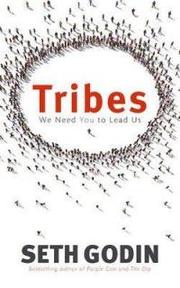
Tribes

Tribes

Seth Godin
2008
T2 160 pages · about 2h 40m to read Open Librarygoodreads

Summary

Godin argues that the internet made it cheap to connect people who share an interest, that groups so connected want leadership, and that most people decline to provide it. He defines a tribe as a group with a shared interest and a way of communicating, and says the two missing ingredients are usually a leader and a means for members to reach each other rather than only the centre.

His prescriptions are short and repeated. Leadership is distinct from management: management directs people to accomplish known tasks, leadership creates change people want to be part of. Anyone can lead, and the barrier is not permission but willingness. Leaders should be heretics, meaning they should challenge the status quo of their industry rather than seeking consensus. A leader should aim to move a small committed group rather than to reach a mass audience indifferent to the message. Faith in the destination is required, and criticism is evidence of having said something.

The book is a hundred and fifty short pages assembled from brief sections, with examples drawn from businesses and non-profits rather than from systematic evidence.

There is no research base and Godin does not claim one. The argument is exhortation. Its practical content is thin relative to its length, and the specific examples of internet-enabled movements are now dated. What has held up is the structural point that connecting members to each other, rather than only to the organisation, is what turns an audience into a group that sustains itself.

Key takeaways 7

  1. A tribe requires members to be connected to each other, not merely to a central organisation broadcasting at them.
  2. Leadership creates change that people choose to follow, while management directs people toward outcomes already decided.
  3. The barrier to leading is willingness rather than permission or position.
  4. A leader should aim to move a small committed group rather than to reach a large indifferent audience.
  5. Challenging the conventions of an industry generates the attention that consensus-seeking cannot.
  6. Organisations suppress tribe formation because connected members are harder to control than isolated ones.
  7. Criticism is evidence that a message was specific enough to disagree with, and its absence indicates the message said nothing.

Who should read it

Founders and marketers who need a short argument for building a committed community rather than an audience, and who do not need evidence to act on it.

About Seth Godin

American marketing writer, founder of Yoyodyne and Squidoo, who has published a daily marketing blog for two decades.

Permission Marketing argued for earning attention through opt-in years before that became the default of email and content marketing, and Purple Cow made remarkability the product's job rather than the advertising budget's. The Dip supplies a decision rule for when to quit a market and when the difficulty itself is the barrier worth pushing through.

Yoyodyne, Squidoo

Who recommended it 1

Similar books 6

Chosen by shared topics, the entries that hold them, and the people who recommended both.

Keshavan Nair · 1994

Gandhi's principles restated as a leadership standard for executives

Recommended by: Mohnish Pabrai

Frank Slootman · 2021

How leaders drive hypergrowth by raising standards, focus and urgency.

William J. O'Neil · 2003

Compiled from Investor's Business Daily profiles.

Jennifer Garvey Berger · 2012

Recommended by: Graham Duncan

John C. Bogle · 2002

Bogle's speeches to Vanguard staff over its first 25 years, with commentary.

Recommended by: Mr. Money Mustache

Where it sits in the reference 3

Strategists
Business themes
Business themes

Topics

LeadershipSales and MarketingGrowth, pricing and channels