Updates

  1. Person pages list letters, writing, profiles and links as sortable tables with filters, and show each person's companies as links; Fund letters show each letter's description in its own column.
  2. Experts show a checked job title and a short description of each person; 30 more people have photographs.
  3. Every company, fund, university and publication the experts work for has a page listing the people there.
  4. Fund letters show each letter's thesis and filter by it; 225 person pages list the essays, columns and newsletter issues the person wrote.
  5. Person pages list every essay and newsletter issue a person wrote, and their own books as a table in List view.
  6. Recommends shows the five largest kinds of book and the rest under More; browse pictures load sooner.
  7. Podcasts and talks link the original episode, filter by Audio and video or Press, and list each publisher once.
  8. Pages are wider, Recommends has List and Grid, and a filter clicked again turns off.
  9. Book cards sit in a ruled grid with Open Library and Goodreads links and each book's one-line note.
  10. Funds is now Investors; each investor's styles are buttons that filter the table.
  11. Podcasts and talks on a person's page filter by year and publisher and show as a list or a grid of pictures.
  12. Quotes show only people's own words: 472 summaries written by list sites are gone.
  13. Country pages open from Browse again, and every link on the shelf lands on a page.
  14. Subject and person pages show their sections as tabs, and each book appears once on a person's page.
  15. Book cards show the quote, who said it and the source; grids show five cards to a row.
  16. On a phone, a menu holds the sections, search, Updates, Feedback and dark mode.
  17. Feedback takes a screenshot of the page with no browser prompt, opens a screenshot full size when you click it, and clears itself once sent.
  18. Book cards are centred, search names the topic each book sits in, and any text cut short shows whole on hover.
  19. Search groups its results by kind: people, companies, geographies, subjects, topics, books, funds, fund letters and papers.
  20. The Books table lists who recommended each book by name, and the browser tab names the section you are in.
  21. Feedback can take a screenshot of the page, or one you paste or choose, and opens in the corner beside Updates.
  22. Each rail button reopens its section where you left it, and Browse, Table and People show on every book and subject page.
  23. Filters grey out choices that hold nothing instead of hiding them, and Books › People filters by authors or recommenders.
  24. Feedback takes a subject line and up to three screenshots.
  25. Biographies are grouped by the person they are about: 41 new pages, from Abraham Lincoln to Lee Kuan Yew.
  26. Sport splits into 23 sports, and Religion into one topic per faith.
  27. Book lists show as cards: the cover, one recommendation quote and every recommender by name.
  28. Seventeen subjects that had two or three pages under different names now have one page each.
  29. Every page lists its Experts as authors and recommenders, with a link to them on the Experts tab.
  30. Economics, Financial history, Financial panics and Accounting are subjects of their own, with one page per financial crisis.
  31. Book, person and subject pages open inside the app, so the tabs stay in view.
  32. 996 more book covers, and photographs or logos for 227 more people and companies.
  33. Books › Browse shows every subject as cards, and the rail holds Fund letters, Papers, Experts, Books and Funds.
  34. Every topic over 150 books splits into narrower topics, each with a page of its own.

Send feedback

What is it?
Screenshots, up to 3 (optional)
or paste one with Ctrl+V

We use your email only to reply to you.

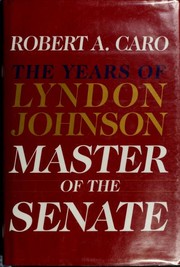
Master of the Senate

Master of the Senate

Robert A. Caro
2002
T1 1200 pages · about 20h to read Open Librarygoodreads

Caro on Johnson's mastery of an institution's levers and incentives

Summary

The third volume of Caro's biography of Lyndon Johnson covers his Senate years from 1949 to 1960, during which he became the most effective majority leader in the institution's history. It opens with a long history of the Senate itself, explaining the rules, the seniority system and the southern bloc's control of committees that made the chamber the graveyard of civil rights legislation for eighty years.

The analytical substance is about how power is actually acquired and used in an institution where formal authority is weak. Johnson had almost no formal power as leader. He built influence through control of committee assignments, through the campaign funds he directed from Texas oil money, through the scheduling authority that determined which bills reached the floor and when, through knowing what every senator needed and feared, and through a personal attention to individuals that Caro documents in extraordinary detail. He converted a ceremonial position into the chamber's decisive one within four years.

The Civil Rights Act of 1957 is the book's centrepiece. Caro reconstructs how Johnson passed the first civil rights legislation since Reconstruction by simultaneously convincing southerners that the bill was weak enough to accept and northerners that it was a beginning, and by removing the enforcement provision that would have made it effective.

The book is very long and Caro's judgements about Johnson's motives are argued rather than established. Its use to operators is as the best available study of how influence is built in an organisation where formal authority does not determine outcomes.

Key takeaways 7

  1. Formal authority and actual influence are separate, and Johnson converted a ceremonial position into the Senate's decisive one within four years.
  2. Control over scheduling, committee assignments and the flow of campaign money produced more power than any formal leadership prerogative.
  3. Knowing precisely what each individual needed and feared, gathered through sustained personal attention, was the foundation of Johnson's method.
  4. The Senate's rules and seniority system were designed to block legislation, which meant passing anything required working through the rules rather than around them.
  5. The 1957 Civil Rights Act passed because Johnson persuaded opposing factions that the same bill meant different things, and because he removed the enforcement provision.
  6. Legislation that achieves little can be necessary to establish that legislation on the subject is possible at all.
  7. Power in an institution accrues to whoever performs the tedious work others avoid, since that work is where the levers are located.

Who should read it

Operators and executives who want the best available study of building influence inside an institution where formal authority does not determine outcomes.

Who recommended it 3 · 1 direct

Similar books 6

Chosen by shared topics, the entries that hold them, and the people who recommended both.
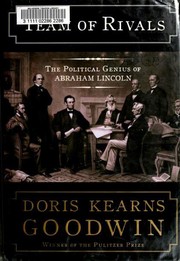
Doris Kearns Goodwin · 2003

How Lincoln brought his three rivals for the 1860 nomination into his cabinet.

Doris Kearns Goodwin

Recommended by: Bill Gates, Scott Belsky

Sun Tzu · 1900

The original text on strategic positioning. Sun Tzu's core insight — that winning without fighting is the highest form of strategy — runs through everything that followed. Short enough to read in an afternoon, dense enough to argue about for a career.

Richard Stengel · 2009

Fifteen lessons on life and leadership from Nelson Mandela's example.

Recommended by: Richard Branson

Catherine Drinker Bowen · 1966

The 1787 Federal Convention in Philadelphia that wrote the US Constitution.

Recommended by: Jim Collins
Where it sits in the reference 4

Business themes
Business themes
Biographies
Business themes

Topics

Biography and MemoirPolitics and GovernmentGeneral HistoryPolitical Leaders and PolicymakersAmerican HistoryAmerican politics and presidents