Updates

  1. Person pages list letters, writing, profiles and links as sortable tables with filters, and show each person's companies as links; Fund letters show each letter's description in its own column.
  2. Experts show a checked job title and a short description of each person; 30 more people have photographs.
  3. Every company, fund, university and publication the experts work for has a page listing the people there.
  4. Fund letters show each letter's thesis and filter by it; 225 person pages list the essays, columns and newsletter issues the person wrote.
  5. Person pages list every essay and newsletter issue a person wrote, and their own books as a table in List view.
  6. Recommends shows the five largest kinds of book and the rest under More; browse pictures load sooner.
  7. Podcasts and talks link the original episode, filter by Audio and video or Press, and list each publisher once.
  8. Pages are wider, Recommends has List and Grid, and a filter clicked again turns off.
  9. Book cards sit in a ruled grid with Open Library and Goodreads links and each book's one-line note.
  10. Funds is now Investors; each investor's styles are buttons that filter the table.
  11. Podcasts and talks on a person's page filter by year and publisher and show as a list or a grid of pictures.
  12. Quotes show only people's own words: 472 summaries written by list sites are gone.
  13. Country pages open from Browse again, and every link on the shelf lands on a page.
  14. Subject and person pages show their sections as tabs, and each book appears once on a person's page.
  15. Book cards show the quote, who said it and the source; grids show five cards to a row.
  16. On a phone, a menu holds the sections, search, Updates, Feedback and dark mode.
  17. Feedback takes a screenshot of the page with no browser prompt, opens a screenshot full size when you click it, and clears itself once sent.
  18. Book cards are centred, search names the topic each book sits in, and any text cut short shows whole on hover.
  19. Search groups its results by kind: people, companies, geographies, subjects, topics, books, funds, fund letters and papers.
  20. The Books table lists who recommended each book by name, and the browser tab names the section you are in.
  21. Feedback can take a screenshot of the page, or one you paste or choose, and opens in the corner beside Updates.
  22. Each rail button reopens its section where you left it, and Browse, Table and People show on every book and subject page.
  23. Filters grey out choices that hold nothing instead of hiding them, and Books › People filters by authors or recommenders.
  24. Feedback takes a subject line and up to three screenshots.
  25. Biographies are grouped by the person they are about: 41 new pages, from Abraham Lincoln to Lee Kuan Yew.
  26. Sport splits into 23 sports, and Religion into one topic per faith.
  27. Book lists show as cards: the cover, one recommendation quote and every recommender by name.
  28. Seventeen subjects that had two or three pages under different names now have one page each.
  29. Every page lists its Experts as authors and recommenders, with a link to them on the Experts tab.
  30. Economics, Financial history, Financial panics and Accounting are subjects of their own, with one page per financial crisis.
  31. Book, person and subject pages open inside the app, so the tabs stay in view.
  32. 996 more book covers, and photographs or logos for 227 more people and companies.
  33. Books › Browse shows every subject as cards, and the rail holds Fund letters, Papers, Experts, Books and Funds.
  34. Every topic over 150 books splits into narrower topics, each with a page of its own.

Send feedback

What is it?
Screenshots, up to 3 (optional)
or paste one with Ctrl+V

We use your email only to reply to you.

Team of Rivals

Team of Rivals

Doris Kearns Goodwin
2003
T2 916 pages · about 15h 16m to read Open Librarygoodreads

Lincoln's cabinet of opponents; a study in managing rivals

Summary

Goodwin examines Lincoln's presidency through his cabinet, three of whose members had competed against him for the 1860 Republican nomination and considered themselves better qualified. William Seward became Secretary of State, Salmon Chase became Secretary of the Treasury, and Edward Bates became Attorney General, and Goodwin adds Edwin Stanton as Secretary of War, who had humiliated Lincoln professionally years earlier.

Her argument is that Lincoln's decision to appoint his rivals reflected a deliberate assessment that these were the most capable available men and that the country required them, and that his management of them, including tolerating disloyalty and criticism, was the source of his effectiveness rather than a weakness.

The specific practices Goodwin documents include Lincoln's habit of taking public responsibility for failures caused by subordinates, his refusal to act while angry which he managed by writing letters he never sent, his willingness to visit subordinates rather than summon them, his use of humour to defuse confrontation, his tolerance of Chase's open manoeuvring against him until it became untenable, and his repeated appointment of people who had criticised him.

The political material covers the Emancipation Proclamation's timing, the management of the border states, the relationship with the generals, and the 1864 re-election. Goodwin writes admiringly and the leadership framing has been criticised as anachronistic, since the cabinet appointments reflected the requirement to balance Republican factions as much as any theory of management. Historians also note that Lincoln's cabinet functioned poorly by many measures. The book is long. The specific behavioural material about handling capable and hostile subordinates is what transfers.

Key takeaways 8

  1. Lincoln appointed his three principal rivals for the nomination to senior cabinet positions, judging that the country required their capability.
  2. He tolerated open criticism and manoeuvring from subordinates for as long as their work justified it, and acted only when it became untenable.
  3. He took public responsibility for failures caused by subordinates, which secured loyalty from people who expected to be blamed.
  4. He wrote letters expressing anger and did not send them, which is his documented mechanism for not acting while angry.
  5. He visited subordinates rather than summoning them, which removed the status dimension from the interaction.
  6. Timing determined the effectiveness of the Emancipation Proclamation, which he delayed until a military success made it appear a decision rather than desperation.
  7. Appointing people who had criticised or humiliated him produced a cabinet with capability that a loyalty-based selection would not have.
  8. The cabinet appointments also reflected the requirement to balance party factions, which the leadership framing underweights.

Who should read it

Executives assembling teams from people who did not want to work for them, wanting documented behavioural practices rather than leadership principles.

Who recommended it 4 · 2 direct

Similar books 6

Chosen by shared topics, the entries that hold them, and the people who recommended both.
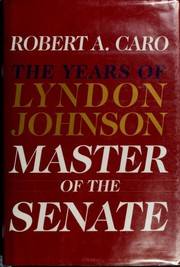
Robert A. Caro · 2002

How Lyndon Johnson mastered the Senate's rules and became its majority leader.

Doris Kearns Goodwin

Recommended by: Bill Gates, Scott Belsky

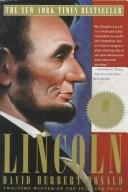
David Herbert Donald · 1995

Recommended by: Mohnish Pabrai, Jamie Dimon

Sun Tzu · 1900

The original text on strategic positioning. Sun Tzu's core insight — that winning without fighting is the highest form of strategy — runs through everything that followed. Short enough to read in an afternoon, dense enough to argue about for a career.

Richard Stengel · 2009

Fifteen lessons on life and leadership from Nelson Mandela's example.

Recommended by: Richard Branson
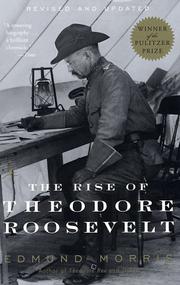
Edmund Morris · 1979

Theodore Roosevelt's life from his birth in 1858 to the presidency in 1901.

Where it sits in the reference 4

Business themes
Business themes
Biographies
Business themes

Topics

Biography and MemoirPolitics and GovernmentGeneral HistoryPolitical Leaders and PolicymakersAmerican HistoryAmerican politics and presidents