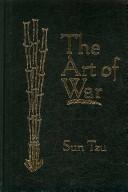
The Art of War
The original text on strategic positioning. Sun Tzu's core insight — that winning without fighting is the highest form of strategy — runs through everything that followed. Short enough to read in an afternoon, dense enough to argue about for a career.
Summary
The Art of War is a Chinese military treatise of thirteen short chapters, traditionally attributed to Sun Tzu and probably compiled in the fifth to third centuries BCE. It addresses the conduct of war at the level of strategy and statecraft rather than tactics, and its brevity and aphoristic form are why it has been applied so widely outside military contexts.
The central position is that war is costly and that the best outcome is achieving the objective without fighting. Sun Tzu argues that prolonged campaigns exhaust the state, that the supreme skill is subduing the enemy without battle, and that a general should attack the enemy's strategy first, then their alliances, then their army, and only besiege cities as a last resort.
The operational chapters cover the assessment of five factors before any campaign, the importance of knowing both yourself and your opponent, the use of deception to shape what the enemy believes about your position and intentions, the choice of ground, the value of speed over perfection, avoiding strength and attacking weakness, and the use of spies, to which he devotes an entire chapter and which he justifies on the grounds that information is cheaper than casualties.
He also states that a general must have the authority to disregard the ruler's orders when the situation on the ground requires it, which is one of the earliest statements of delegated command. The business application is often superficial, since competition and warfare differ in whether the objective is destruction. The text is short enough to read in an hour and dense enough to require several passes. Translations vary considerably. Read it for the emphasis on assessment before commitment and on winning through position rather than through confrontation.
Key takeaways 8
- The highest skill is achieving the objective without fighting, because battle is costly even when won.
- Victory is determined by conditions established before the engagement, so the assessment made in advance decides the outcome.
- Knowing both your own position and your opponent's is the condition for consistent success, and knowing only one produces defeat half the time.
- Deception about your strength, position and intentions is the central operational method, since the opponent acts on what they believe rather than on what is true.
- Speed matters more than perfection, and prolonged campaigns exhaust the resources that made them possible.
- Attack where the opponent is weak and avoid where they are strong, which requires choosing the ground rather than accepting it.
- Intelligence about the opponent is the cheapest expenditure available, since it substitutes for the cost of fighting blind.
- A commander must be able to disregard instructions from above when conditions on the ground require it, or the authority is worthless.
Who should read it
Executives and investors who want the classic argument for assessment before commitment and for winning through position rather than confrontation.
Who recommended it 7 · 1 direct
Similar books 6
Chosen by shared topics, the entries that hold them, and the people who recommended both.
Clausewitz introduces friction, fog, and the political nature of conflict as irreducible elements of strategy. His insistence that war is a continuation of politics by other means is the foundational challenge to anyone who wants a purely technical theory of winning.
Recommended by: Ryan Holiday, Elon Musk, Reid Hoffman

How Lincoln brought his three rivals for the 1860 nomination into his cabinet.
Recommended by: Bill Gates, Mohnish Pabrai, Jamie Dimon and 1 other
How Lyndon Johnson mastered the Senate's rules and became its majority leader.
Recommended by: Jim Collins, Marc Andreessen and 1 other
Givers, takers and matchers, and why givers end up both at the bottom and the top.
Recommended by: Mohnish Pabrai, Alex Lieberman and 4 others

John Boyd's military strategy, including the OODA loop, applied to business.
Recommended by: Ryan Peterson
Machiavelli's handbook on political strategy remains disturbing because it separates effectiveness from morality — a distinction every strategic thinker eventually has to confront. His analysis of how new rulers consolidate power is still the sharpest treatment of legitimacy under conditions of uncertainty.
Recommended by: Ryan Holiday, Stewart Brand, Fred Wilson and 2 others
Where it sits in the reference 4
Topics