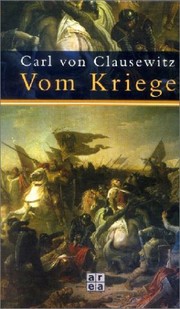
On War
Clausewitz introduces friction, fog, and the political nature of conflict as irreducible elements of strategy. His insistence that war is a continuation of politics by other means is the foundational challenge to anyone who wants a purely technical theory of winning.
Summary
Clausewitz served in the Prussian army through the Napoleonic wars and wrote On War over twelve years without completing the revision. His widow published it after his death in 1831, which is why the text is uneven and why some sections contradict others.
The central proposition is that war is a continuation of policy by other means, which establishes that military action has no logic of its own and must be governed by the political purpose it serves. Everything else follows from this. The military objective, the resources committed and the definition of success are all political questions rather than military ones.
His second major concept is friction, meaning the accumulation of small difficulties that make even simple things difficult in war. Weather, exhaustion, misunderstood orders, delayed information and chance combine so that the difference between plans and execution is systematic rather than occasional. His related concept, the fog of war, describes decision-making with incomplete and incorrect information as the normal condition.
He also develops the concept of the culminating point of victory, beyond which continued advance weakens the attacker; the centre of gravity, meaning the source of an opponent's power against which effort should be concentrated; the superiority of defence as a form of war; and the trinity of the government, the army and the people, whose relationship determines what any state can sustain. The text is difficult, contradictory in places and reflects nineteenth-century warfare. The business applications are frequently superficial. The concepts of friction, the culminating point and the primacy of purpose over method transfer directly.
Key takeaways 8
- War is a continuation of policy by other means, which means military action has no logic of its own and must serve the political purpose.
- The political purpose determines the objective, the resources justified and the definition of success, and none of these are military questions.
- Friction, meaning the accumulation of small difficulties, makes the simplest actions difficult and is the systematic difference between plans and execution.
- Decisions must be made with incomplete and incorrect information, which is the normal condition rather than a failure of preparation.
- Every offensive has a culminating point beyond which continued advance weakens the attacker rather than strengthening the position.
- Effort should be concentrated against the opponent's centre of gravity, meaning the source of their power rather than their most visible asset.
- Defence is the stronger form of war, which means an attacker requires a substantial advantage rather than parity.
- The relationship between the government, the fighting force and the population determines what a state can actually sustain.
Who should read it
Executives and strategists who want the original concepts of friction, culminating point and the primacy of purpose, prepared for a difficult unfinished text.
Who recommended it 3 · 1 direct
Similar books 6
Chosen by shared topics, the entries that hold them, and the people who recommended both.
The original text on strategic positioning. Sun Tzu's core insight — that winning without fighting is the highest form of strategy — runs through everything that followed. Short enough to read in an afternoon, dense enough to argue about for a career.
Recommended by: Mohnish Pabrai, Evan Spiegel, Fred Wilson and 4 others
Game theory without maths: look forward, reason back, and make threats credible.
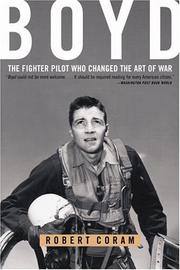
The definitive account of John Boyd and the OODA loop. Boyd's contribution was to show that strategy is fundamentally about time and adaptation: the side that observes, orients, decides, and acts faster keeps the opponent reacting rather than acting. His ideas crossed into business, software, and lean manufacturing.
Recommended by: Morgan Housel, Patrick O'Shaughnessy and 2 others

Machiavelli's handbook on political strategy remains disturbing because it separates effectiveness from morality — a distinction every strategic thinker eventually has to confront. His analysis of how new rulers consolidate power is still the sharpest treatment of legitimacy under conditions of uncertainty.
Recommended by: Ryan Holiday, Stewart Brand, Fred Wilson and 2 others
Complex problems yield to trial and error, not expert plans, and how to run it.
Recommended by: Mohnish Pabrai, Patrick O'Shaughnessy
John Boyd's military strategy, including the OODA loop, applied to business.
Recommended by: Ryan Peterson
Where it sits in the reference 4
Topics