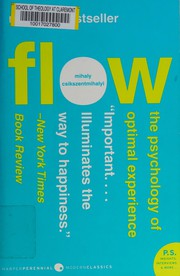
Flow: The Psychology of Optimal Experience
Optimal experience and attention; the psychology of absorbed work
Summary
Csikszentmihalyi studied optimal experience using the experience sampling method, in which participants carried pagers and recorded what they were doing and how they felt at random intervals across weeks. From tens of thousands of these reports he identified a state he named flow, characterised by complete absorption in an activity.
The conditions for flow are specific: clear goals, immediate feedback, and a balance between the challenge of the task and the skill of the person, with challenge slightly exceeding current skill. The state itself involves merging of action and awareness, loss of self-consciousness, distortion of the sense of time, and the activity becoming autotelic, meaning worth doing for its own sake.
The finding that surprised his readers most is that people report flow far more often at work than during leisure, and simultaneously report wanting to be working less, which he calls the paradox of work. Leisure as commonly practised provides neither challenge nor structure and produces low-quality experience.
He argues that flow requires skill development, so an activity that reliably produces it must be one where the person keeps improving, since a fixed skill level against a fixed challenge produces boredom. The later chapters extend the argument to the construction of a meaningful life, which is weaker and more speculative than the empirical material. The experience sampling method has methodological limits, since it relies on self-report and on participants interrupting their activity to record. The concept has been overused commercially. The challenge and skill balance is the operative finding and applies directly to task and role design.
Key takeaways 8
- Optimal experience occurs when a task's challenge slightly exceeds current skill, with clear goals and immediate feedback present.
- People report flow far more often at work than during leisure while simultaneously reporting that they would rather not be working.
- Leisure as commonly practised provides neither challenge nor structure, which is why it produces low-quality experience despite being preferred.
- Flow requires continuous skill development, since a fixed skill against a fixed challenge produces boredom rather than absorption.
- The state involves loss of self-consciousness and distortion of time, which are consequences of full attention rather than goals in themselves.
- An activity becomes worth doing for its own sake once it reliably produces flow, independent of any external reward attached to it.
- Enjoyment differs from pleasure, since pleasure restores a prior state and enjoyment requires investment of attention and produces growth.
- Tasks and roles can be designed for the challenge and skill balance deliberately, which is the practical application of the finding.
Who should read it
Managers designing work and individuals structuring their own tasks who want the empirical conditions under which absorption occurs.
Who recommended it 4 · 3 direct
Similar books 6
Chosen by shared topics, the entries that hold them, and the people who recommended both.
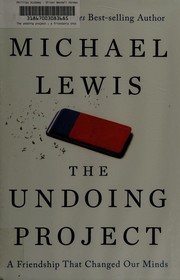
Michael Lewis's account of the Kahneman-Tversky collaboration works as intellectual biography and as a second path through the research for readers who find academic writing slow. The friendship and its eventual fracture clarifies how two very different minds produced work that neither could have done alone.
Recommended by: Andrew Wilkinson, Mohnish Pabrai, Ray Dalio and 6 others
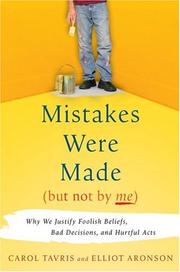
Tavris and Aronson focus on what happens after a bias fires: the self-justification, narrative revision, and escalating commitment that follow. Cognitive dissonance, they argue, is not a personality flaw but a universal mechanism, and understanding it explains police misconduct, political tribalism, and therapy failures in a single framework.
Recommended by: Mohnish Pabrai, Nat Eliason and 2 others
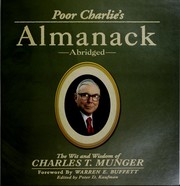
Speeches making the case for a latticework of mental models from many fields.
“…books I've recommended, highlighted to death, or forced on friends.” — Andrew Wilkinson
Source: Andrew Wilkinson's Bookshelf, neverenough.com
Recommended by: Andrew Wilkinson, Charlie Munger and 26 others
Data showing that low-expectation stocks beat popular ones over the long run.
“all these people really were helpful in forming and getting me involved in investing” — Joel Greenblatt
Source: Masters in Business transcript: Joel Greenblatt (2018)
Recommended by: Joel Greenblatt, Mohnish Pabrai and 1 other

Why people mistake luck for skill, above all in markets.
“Fooled by Randomness is a serious, intellectually sophisticated book, well worth reading carefully. At times, the book is condescending. Nevertheless, there are some great insights.” — Barton Biggs
Source: Biggs on a sophisticated book worth reading carefully
Recommended by: Barton Biggs, Michael Mauboussin and 11 others
Experiments showing that people depart from rational choice in repeatable ways.
Recommended by: Mohnish Pabrai, Alfred Lin, Anna Cheng and 6 others
Where it sits in the reference 1
Topics