
Munger's Psychology of Human Misjudgment
Munger's assembled list of about twenty-five standard causes of human error - incentive bias, consistency, social proof, deprival superreaction, authority and the rest - together with the observation that they compound when several fire at once. He treats it as a checklist for the mind, run before a decision rather than after a loss. The claim is that avoiding standard stupidity beats pursuing brilliance.
Start here
- Influence: The Psychology of PersuasionRobert B. Cialdini, 1984
- Poor Charlie's AlmanackCharles T. Munger, Peter D. Kaufman, 2005
- Seeking Wisdom: From Darwin to MungerPeter Bevelin, 2003
Essays on self-knowledge and how unreliable one's own judgement is.
Recommended by: Nassim Nicholas Taleb
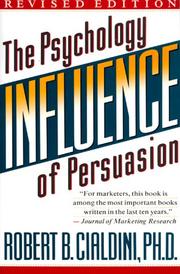
Six principles of compliance, from reciprocity to scarcity, and how sellers use them.
“…books I've recommended, highlighted to death, or forced on friends.” — Andrew Wilkinson
Source: Andrew Wilkinson's Bookshelf, neverenough.com
Recommended by: Andrew Wilkinson, Charlie Munger and 29 others
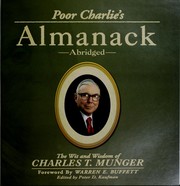
Speeches making the case for a latticework of mental models from many fields.
“…books I've recommended, highlighted to death, or forced on friends.” — Andrew Wilkinson
Source: Andrew Wilkinson's Bookshelf, neverenough.com
Recommended by: Andrew Wilkinson, Charlie Munger and 26 others
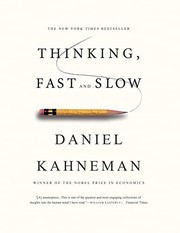
Kahneman's synthesis of behavioral economics is the cognitive science underpinning every negotiation tactic. Anchoring, loss aversion, framing effects, and the planning fallacy — understanding why these biases operate, not just that they exist, makes you harder to exploit and more honest about your own irrationality.
“…books I've recommended, highlighted to death, or forced on friends.” — Andrew Wilkinson
Source: Andrew Wilkinson's Bookshelf, neverenough.com
Recommended by: Andrew Wilkinson, Charles de Vaulx and 32 others
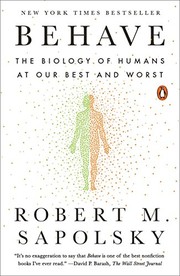
Explains an action by tracing its causes back from neurons to hormones to evolution.
“…books I've recommended, highlighted to death, or forced on friends.” — Andrew Wilkinson
Source: Andrew Wilkinson's Bookshelf, neverenough.com
Recommended by: Andrew Wilkinson, Bill Gates, Bryan Johnson and 5 others

Builds out Munger's latticework idea from primary sources.
“…books I've recommended, highlighted to death, or forced on friends.” — Andrew Wilkinson
Source: Andrew Wilkinson's Bookshelf, neverenough.com
Recommended by: Andrew Wilkinson, Nat Eliason and 8 others
Practical countermeasures rather than a catalogue of biases.
Recommended by: Mohnish Pabrai

What physics, biology, psychology and other fields teach about investing.
“here's a book I read, Robert Hagstrom, who has written a lot of books about Buffett” — Thomas Gayner
Source: Masters in Business transcript: Thomas S. Gayner, Markel Corp
Recommended by: Morgan Housel, Thomas Gayner

Synthesis of his mental-models framework, not a life.
“…books I've recommended, highlighted to death, or forced on friends.” — Andrew Wilkinson
Source: Andrew Wilkinson's Bookshelf, neverenough.com
Recommended by: Andrew Wilkinson, Christopher Bloomstran and 7 others
The only full biography; written with Munger's cooperation.
“The two I'd recommend that I thoroughly enjoyed are Damn Right: Behind the Scenes with Berkshire Hathaway Billionaire Charlie Munger by Janet Lowe” — Christopher Bloomstran
Source: Semper Augustus 2023 Letter to Clients, 'Worldly Wisdom', p. 81
Recommended by: Christopher Bloomstran, Mohnish Pabrai

Mental models from physics, biology and psychology, applied to investing.
“I'd recommend reading Robert Hagstrom's outstanding book, Latticework.” — Mohnish Pabrai
Source: Pabrai recommending Hagstrom's book on mental models
Recommended by: Mohnish Pabrai
Traits of psychopathy and where they are rewarded in business
Recommended by: Morgan Housel

Bevelin distilling observation and inference habits from Sherlock Holmes
Recommended by: Mohnish Pabrai, Patrick O'Shaughnessy and 1 other
Charlie Mungerwrote 1 book here Daniel Kahnemanwrote 1 book here
 Robert B. Cialdiniwrote 1 book here
 Mohnish Pabrairecommends 8 books hereCharlie Mungerrecommends 4 books here
 Nassim Nicholas Talebrecommends 4 books here
 Warren Buffettrecommends 4 books here
 Marc Andreessenrecommends 3 books here
 Bill Gatesrecommends 3 books here
Show all 78
 Naval Ravikantrecommends 3 books here
 Patrick Collisonrecommends 3 books here
 Alfred Linrecommends 2 books here
 Bryan Johnsonrecommends 2 books here
 Ramit Sethirecommends 2 books here
 Sam Altmanrecommends 2 books here
 Tristan Harrisrecommends 2 books here
 Jim Collinsrecommends 1 book here
 Peter Thielrecommends 1 book here
 Ray Daliorecommends 1 book here
 Seth Klarmanrecommends 1 book here
 Guy Kawasakirecommends 1 book here
 Guy Spierrecommends 1 book here
 Albert Wengerrecommends 1 book here
 Alexis Ohanianrecommends 1 book here
 Amy Hoodrecommends 1 book here
 Daniel Burkarecommends 1 book here
 Daniel Ekrecommends 1 book here
 Drew Houstonrecommends 1 book here
 Ev Williamsrecommends 1 book here
 Julie Zhuorecommends 1 book here
 Keith Raboisrecommends 1 book here
 Matt Mullenwegrecommends 1 book here
 Max Levchinrecommends 1 book here
 Nir Eyalrecommends 1 book here
 Ron Conwayrecommends 1 book here
 Ryan Petersonrecommends 1 book here
 Samy Kamkarrecommends 1 book here
 Satya Nadellarecommends 1 book here
 Stewart Brandrecommends 1 book here
 Tim Ferrissrecommends 1 book here
 Tobi Lütkerecommends 1 book here
 Vinod Khoslarecommends 1 book here
- The Psychology of Human Misjudgment (transcript)Charlie Munger · talk · Munger's twenty-five standard causes of human misjudgment.
- Charlie Munger's Operating SystemShane Parrish · talk · Munger's rules for a life that actually works.
- A Lesson on Elementary Worldly WisdomCharlie Munger · talk · Munger's USC talk on building a latticework of models.
- Peter Bevelin on Seeking WisdomShane Parrish · essay · Multidisciplinary models in the Munger tradition.