
Incentives
Munger's observation that incentives do more than tempt - they quietly reshape what people sincerely believe, which is why the broker recommending the churn would pass a polygraph. The move is to audit the payoff structure behind every recommendation, forecast and fee before weighing its content. Sincerity is no defence; read the compensation tables the way others read the CEO letter.
Start here
- FreakonomicsSteven D. Levitt, Stephen J. Dubner, 2005
- Poor Charlie's AlmanackCharles T. Munger, Peter D. Kaufman, 2005
- The OutsidersWilliam N. Thorndike, 2012
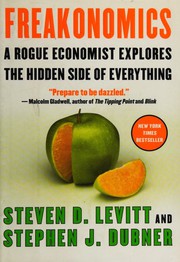
Incentives and data applied to cheating teachers, sumo wrestlers and other puzzles.
Recommended by: Mohnish Pabrai, Andrew Lokenauth and 6 others
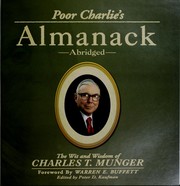
Speeches making the case for a latticework of mental models from many fields.
“…books I've recommended, highlighted to death, or forced on friends.” — Andrew Wilkinson
Source: Andrew Wilkinson's Bookshelf, neverenough.com
Recommended by: Andrew Wilkinson, Charlie Munger and 26 others
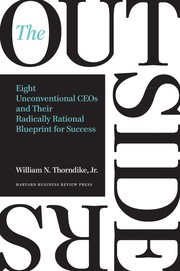
Eight CEOs who beat the market by allocating capital, not by running operations.
“…books I've recommended, highlighted to death, or forced on friends.” — Andrew Wilkinson
Source: Andrew Wilkinson's Bookshelf, neverenough.com
Recommended by: Andrew Wilkinson, Dan Loeb, Francois Rochon and 12 others
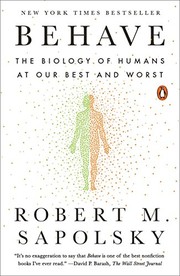
Explains an action by tracing its causes back from neurons to hormones to evolution.
“…books I've recommended, highlighted to death, or forced on friends.” — Andrew Wilkinson
Source: Andrew Wilkinson's Bookshelf, neverenough.com
Recommended by: Andrew Wilkinson, Bill Gates, Bryan Johnson and 5 others

How firms are organised, using agency, contracts and transaction-cost economics.
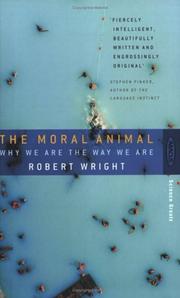
Evolutionary psychology explained through Darwin's own life and behaviour.
Recommended by: Mohnish Pabrai, Ryan Holiday, Morgan Housel and 2 others

Builds out Munger's latticework idea from primary sources.
“…books I've recommended, highlighted to death, or forced on friends.” — Andrew Wilkinson
Source: Andrew Wilkinson's Bookshelf, neverenough.com
Recommended by: Andrew Wilkinson, Nat Eliason and 8 others
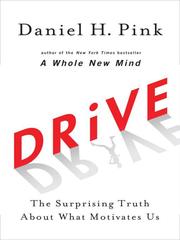
Rewards work for routine tasks; creative work runs on autonomy, mastery and purpose.
“In his excellent book, Drive, Dan Pink distinguishes between algorithmic tasks and heuristic tasks.” — Michael Mauboussin
Source: Blaming the Rat: Incentives, Motivation, and How They Interact (Legg Mason Capital Management)
Recommended by: Michael Mauboussin, Mohnish Pabrai and 3 others
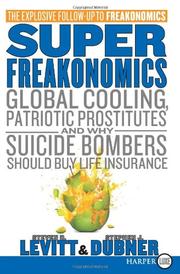
Sequel applying incentive analysis to climate, crime and altruism
“I recommend this book to anyone who reads nonfiction. It is very well written and full of great insights.” — Bill Gates
Source: Gates Notes review of SuperFreakonomics
Recommended by: Bill Gates, Mohnish Pabrai

Incerto volume 5
Recommended by: Nat Eliason, Ana Fabrega, Ben Horowitz and 12 others

Elster on mechanisms rather than laws in the social sciences
Recommended by: Mohnish Pabrai, Nassim Nicholas Taleb
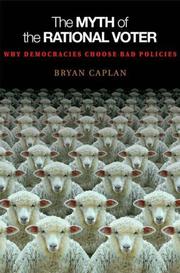
Voters hold systematic biases about economics, so democracies choose bad policies.
“The median American is a moderate national socialist – statist to the core on both economic and social policy.” — Marc Andreessen
Source: @pmarca, 'Thread: Books I've recently read and recommend'
Recommended by: Marc Andreessen, Patrick Collison
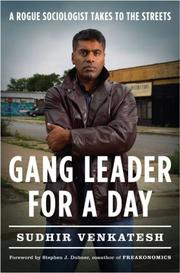
Sociologist embedded with a gang; an informal economy's incentive structure
Recommended by: Mohnish Pabrai, Mark Zuckerberg
 Charlie Mungerwrote 1 book here
 Nassim Nicholas Talebwrote 1 book here
 Mohnish Pabrairecommends 8 books here
 Marc Andreessenrecommends 4 books hereCharlie Mungerrecommends 3 books here
 Warren Buffettrecommends 3 books here
 Bill Gatesrecommends 3 books here
 Patrick Collisonrecommends 3 books hereNassim Nicholas Talebrecommends 2 books here
Show all 67
 Alfred Linrecommends 2 books here
 Keith Raboisrecommends 2 books here
 Matt Mullenwegrecommends 2 books here
 Naval Ravikantrecommends 2 books here
 Vinod Khoslarecommends 2 books here
 Ben Horowitzrecommends 1 book here
 Daniel Kahnemanrecommends 1 book here
 Reid Hoffmanrecommends 1 book here
 Guy Spierrecommends 1 book here
 Ryan Holidayrecommends 1 book here
 Simon Sinekrecommends 1 book here
 William Ackmanrecommends 1 book here
 Brian Armstrongrecommends 1 book here
 Bryan Johnsonrecommends 1 book here
 Changpeng Zhaorecommends 1 book here
 Chris Dixonrecommends 1 book here
 Daniel Ekrecommends 1 book here
 Drew Houstonrecommends 1 book here
 Ev Williamsrecommends 1 book here
 James Altucherrecommends 1 book here
 Mark Zuckerbergrecommends 1 book here
 Nir Eyalrecommends 1 book here
 Ramit Sethirecommends 1 book here
 Ruslan Koganrecommends 1 book here
 Ryan Petersonrecommends 1 book here
 Sam Altmanrecommends 1 book here
 Tim Ferrissrecommends 1 book here
 Tobi Lütkerecommends 1 book here
 Tom Bilyeurecommends 1 book here
- Bias from Incentives and ReinforcementShane Parrish · essay · Munger's claim that incentives reshape sincere belief.
- The Psychology of Human Misjudgment (transcript)Charlie Munger · talk · Munger's twenty-five standard causes of human misjudgment.
- Creating Effective Incentive SystemsShane Parrish · essay · Nucor's Ken Iverson on incentives that actually worked.
- A Look Under the HoodHoward Marks · memo · How an institution's incentives shape its portfolio.