
Updates

  1. Person pages list letters, writing, profiles and links as sortable tables with filters, and show each person's companies as links; Fund letters show each letter's description in its own column.
  2. Experts show a checked job title and a short description of each person; 30 more people have photographs.
  3. Every company, fund, university and publication the experts work for has a page listing the people there.
  4. Fund letters show each letter's thesis and filter by it; 225 person pages list the essays, columns and newsletter issues the person wrote.
  5. Person pages list every essay and newsletter issue a person wrote, and their own books as a table in List view.
  6. Recommends shows the five largest kinds of book and the rest under More; browse pictures load sooner.
  7. Podcasts and talks link the original episode, filter by Audio and video or Press, and list each publisher once.
  8. Pages are wider, Recommends has List and Grid, and a filter clicked again turns off.
  9. Book cards sit in a ruled grid with Open Library and Goodreads links and each book's one-line note.
  10. Funds is now Investors; each investor's styles are buttons that filter the table.
  11. Podcasts and talks on a person's page filter by year and publisher and show as a list or a grid of pictures.
  12. Quotes show only people's own words: 472 summaries written by list sites are gone.
  13. Country pages open from Browse again, and every link on the shelf lands on a page.
  14. Subject and person pages show their sections as tabs, and each book appears once on a person's page.
  15. Book cards show the quote, who said it and the source; grids show five cards to a row.
  16. On a phone, a menu holds the sections, search, Updates, Feedback and dark mode.
  17. Feedback takes a screenshot of the page with no browser prompt, opens a screenshot full size when you click it, and clears itself once sent.
  18. Book cards are centred, search names the topic each book sits in, and any text cut short shows whole on hover.
  19. Search groups its results by kind: people, companies, geographies, subjects, topics, books, funds, fund letters and papers.
  20. The Books table lists who recommended each book by name, and the browser tab names the section you are in.
  21. Feedback can take a screenshot of the page, or one you paste or choose, and opens in the corner beside Updates.
  22. Each rail button reopens its section where you left it, and Browse, Table and People show on every book and subject page.
  23. Filters grey out choices that hold nothing instead of hiding them, and Books › People filters by authors or recommenders.
  24. Feedback takes a subject line and up to three screenshots.
  25. Biographies are grouped by the person they are about: 41 new pages, from Abraham Lincoln to Lee Kuan Yew.
  26. Sport splits into 23 sports, and Religion into one topic per faith.
  27. Book lists show as cards: the cover, one recommendation quote and every recommender by name.
  28. Seventeen subjects that had two or three pages under different names now have one page each.
  29. Every page lists its Experts as authors and recommenders, with a link to them on the Experts tab.
  30. Economics, Financial history, Financial panics and Accounting are subjects of their own, with one page per financial crisis.
  31. Book, person and subject pages open inside the app, so the tabs stay in view.
  32. 996 more book covers, and photographs or logos for 227 more people and companies.
  33. Books › Browse shows every subject as cards, and the rail holds Fund letters, Papers, Experts, Books and Funds.
  34. Every topic over 150 books splits into narrower topics, each with a page of its own.

Send feedback

What is it?
Screenshots, up to 3 (optional)
or paste one with Ctrl+V

We use your email only to reply to you.

SuperFreakonomics

SuperFreakonomics

Steven D. Levitt, Stephen J. Dubner
2009
T4 288 pages · about 4h 48m to read Open Librarygoodreads

Sequel applying incentive analysis to climate, crime and altruism

Summary

The sequel to Freakonomics applies the same method: take a question people assume they understand, find data that bears on it, and report what the data says regardless of whether the answer is comfortable. The chapters cover the economics of street prostitution in Chicago, the effect of television on women's status in India, terrorist detection through banking data, hospital and doctor quality measurement, altruism experiments and their design flaws, the history of childbirth and hand washing, and geoengineering as a response to climate change.

The strongest material is on measurement. Levitt and Dubner show that laboratory altruism experiments produce results that reverse when subjects are given the option to take rather than only to give, which undermines a substantial literature. They show that doctor quality varies enormously and is measurable from patient outcomes if the data is examined. They show that simple cheap interventions, including hand washing and seat belts, produced larger mortality gains than expensive medical technology.

The climate chapter caused sustained controversy. The authors present geoengineering through stratospheric sulphate injection as a cheap alternative to emissions reduction, quoting Nathan Myhrvold at length, and climate scientists documented specific errors in the chapter's characterisation of solar power, of atmospheric science and of the researchers quoted. That chapter is the book's main reliability problem. More broadly, the book is a collection of contrarian findings rather than an argument, several of the underlying studies have not replicated, and the willingness to be provocative sometimes outruns the evidence.

Key takeaways 7

  1. Laboratory experiments demonstrating human altruism reverse when subjects can take as well as give, which suggests the effect measured was an artefact of the experimental design.
  2. Cheap simple interventions such as hand washing and seat belts have saved more lives than expensive medical technology.
  3. Individual doctor quality varies enormously and is measurable from patient outcome data, but hospitals do not measure it.
  4. Behaviour responds to incentives in ways that defeat well-intentioned policy, and unintended consequences are the normal case rather than the exception.
  5. Terrorists can be identified statistically from banking behaviour patterns, because they differ systematically from ordinary customers in identifiable ways.
  6. Geoengineering through stratospheric aerosols would be far cheaper than emissions reduction, a claim the authors present as underexamined and which climate scientists dispute.
  7. Television access in Indian villages was associated with measurable improvements in women's autonomy and reductions in reported acceptance of domestic violence.

Who should read it

Readers who want examples of applying data to questions where intuition misleads, treated with awareness that several chapters are contested and the climate chapter contains documented errors.

Who recommended it 2 · 2 direct

“I recommend this book to anyone who reads nonfiction. It is very well written and full of great insights.”

Similar books 6

Chosen by shared topics, the entries that hold them, and the people who recommended both.

Steven D. Levitt, Stephen D. Levitt, Stephen J. Dubner · 2005

Incentives and data applied to cheating teachers, sumo wrestlers and other puzzles.

Jon Elster · 2007

Elster on mechanisms rather than laws in the social sciences

Tom Wainwright · 2016

The drug trade as a business: how cartels handle supply chains, staff and branding.

Alan B. Krueger · 2019

The economics of the music industry, where superstar markets show up in pure form.
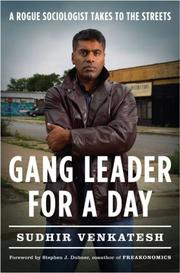
Sudhir Venkatesh · 2008

Sociologist embedded with a gang; an informal economy's incentive structure

Where it sits in the reference 2

Mental models
Economics

Topics

EconomicsSociology and CultureSocial behaviour and collective action