Updates

  1. Person pages list letters, writing, profiles and links as sortable tables with filters, and show each person's companies as links; Fund letters show each letter's description in its own column.
  2. Experts show a checked job title and a short description of each person; 30 more people have photographs.
  3. Every company, fund, university and publication the experts work for has a page listing the people there.
  4. Fund letters show each letter's thesis and filter by it; 225 person pages list the essays, columns and newsletter issues the person wrote.
  5. Person pages list every essay and newsletter issue a person wrote, and their own books as a table in List view.
  6. Recommends shows the five largest kinds of book and the rest under More; browse pictures load sooner.
  7. Podcasts and talks link the original episode, filter by Audio and video or Press, and list each publisher once.
  8. Pages are wider, Recommends has List and Grid, and a filter clicked again turns off.
  9. Book cards sit in a ruled grid with Open Library and Goodreads links and each book's one-line note.
  10. Funds is now Investors; each investor's styles are buttons that filter the table.
  11. Podcasts and talks on a person's page filter by year and publisher and show as a list or a grid of pictures.
  12. Quotes show only people's own words: 472 summaries written by list sites are gone.
  13. Country pages open from Browse again, and every link on the shelf lands on a page.
  14. Subject and person pages show their sections as tabs, and each book appears once on a person's page.
  15. Book cards show the quote, who said it and the source; grids show five cards to a row.
  16. On a phone, a menu holds the sections, search, Updates, Feedback and dark mode.
  17. Feedback takes a screenshot of the page with no browser prompt, opens a screenshot full size when you click it, and clears itself once sent.
  18. Book cards are centred, search names the topic each book sits in, and any text cut short shows whole on hover.
  19. Search groups its results by kind: people, companies, geographies, subjects, topics, books, funds, fund letters and papers.
  20. The Books table lists who recommended each book by name, and the browser tab names the section you are in.
  21. Feedback can take a screenshot of the page, or one you paste or choose, and opens in the corner beside Updates.
  22. Each rail button reopens its section where you left it, and Browse, Table and People show on every book and subject page.
  23. Filters grey out choices that hold nothing instead of hiding them, and Books › People filters by authors or recommenders.
  24. Feedback takes a subject line and up to three screenshots.
  25. Biographies are grouped by the person they are about: 41 new pages, from Abraham Lincoln to Lee Kuan Yew.
  26. Sport splits into 23 sports, and Religion into one topic per faith.
  27. Book lists show as cards: the cover, one recommendation quote and every recommender by name.
  28. Seventeen subjects that had two or three pages under different names now have one page each.
  29. Every page lists its Experts as authors and recommenders, with a link to them on the Experts tab.
  30. Economics, Financial history, Financial panics and Accounting are subjects of their own, with one page per financial crisis.
  31. Book, person and subject pages open inside the app, so the tabs stay in view.
  32. 996 more book covers, and photographs or logos for 227 more people and companies.
  33. Books › Browse shows every subject as cards, and the rail holds Fund letters, Papers, Experts, Books and Funds.
  34. Every topic over 150 books splits into narrower topics, each with a page of its own.

Send feedback

What is it?
Screenshots, up to 3 (optional)
or paste one with Ctrl+V

We use your email only to reply to you.

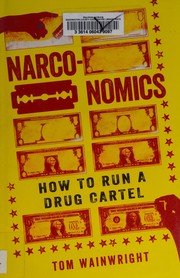
Narconomics

Narconomics

Tom Wainwright
2016
T2 310 pages · about 5h 10m to read Open Librarygoodreads

The cartels analysed as firms: supply chains, franchising, HR.

Summary

Tom Wainwright covered Mexico for The Economist and analyses the drug trade as an industry rather than as a criminal phenomenon. Each chapter takes a standard business problem and shows how cartels solve it: supply chain management, human resources, public relations, franchising, offshoring, diversification, online retail.

Several of the findings undercut standard drug policy. Wainwright shows that coca eradication in the Andes barely raises retail cocaine prices in the United States, because the farm-gate value of the coca in a kilogram of cocaine is trivial relative to the retail price, and because the cartels operate as a monopsony that pushes the cost of crop destruction back onto growers. He shows that cartels franchise their brands, with the franchisee bearing operational risk and the brand owner collecting fees, which explains why decapitating a cartel's leadership multiplies violence rather than reducing supply. He covers the growth of the dark web as a retail channel, where reputation systems produce better product quality and lower violence than street dealing, and the diversification of Mexican groups into avocados, iron ore and fuel theft.

The policy conclusions follow from the economics: interdiction at the production end is ineffective because the input is cheap, demand-side treatment is far more cost-effective per unit of consumption reduced, and legalisation transfers the industry to firms that can be taxed and regulated. Wainwright is writing accessible journalism rather than economics, and the quantitative claims deserve checking against the specialist literature. The framework is genuinely illuminating and the reporting is first-hand.

Key takeaways 7

  1. Coca eradication barely affects retail cocaine prices because the raw input is a negligible share of the final price.
  2. Cartels operate as monopsony buyers of coca leaf, which lets them push the cost of eradication back onto farmers.
  3. Cartels franchise their brands, so removing a leader multiplies competing operators and raises violence without reducing supply.
  4. Dark web drug markets produce better product quality and less violence than street dealing because reputation systems substitute for enforcement.
  5. Spending on treatment reduces consumption far more per dollar than spending on interdiction does.
  6. Cartels diversify into legal industries such as agriculture and mining because their core capability is extortion and logistics rather than drugs.
  7. Prison functions as a recruiting and coordination facility for these organisations rather than as a disruption to them.

Who should read it

Operators and analysts who want a demonstration of how standard industry analysis applies to illicit markets, and readers assessing drug policy on economic grounds.

Similar books 6

Chosen by shared topics, the entries that hold them, and the people who recommended both.

Andrew Selee · 2018

How deeply the two economies are now integrated.
Hernando de Soto · 1989

A study of Lima's informal economy and the legal costs that keep the poor outside it.

Andres Oppenheimer · 1996

Mexico in the NAFTA era: an uprising, assassinations, corruption and a $50bn bailout.
Enrique Krauze · 1997

Modern Mexico from the insurgent priests of the 1810s to Zedillo and the Zapatistas.

Julia Preston, Samuel Dillon · 2004

The citizens' movement of reformers and activists that ended Mexico's one-party rule.

Alex Cuadros · 2016

Brazil's billionaires during the boom, and what their fortunes say about inequality.

Where it sits in the reference 3

Geographies
Economics
Geographies

Topics

EconomicsSociology and CulturePolitics and GovernmentWealth, poverty and inequality