
Latin America
The useful literature is about a recurring cycle rather than any one country: commodity windfall, fiscal expansion, overvalued currency, capital flight, default. Dornbusch and Edwards named the pattern and it has held up.
Start here
- Forgotten ContinentMichael Reid, 2007
- The Other PathHernando de Soto, 1989
- The Economic History of Latin America since IndependenceVictor Bulmer-Thomas, 1994

A study of Lima's informal economy and the legal costs that keep the poor outside it.

Latin America's economies from independence to today, period by period.

Why oil booms left Venezuela, Iran, Nigeria and others with unstable states.
How Latin American populist economic programmes follow a cycle from boom to collapse.

Latin America's reforms from the 1980s debt crisis to the mid-1990s, assessed.
How Chicago-trained Chilean economists came to run economic policy under Pinochet.

Mexico in the NAFTA era: an uprising, assassinations, corruption and a $50bn bailout.

Essays on why Brazil's and Mexico's economies lagged from 1800 to 1914.
Modern Mexico from the insurgent priests of the 1810s to Zedillo and the Zapatistas.
The IMF's own former chief economist on the Fund's failures in Argentina.

The citizens' movement of reformers and activists that ended Mexico's one-party rule.
How Argentina and the IMF headed toward the 2001 default and devaluation.
Latin America is neither doomed to fail nor saved by one reform; a balanced view.
How Hugo Chavez turned Venezuela's frail democracy into a semi-authoritarian state.

Brazil's rise toward economic power and the many problems it still faces.

Brazil's billionaires during the boom, and what their fortunes say about inequality.
The drug trade as a business: how cartels handle supply chains, staff and branding.
Chile's market reforms under Pinochet and their results up to the 2019 protests.
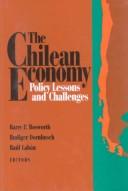
Brookings assessment of the reform package by economists who took it seriously.

The critical case; distributional costs behind the headline growth numbers.
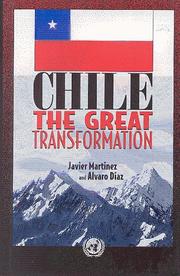
How the productive structure and business class were remade after 1973.

Stabilisation, privatisation and the authoritarian bargain that delivered them.

Two centuries of graft quantified; the cost of doing business, measured.

Why growth kept disappointing despite reform; good on institutions and productivity.

Institutional history of the stabilisation that made the commodity boom possible.

The commodity-boom decade and the institutions underneath it.

Reported from inside the Chávez government as expropriation accelerated.

Mining and hydrocarbon conflict in the Andes; the social licence problem.

The mechanics of subsidised fuel, multiple exchange rates and arbitrage as a national industry.

Insider: the economy minister who built convertibility defending the record.
How deeply the two economies are now integrated.
Why Latin America's written rules often go unenforced, and what that costs.
Insider: two federal police delegates on the Lava Jato investigation.

Reporting on the endgame: PDVSA's decay, default, sanctions and dollarisation.

Recommended by: Patrick Collison, Ben Horowitz

Property rights, land and violence as a continuous economic story.

How a New York Times reporter's coverage of Castro shaped American views of Cuba.
Recommended by: Balaji S. Srinivasan

The copper enclave before nationalisation: labour, Anaconda and Kennecott.
 Ben Horowitzrecommends 1 book here
 Balaji S. Srinivasanrecommends 1 book here
 Patrick Collisonrecommends 1 book here