Updates

  1. Person pages list letters, writing, profiles and links as sortable tables with filters, and show each person's companies as links; Fund letters show each letter's description in its own column.
  2. Experts show a checked job title and a short description of each person; 30 more people have photographs.
  3. Every company, fund, university and publication the experts work for has a page listing the people there.
  4. Fund letters show each letter's thesis and filter by it; 225 person pages list the essays, columns and newsletter issues the person wrote.
  5. Person pages list every essay and newsletter issue a person wrote, and their own books as a table in List view.
  6. Recommends shows the five largest kinds of book and the rest under More; browse pictures load sooner.
  7. Podcasts and talks link the original episode, filter by Audio and video or Press, and list each publisher once.
  8. Pages are wider, Recommends has List and Grid, and a filter clicked again turns off.
  9. Book cards sit in a ruled grid with Open Library and Goodreads links and each book's one-line note.
  10. Funds is now Investors; each investor's styles are buttons that filter the table.
  11. Podcasts and talks on a person's page filter by year and publisher and show as a list or a grid of pictures.
  12. Quotes show only people's own words: 472 summaries written by list sites are gone.
  13. Country pages open from Browse again, and every link on the shelf lands on a page.
  14. Subject and person pages show their sections as tabs, and each book appears once on a person's page.
  15. Book cards show the quote, who said it and the source; grids show five cards to a row.
  16. On a phone, a menu holds the sections, search, Updates, Feedback and dark mode.
  17. Feedback takes a screenshot of the page with no browser prompt, opens a screenshot full size when you click it, and clears itself once sent.
  18. Book cards are centred, search names the topic each book sits in, and any text cut short shows whole on hover.
  19. Search groups its results by kind: people, companies, geographies, subjects, topics, books, funds, fund letters and papers.
  20. The Books table lists who recommended each book by name, and the browser tab names the section you are in.
  21. Feedback can take a screenshot of the page, or one you paste or choose, and opens in the corner beside Updates.
  22. Each rail button reopens its section where you left it, and Browse, Table and People show on every book and subject page.
  23. Filters grey out choices that hold nothing instead of hiding them, and Books › People filters by authors or recommenders.
  24. Feedback takes a subject line and up to three screenshots.
  25. Biographies are grouped by the person they are about: 41 new pages, from Abraham Lincoln to Lee Kuan Yew.
  26. Sport splits into 23 sports, and Religion into one topic per faith.
  27. Book lists show as cards: the cover, one recommendation quote and every recommender by name.
  28. Seventeen subjects that had two or three pages under different names now have one page each.
  29. Every page lists its Experts as authors and recommenders, with a link to them on the Experts tab.
  30. Economics, Financial history, Financial panics and Accounting are subjects of their own, with one page per financial crisis.
  31. Book, person and subject pages open inside the app, so the tabs stay in view.
  32. 996 more book covers, and photographs or logos for 227 more people and companies.
  33. Books › Browse shows every subject as cards, and the rail holds Fund letters, Papers, Experts, Books and Funds.
  34. Every topic over 150 books splits into narrower topics, each with a page of its own.

Send feedback

What is it?
Screenshots, up to 3 (optional)
or paste one with Ctrl+V

We use your email only to reply to you.

The Chile Project: The Story of the Chicago

The Chile Project: The Story of the Chicago Boys and the Downfall of Neoliberalism

Sebastian Edwards
2023
T2 384 pages · about 6h 24m to read Open Librarygoodreads

Best single volume: the reforms, the 1982 crash, the pension system and the reaction against it.

Summary

Edwards, a Chilean economist at UCLA who was a student in Chile during the period and later worked at the World Bank, wrote a history of the economic reforms implemented under Pinochet and their consequences through the 2019 protests and the constitutional process.

The historical account covers the programme's origins in an exchange agreement between the Catholic University of Chile and the University of Chicago that trained a generation of Chilean economists under Friedman and Harberger; the group's role after the 1973 coup; the shock stabilisation; the privatisations; the trade liberalisation; the 1981 private pension system that replaced pay-as-you-go with individual accounts; the 1982 debt crisis that forced a large state rescue of the banking system; and the recovery and growth from the late 1980s through the 2000s, which reduced poverty from around forty per cent to under ten.

Edwards's argument is that the reforms delivered genuine and large gains in income and poverty reduction, and that they nonetheless produced a political failure. Inequality remained very high. The pension system delivered replacement rates far below what people had been led to expect, because contribution densities were low and fees were high. Education and healthcare became stratified by ability to pay. The result was a population with rising incomes and rising resentment, which produced the 2019 protests and the rejection of the model.

He is unsparing about the human rights context and does not treat the economic record as separable from the dictatorship that imposed it.

The book is written by someone who was present and who shares much of the economics, which gives it both insight and a perspective. The constitutional process it ends with resolved differently from what appeared likely at the time of writing.

Key takeaways 7

  1. Chile's reforms substantially raised incomes and reduced poverty from around forty per cent to under ten over three decades.
  2. The 1981 private pension system delivered replacement rates far below what people expected because contribution densities were low and fees were high.
  3. The 1982 crisis required a large state rescue of the banking system, which contradicted the programme's own principles.
  4. High inequality persisted through the entire period of growth, which is what eventually produced the political rejection.
  5. Stratifying education and healthcare by ability to pay generated resentment that rising incomes did not offset.
  6. The reforms were implemented by a dictatorship that suppressed the opposition they would otherwise have faced.
  7. A programme can succeed on its stated economic measures and still fail politically if the gains are distributed in a way the population rejects.

Who should read it

Investors and analysts working in Latin America who want an insider's assessment of what market reforms delivered in Chile and why they were eventually rejected.

Similar books 6

Chosen by shared topics, the entries that hold them, and the people who recommended both.
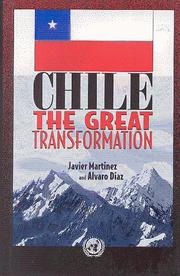
Javier Martínez, Alvaro Díaz · 1996

How the productive structure and business class were remade after 1973.
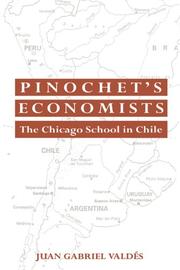
Juan Gabriel Valdés · 1995

How Chicago-trained Chilean economists came to run economic policy under Pinochet.

Joseph Collins, John Lear · 1995

The critical case; distributional costs behind the headline growth numbers.
Barry P. Bosworth, Rudiger Dornbusch, Raúl Labán · 1994

Brookings assessment of the reform package by economists who took it seriously.
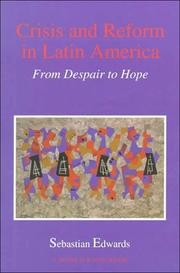
Sebastian Edwards · 1995

Latin America's reforms from the 1980s debt crisis to the mid-1990s, assessed.
Sebastian Edwards · 2010

Why growth kept disappointing despite reform; good on institutions and productivity.

Where it sits in the reference 3

Geographies
Geographies
Economics

Topics

EconomicsGeneral HistoryPolitics and GovernmentAsia, Africa, Latin America and the Middle East