Updates

  1. Person pages list letters, writing, profiles and links as sortable tables with filters, and show each person's companies as links; Fund letters show each letter's description in its own column.
  2. Experts show a checked job title and a short description of each person; 30 more people have photographs.
  3. Every company, fund, university and publication the experts work for has a page listing the people there.
  4. Fund letters show each letter's thesis and filter by it; 225 person pages list the essays, columns and newsletter issues the person wrote.
  5. Person pages list every essay and newsletter issue a person wrote, and their own books as a table in List view.
  6. Recommends shows the five largest kinds of book and the rest under More; browse pictures load sooner.
  7. Podcasts and talks link the original episode, filter by Audio and video or Press, and list each publisher once.
  8. Pages are wider, Recommends has List and Grid, and a filter clicked again turns off.
  9. Book cards sit in a ruled grid with Open Library and Goodreads links and each book's one-line note.
  10. Funds is now Investors; each investor's styles are buttons that filter the table.
  11. Podcasts and talks on a person's page filter by year and publisher and show as a list or a grid of pictures.
  12. Quotes show only people's own words: 472 summaries written by list sites are gone.
  13. Country pages open from Browse again, and every link on the shelf lands on a page.
  14. Subject and person pages show their sections as tabs, and each book appears once on a person's page.
  15. Book cards show the quote, who said it and the source; grids show five cards to a row.
  16. On a phone, a menu holds the sections, search, Updates, Feedback and dark mode.
  17. Feedback takes a screenshot of the page with no browser prompt, opens a screenshot full size when you click it, and clears itself once sent.
  18. Book cards are centred, search names the topic each book sits in, and any text cut short shows whole on hover.
  19. Search groups its results by kind: people, companies, geographies, subjects, topics, books, funds, fund letters and papers.
  20. The Books table lists who recommended each book by name, and the browser tab names the section you are in.
  21. Feedback can take a screenshot of the page, or one you paste or choose, and opens in the corner beside Updates.
  22. Each rail button reopens its section where you left it, and Browse, Table and People show on every book and subject page.
  23. Filters grey out choices that hold nothing instead of hiding them, and Books › People filters by authors or recommenders.
  24. Feedback takes a subject line and up to three screenshots.
  25. Biographies are grouped by the person they are about: 41 new pages, from Abraham Lincoln to Lee Kuan Yew.
  26. Sport splits into 23 sports, and Religion into one topic per faith.
  27. Book lists show as cards: the cover, one recommendation quote and every recommender by name.
  28. Seventeen subjects that had two or three pages under different names now have one page each.
  29. Every page lists its Experts as authors and recommenders, with a link to them on the Experts tab.
  30. Economics, Financial history, Financial panics and Accounting are subjects of their own, with one page per financial crisis.
  31. Book, person and subject pages open inside the app, so the tabs stay in view.
  32. 996 more book covers, and photographs or logos for 227 more people and companies.
  33. Books › Browse shows every subject as cards, and the rail holds Fund letters, Papers, Experts, Books and Funds.
  34. Every topic over 150 books splits into narrower topics, each with a page of its own.

Send feedback

What is it?
Screenshots, up to 3 (optional)
or paste one with Ctrl+V

We use your email only to reply to you.

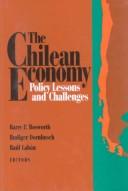
The Chilean Economy: Policy Lessons and Chal

The Chilean Economy: Policy Lessons and Challenges

Barry P. Bosworth, Rudiger Dornbusch, Raúl Labán
1994
T3 449 pages · about 7h 29m to read Open Librarygoodreads

Brookings assessment of the reform package by economists who took it seriously.

Summary

Barry Bosworth, Rudiger Dornbusch and Raul Laban edited this Brookings volume assessing Chilean economic policy at the point when the country had returned to democracy and had become the standard reference case for market reform in Latin America.

The chapters cover the major policy areas. Macroeconomic management and the central bank's independence and its use of capital controls on short-term inflows, which became a widely discussed instrument. Trade liberalisation and export diversification beyond copper. The privatised pension system introduced in 1981 and its effects on savings, capital markets and coverage. Financial sector regulation following the 1982 banking crisis, which had required a large state rescue and which produced Chile's subsequently strict supervision. Labour markets, poverty and income distribution, where the record was substantially worse than the growth record.

The volume is empirical and the contributors do not agree with each other on all points. Its assessment is that Chile's growth resulted from sustained policy across governments rather than from any single reform, that the 1982 crisis taught lessons that the country applied and its neighbours did not, and that the distributional record remained poor. It was published in 1994, so the subsequent copper boom, the pension system's coverage problems and the political reaction of the 2010s and 2020s fall outside it.

Key takeaways 7

  1. Chile's growth came from sustained policy continuity across governments rather than from the initial reforms alone.
  2. The 1982 banking crisis required a large state rescue and produced the strict financial supervision that later protected the country.
  3. Capital controls on short-term inflows were used as a macroeconomic instrument and are assessed here with mixed conclusions.
  4. The privatised pension system raised national savings and developed capital markets while leaving coverage gaps.
  5. Export diversification beyond copper was a deliberate policy achievement rather than an automatic consequence of liberalisation.
  6. Chile's distributional record remained poor despite its growth record, which the contributors treat as a policy failure rather than an inevitability.
  7. The contributors disagree with each other, which makes the volume more useful than a single-author assessment.

Who should read it

Analysts of Latin American reform who want an empirical multi-author assessment of the region's most-cited policy case.

Similar books 6

Chosen by shared topics, the entries that hold them, and the people who recommended both.
Joseph Collins, John Lear · 1995

The critical case; distributional costs behind the headline growth numbers.
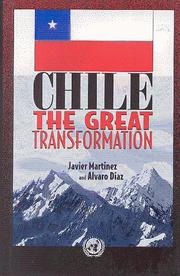
Javier Martínez, Alvaro Díaz · 1996

How the productive structure and business class were remade after 1973.
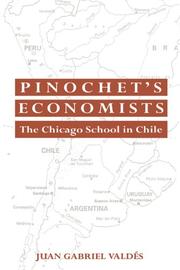
Juan Gabriel Valdés · 1995

How Chicago-trained Chilean economists came to run economic policy under Pinochet.

Sebastian Edwards · 2023

Chile's market reforms under Pinochet and their results up to the 2019 protests.
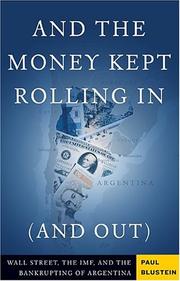
Paul Blustein · 2005

How Argentina and the IMF headed toward the 2001 default and devaluation.
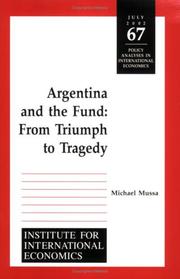
Michael Mussa · 2002

The IMF's own former chief economist on the Fund's failures in Argentina.

Where it sits in the reference 3

Geographies
Economics
Geographies

Topics

EconomicsPolitics and Government