
Updates

  1. Person pages list letters, writing, profiles and links as sortable tables with filters, and show each person's companies as links; Fund letters show each letter's description in its own column.
  2. Experts show a checked job title and a short description of each person; 30 more people have photographs.
  3. Every company, fund, university and publication the experts work for has a page listing the people there.
  4. Fund letters show each letter's thesis and filter by it; 225 person pages list the essays, columns and newsletter issues the person wrote.
  5. Person pages list every essay and newsletter issue a person wrote, and their own books as a table in List view.
  6. Recommends shows the five largest kinds of book and the rest under More; browse pictures load sooner.
  7. Podcasts and talks link the original episode, filter by Audio and video or Press, and list each publisher once.
  8. Pages are wider, Recommends has List and Grid, and a filter clicked again turns off.
  9. Book cards sit in a ruled grid with Open Library and Goodreads links and each book's one-line note.
  10. Funds is now Investors; each investor's styles are buttons that filter the table.
  11. Podcasts and talks on a person's page filter by year and publisher and show as a list or a grid of pictures.
  12. Quotes show only people's own words: 472 summaries written by list sites are gone.
  13. Country pages open from Browse again, and every link on the shelf lands on a page.
  14. Subject and person pages show their sections as tabs, and each book appears once on a person's page.
  15. Book cards show the quote, who said it and the source; grids show five cards to a row.
  16. On a phone, a menu holds the sections, search, Updates, Feedback and dark mode.
  17. Feedback takes a screenshot of the page with no browser prompt, opens a screenshot full size when you click it, and clears itself once sent.
  18. Book cards are centred, search names the topic each book sits in, and any text cut short shows whole on hover.
  19. Search groups its results by kind: people, companies, geographies, subjects, topics, books, funds, fund letters and papers.
  20. The Books table lists who recommended each book by name, and the browser tab names the section you are in.
  21. Feedback can take a screenshot of the page, or one you paste or choose, and opens in the corner beside Updates.
  22. Each rail button reopens its section where you left it, and Browse, Table and People show on every book and subject page.
  23. Filters grey out choices that hold nothing instead of hiding them, and Books › People filters by authors or recommenders.
  24. Feedback takes a subject line and up to three screenshots.
  25. Biographies are grouped by the person they are about: 41 new pages, from Abraham Lincoln to Lee Kuan Yew.
  26. Sport splits into 23 sports, and Religion into one topic per faith.
  27. Book lists show as cards: the cover, one recommendation quote and every recommender by name.
  28. Seventeen subjects that had two or three pages under different names now have one page each.
  29. Every page lists its Experts as authors and recommenders, with a link to them on the Experts tab.
  30. Economics, Financial history, Financial panics and Accounting are subjects of their own, with one page per financial crisis.
  31. Book, person and subject pages open inside the app, so the tabs stay in view.
  32. 996 more book covers, and photographs or logos for 227 more people and companies.
  33. Books › Browse shows every subject as cards, and the rail holds Fund letters, Papers, Experts, Books and Funds.
  34. Every topic over 150 books splits into narrower topics, each with a page of its own.

Send feedback

What is it?
Screenshots, up to 3 (optional)
or paste one with Ctrl+V

We use your email only to reply to you.

Chile's Free-Market Miracle: A Second Look

Chile's Free-Market Miracle: A Second Look

Joseph Collins, John Lear
1995
T3 320 pages · about 5h 20m to read Open Librarygoodreads

The critical case; distributional costs behind the headline growth numbers.

Summary

The reference has not verified this book in detail; the summary states only what the title, author and subject establish.

Collins and Lear wrote a critical assessment of the Chilean economic model, published in 1995 when the country was widely presented as a development success.

Their argument is that the aggregate figures conceal what happened to most Chileans. They examine the distribution of the growth, arguing that real wages took until the 1990s to recover their pre-1973 levels, that income inequality increased substantially, that poverty rose sharply during the 1982 crisis and the adjustment that followed, and that the growth was concentrated in export sectors with limited employment effects.

They examine specific sectors. In agriculture, the reversal of land reform transferred land to larger commercial operators, and the fruit export industry that resulted employs a largely seasonal, temporary and low-paid workforce, disproportionately women, without the employment security that the earlier arrangements had provided. In forestry and fishing, they document resource depletion and the environmental effects of the extraction model. In mining, they examine the terms on which foreign investment was permitted and what share of the resource rent remained in Chile.

They also examine the social sectors: the privatised pension system, the education voucher system and the health system, arguing that each produced stratification by income and that the state retained the costs while the private sector took the profitable segments.

The book argues one position and was written to counter the prevailing account. Chile's subsequent record complicates both sides: poverty fell very substantially from the 1990s onward, which the critics did not anticipate, while inequality remained high and the pension system's inadequacy became the central political issue, which the defenders did not. Edwards's The Chile Project, also in this reference, is the more balanced later assessment.

Key takeaways 7

  1. Real wages in Chile took until the 1990s to recover their pre-1973 levels despite the growth in aggregate output.
  2. Income inequality increased substantially during the period presented internationally as a development success.
  3. The fruit export industry created seasonal, temporary and low-paid employment rather than the secure work the earlier arrangements had provided.
  4. Reversing land reform transferred agricultural land to larger commercial operators rather than restoring a prior distribution.
  5. Forestry and fishing expansion depleted resources at rates the extraction model did not account for.
  6. Privatised pensions, education vouchers and health provision each produced stratification by income.
  7. The state retained the unprofitable segments of social provision while the private sector took the profitable ones.

Who should read it

Readers examining the Chilean model who want the critical assessment from the period, alongside later and more balanced accounts.

Similar books 6

Chosen by shared topics, the entries that hold them, and the people who recommended both.
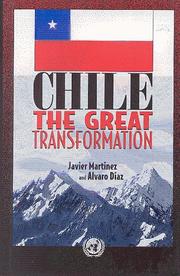
Javier Martínez, Alvaro Díaz · 1996

How the productive structure and business class were remade after 1973.
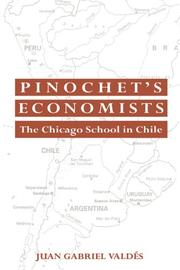
Juan Gabriel Valdés · 1995

How Chicago-trained Chilean economists came to run economic policy under Pinochet.

Sebastian Edwards · 2023

Chile's market reforms under Pinochet and their results up to the 2019 protests.
Barry P. Bosworth, Rudiger Dornbusch, Raúl Labán · 1994

Brookings assessment of the reform package by economists who took it seriously.
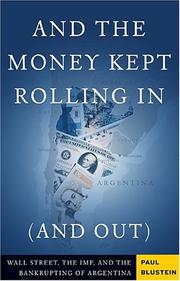
Paul Blustein · 2005

How Argentina and the IMF headed toward the 2001 default and devaluation.

Michael Mussa · 2002

The IMF's own former chief economist on the Fund's failures in Argentina.

Where it sits in the reference 3

Geographies
Economics
Geographies

Topics

EconomicsPolitics and Government