Updates

  1. Person pages list letters, writing, profiles and links as sortable tables with filters, and show each person's companies as links; Fund letters show each letter's description in its own column.
  2. Experts show a checked job title and a short description of each person; 30 more people have photographs.
  3. Every company, fund, university and publication the experts work for has a page listing the people there.
  4. Fund letters show each letter's thesis and filter by it; 225 person pages list the essays, columns and newsletter issues the person wrote.
  5. Person pages list every essay and newsletter issue a person wrote, and their own books as a table in List view.
  6. Recommends shows the five largest kinds of book and the rest under More; browse pictures load sooner.
  7. Podcasts and talks link the original episode, filter by Audio and video or Press, and list each publisher once.
  8. Pages are wider, Recommends has List and Grid, and a filter clicked again turns off.
  9. Book cards sit in a ruled grid with Open Library and Goodreads links and each book's one-line note.
  10. Funds is now Investors; each investor's styles are buttons that filter the table.
  11. Podcasts and talks on a person's page filter by year and publisher and show as a list or a grid of pictures.
  12. Quotes show only people's own words: 472 summaries written by list sites are gone.
  13. Country pages open from Browse again, and every link on the shelf lands on a page.
  14. Subject and person pages show their sections as tabs, and each book appears once on a person's page.
  15. Book cards show the quote, who said it and the source; grids show five cards to a row.
  16. On a phone, a menu holds the sections, search, Updates, Feedback and dark mode.
  17. Feedback takes a screenshot of the page with no browser prompt, opens a screenshot full size when you click it, and clears itself once sent.
  18. Book cards are centred, search names the topic each book sits in, and any text cut short shows whole on hover.
  19. Search groups its results by kind: people, companies, geographies, subjects, topics, books, funds, fund letters and papers.
  20. The Books table lists who recommended each book by name, and the browser tab names the section you are in.
  21. Feedback can take a screenshot of the page, or one you paste or choose, and opens in the corner beside Updates.
  22. Each rail button reopens its section where you left it, and Browse, Table and People show on every book and subject page.
  23. Filters grey out choices that hold nothing instead of hiding them, and Books › People filters by authors or recommenders.
  24. Feedback takes a subject line and up to three screenshots.
  25. Biographies are grouped by the person they are about: 41 new pages, from Abraham Lincoln to Lee Kuan Yew.
  26. Sport splits into 23 sports, and Religion into one topic per faith.
  27. Book lists show as cards: the cover, one recommendation quote and every recommender by name.
  28. Seventeen subjects that had two or three pages under different names now have one page each.
  29. Every page lists its Experts as authors and recommenders, with a link to them on the Experts tab.
  30. Economics, Financial history, Financial panics and Accounting are subjects of their own, with one page per financial crisis.
  31. Book, person and subject pages open inside the app, so the tabs stay in view.
  32. 996 more book covers, and photographs or logos for 227 more people and companies.
  33. Books › Browse shows every subject as cards, and the rail holds Fund letters, Papers, Experts, Books and Funds.
  34. Every topic over 150 books splits into narrower topics, each with a page of its own.

Send feedback

What is it?
Screenshots, up to 3 (optional)
or paste one with Ctrl+V

We use your email only to reply to you.

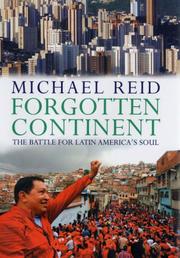
Forgotten Continent

Forgotten Continent

Michael Reid
2007
T2 392 pages · about 6h 32m to read Open Librarygoodreads

The Economist's survey of why Latin America keeps underperforming.

Summary

Reid covered Latin America for The Economist for decades and wrote this as a corrective to two opposing views of the region: that it is condemned by structural forces to underdevelopment, and that any particular reform programme will transform it.

His argument is that Latin America made genuine progress between the 1980s and the 2000s that outside observers largely ignored. Military governments gave way to durable democracies across almost the whole region. Hyperinflation was defeated. Trade was opened, state enterprises sold and macroeconomic policy stabilised. Poverty fell and social programmes including Brazil's Bolsa Familia and Mexico's Progresa demonstrated that conditional cash transfers could reduce it measurably at modest cost.

He is equally clear about what did not change. Inequality remained the highest of any region. Tax collection stayed low, particularly on income and property, which left states unable to fund the public goods that would broaden opportunity. Education quality remained poor. Crime and weak judicial institutions undermined both investment and public confidence. Productivity growth was disappointing even in the reform period, and the commodity boom of the 2000s masked the failure to diversify.

Reid rejects the standard accounts on both sides. He argues the Washington Consensus reforms were neither the disaster their critics claim nor sufficient on their own, because they addressed macroeconomic stability without building state capacity. He also argues that the populist alternative, which he examines through Chavez's Venezuela, spends commodity revenue on consumption and leaves the underlying weaknesses intact.

The book was written during the commodity boom, and the subsequent decade, with the Venezuelan collapse, Brazil's corruption crisis and recession, and renewed political volatility, tested his qualified optimism. He published a revised edition. Specialists find the treatment of individual countries necessarily thin given the scope.

Key takeaways 7

  1. Latin America consolidated democracy and defeated hyperinflation between the 1980s and 2000s, and outside commentary largely failed to register it.
  2. Inequality rather than poverty is the region's defining economic characteristic, and it persisted through the reform period.
  3. Low tax collection, especially on income and property, leaves states unable to fund the public goods that would broaden opportunity.
  4. Conditional cash transfer programmes reduced poverty measurably at low fiscal cost and were the region's main policy innovation.
  5. Market reforms delivered macroeconomic stability without building the state capacity that would have converted it into growth.
  6. Commodity booms fund consumption and postpone diversification, which is why each one is followed by the same problems.
  7. Weak judicial institutions and high crime depress investment independently of macroeconomic policy.

Who should read it

Investors and operators entering Latin American markets who need a balanced regional assessment rather than a case for or against reform.

Similar books 6

Chosen by shared topics, the entries that hold them, and the people who recommended both.
Larry Rohter · 2012

The commodity-boom decade and the institutions underneath it.
Michael Reid · 2014

Brazil's rise toward economic power and the many problems it still faces.

Jorge Pontes, Marcio Anselmo · 2022

Insider: two federal police delegates on the Lava Jato investigation.
Riordan Roett · 2010

Institutional history of the stabilisation that made the commodity boom possible.
Paul Blustein · 2005

How Argentina and the IMF headed toward the 2001 default and devaluation.

Michael Mussa · 2002

The IMF's own former chief economist on the Fund's failures in Argentina.

Where it sits in the reference 3

Geographies
Geographies
Geographies

Topics

General HistoryPolitics and GovernmentAsia, Africa, Latin America and the Middle East