Updates

  1. Person pages list letters, writing, profiles and links as sortable tables with filters, and show each person's companies as links; Fund letters show each letter's description in its own column.
  2. Experts show a checked job title and a short description of each person; 30 more people have photographs.
  3. Every company, fund, university and publication the experts work for has a page listing the people there.
  4. Fund letters show each letter's thesis and filter by it; 225 person pages list the essays, columns and newsletter issues the person wrote.
  5. Person pages list every essay and newsletter issue a person wrote, and their own books as a table in List view.
  6. Recommends shows the five largest kinds of book and the rest under More; browse pictures load sooner.
  7. Podcasts and talks link the original episode, filter by Audio and video or Press, and list each publisher once.
  8. Pages are wider, Recommends has List and Grid, and a filter clicked again turns off.
  9. Book cards sit in a ruled grid with Open Library and Goodreads links and each book's one-line note.
  10. Funds is now Investors; each investor's styles are buttons that filter the table.
  11. Podcasts and talks on a person's page filter by year and publisher and show as a list or a grid of pictures.
  12. Quotes show only people's own words: 472 summaries written by list sites are gone.
  13. Country pages open from Browse again, and every link on the shelf lands on a page.
  14. Subject and person pages show their sections as tabs, and each book appears once on a person's page.
  15. Book cards show the quote, who said it and the source; grids show five cards to a row.
  16. On a phone, a menu holds the sections, search, Updates, Feedback and dark mode.
  17. Feedback takes a screenshot of the page with no browser prompt, opens a screenshot full size when you click it, and clears itself once sent.
  18. Book cards are centred, search names the topic each book sits in, and any text cut short shows whole on hover.
  19. Search groups its results by kind: people, companies, geographies, subjects, topics, books, funds, fund letters and papers.
  20. The Books table lists who recommended each book by name, and the browser tab names the section you are in.
  21. Feedback can take a screenshot of the page, or one you paste or choose, and opens in the corner beside Updates.
  22. Each rail button reopens its section where you left it, and Browse, Table and People show on every book and subject page.
  23. Filters grey out choices that hold nothing instead of hiding them, and Books › People filters by authors or recommenders.
  24. Feedback takes a subject line and up to three screenshots.
  25. Biographies are grouped by the person they are about: 41 new pages, from Abraham Lincoln to Lee Kuan Yew.
  26. Sport splits into 23 sports, and Religion into one topic per faith.
  27. Book lists show as cards: the cover, one recommendation quote and every recommender by name.
  28. Seventeen subjects that had two or three pages under different names now have one page each.
  29. Every page lists its Experts as authors and recommenders, with a link to them on the Experts tab.
  30. Economics, Financial history, Financial panics and Accounting are subjects of their own, with one page per financial crisis.
  31. Book, person and subject pages open inside the app, so the tabs stay in view.
  32. 996 more book covers, and photographs or logos for 227 more people and companies.
  33. Books › Browse shows every subject as cards, and the rail holds Fund letters, Papers, Experts, Books and Funds.
  34. Every topic over 150 books splits into narrower topics, each with a page of its own.

Send feedback

What is it?
Screenshots, up to 3 (optional)
or paste one with Ctrl+V

We use your email only to reply to you.

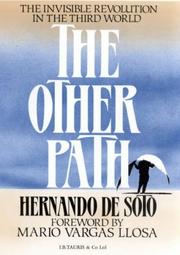
The Other Path

The Other Path

Hernando de Soto
1989
T1 280 pages · about 4h 40m to read Open Librarygoodreads

Field measurement of Lima's informal economy and the cost of legality; the founding text.

Summary

De Soto and his Institute for Liberty and Democracy studied the informal economy of Lima, and this book reports what they found. It was written during Peru's conflict with the Shining Path, and the title contrasts the informal economy with that movement's armed alternative.

The empirical work is the book's foundation. De Soto's researchers measured the extent of informality: the share of housing built outside the legal system, the proportion of transport provided by unlicensed operators, the size of informal retail markets, and the value of assets held without title. They then measured the cost of legality directly by attempting to register a small garment business, following every required step, which took two hundred and eighty-nine days of full-time effort and payments equivalent to many months of the minimum wage, with bribes solicited repeatedly.

The argument follows from the measurement. Informality is not a cultural characteristic or a preference for evasion but a rational response to a legal system whose costs exceed its benefits for most people. The informal sector develops its own institutions, including extralegal property conventions, contract enforcement and organisations, which function well enough to sustain large-scale economic activity. De Soto argues that these institutions are the basis on which a functioning legal system should be built, and that the state's mercantilist regulation, which he traces to colonial administration, exists to protect established interests rather than to serve any public purpose.

The book influenced Peruvian policy substantially and de Soto's institute worked on simplification of business registration.

The titling and formalisation agenda that developed from this work has had disappointing results in later evaluations, particularly on credit access. Critics also argue that de Soto understates the informal sector's own exploitation and that formalisation can dispossess as easily as it enfranchises.

Key takeaways 7

  1. Informality is a rational response to legal costs that exceed legal benefits, not a cultural preference or a form of evasion.
  2. Registering a small business in Lima required two hundred and eighty-nine days of full-time effort, which the researchers measured directly.
  3. The informal sector develops its own property conventions and contract enforcement, which function well enough to sustain large-scale activity.
  4. Extralegal institutions should be the basis on which formal law is built rather than something formal law replaces.
  5. Regulation in this setting protects established interests rather than serving any stated public purpose.
  6. Informal operators supply housing, transport and retail at scale where the formal sector does not.
  7. The mercantilist legal structure of Latin American states descends from colonial administration and has not been redesigned since.

Who should read it

Investors and operators in emerging markets who want measured evidence of what informality costs and why it persists.

Similar books 6

Chosen by shared topics, the entries that hold them, and the people who recommended both.
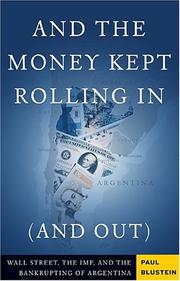
Paul Blustein · 2005

How Argentina and the IMF headed toward the 2001 default and devaluation.

Michael Mussa · 2002

The IMF's own former chief economist on the Fund's failures in Argentina.

Domingo Cavallo, Sonia Cavallo Runde · 2017

Insider: the economy minister who built convertibility defending the record.

Joseph Collins, John Lear · 1995

The critical case; distributional costs behind the headline growth numbers.

Javier Martínez, Alvaro Díaz · 1996

How the productive structure and business class were remade after 1973.

Sebastian Edwards · 1995

Latin America's reforms from the 1980s debt crisis to the mid-1990s, assessed.

Where it sits in the reference 3

Geographies
Geographies
Economics

Topics

EconomicsPolitics and GovernmentSociology and CultureWealth, poverty and inequality