A Few Lessons from Sherlock Holmes
Bevelin distilling observation and inference habits from Sherlock Holmes
Summary
Bevelin extracts a method of reasoning from Conan Doyle's Holmes stories, assembling quotations and organising them into principles about observation, inference and the avoidance of error. It is very short and consists largely of quotation with Bevelin's connecting commentary.
The principles include that observation differs from seeing, since most people look without noticing; that data should be gathered before theories are formed, because a theory formed early causes facts to be selected to fit it; that the absence of something expected is evidence, which is the point of the dog that did not bark; that the improbable and the impossible are different categories, and that eliminating the impossible leaves the truth however improbable; that a small number of specific observations can support a large inference if the connection is sound; and that the obvious explanation should be tested rather than assumed.
Bevelin connects these to investing throughout, following the same approach he took in Seeking Wisdom, and adds material on checklists and on the difference between plausible and demonstrated.
The book is a compilation and Bevelin does not claim otherwise. Readers who have read the Holmes stories will find the quotations familiar. The transfer from fiction to actual reasoning has an obvious problem, since Conan Doyle constructed both the puzzles and the solutions, which means Holmes' method always works because the author arranged it. Bevelin does not address this. As a short reminder of observational discipline and of the danger of theorising before data, it does its job.
Key takeaways 8
- Observation differs from seeing, and most people pass over the details that would settle a question.
- Theories formed before the data is gathered cause facts to be selected to fit them rather than tested against them.
- The absence of something that should have been present is evidence, and it is systematically overlooked because nothing draws attention to it.
- Eliminating what is impossible leaves the truth however improbable it appears, which requires distinguishing improbable from impossible.
- A large inference can rest on a small number of specific observations provided the connecting reasoning is sound.
- The obvious explanation should be tested rather than assumed, since familiarity substitutes for evidence.
- Knowledge stored and organised in advance is what allows an observation to be interpreted at the moment it occurs.
- The method appears reliable in fiction because the author constructed both the puzzle and the solution, which the book does not address.
Who should read it
Investors who want a short reminder about observational discipline and the danger of theorising before gathering data.
About Peter Bevelin
Swedish investor and author who assembles the psychology, physics and biology behind Charlie Munger's approach to thinking.
Seeking Wisdom collects the misjudgement patterns, cross-disciplinary principles and checklists underlying Munger's method, sourced back to Darwin, Feynman, Munger and Buffett with citations throughout. The Sherlock Holmes volume drills the same procedure as observation and inference practice.
Who recommended it 3 · 2 direct
Similar books 6
Chosen by shared topics, the entries that hold them, and the people who recommended both.
Builds out Munger's latticework idea from primary sources.
“…books I've recommended, highlighted to death, or forced on friends.” — Andrew Wilkinson
Source: Andrew Wilkinson's Bookshelf, neverenough.com
Recommended by: Andrew Wilkinson, Nat Eliason and 8 others
Eight mistakes experienced decision-makers repeat, and a correction for each.
Recommended by: Mohnish Pabrai and 1 other
Kahneman's synthesis of behavioral economics is the cognitive science underpinning every negotiation tactic. Anchoring, loss aversion, framing effects, and the planning fallacy — understanding why these biases operate, not just that they exist, makes you harder to exploit and more honest about your own irrationality.
“…books I've recommended, highlighted to death, or forced on friends.” — Andrew Wilkinson
Source: Andrew Wilkinson's Bookshelf, neverenough.com
Recommended by: Andrew Wilkinson, Charles de Vaulx and 32 others

Dialogue form; Munger's inversion habit worked through systematically.
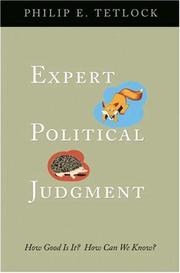
A 20-year test of 28,000 expert forecasts: foxes with many models beat hedgehogs.
“All pundits and commentators should publish their prediction track records, yet don't. What to pay attention to and what to ignore.” — Marc Andreessen
Source: @pmarca, 'Thread: Books I've recently read and recommend'
Recommended by: Marc Andreessen, Michael Mauboussin and 2 others
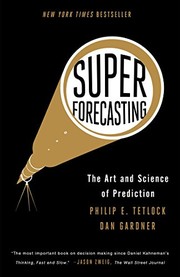
The Good Judgment Project; the practices that measurably improve forecasts.
Recommended by: Patrick Collison and 9 others
Where it sits in the reference 4
Topics