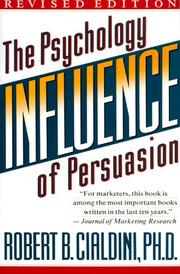
Influence: The Psychology of Persuasion
Cialdini's six principles — reciprocity, commitment, social proof, authority, liking, scarcity — are the persuasion levers that operate before formal negotiation begins. Understanding them is partly defensive (recognizing when they're being used on you) and partly offensive (deploying them ethically).
Summary
Cialdini organises compliance techniques into six principles: reciprocation, commitment and consistency, social proof, liking, authority and scarcity. He argues that each principle exists because it usually produces good decisions cheaply, and that compliance professionals exploit the shortcut by supplying the trigger without the substance behind it.
The research combines laboratory experiments with three years Cialdini spent in the field, training as a car salesman, a fundraiser and a telemarketer to observe what practitioners actually do. Each chapter pairs published studies with observed tactics. The reciprocation chapter covers the Hare Krishna flower gift and the rejection-then-retreat technique. The consistency chapter covers foot-in-the-door and the lowball tactic used in car sales. The social proof chapter covers pluralistic ignorance and bystander effects. The scarcity chapter covers limited-number and deadline tactics, and psychological reactance.
The book works in two directions. It gives sellers and fundraisers a set of tools, and it gives buyers a defence, since Cialdini explicitly tells readers how to detect and refuse each trigger. For operators the most useful material is on commitment devices, particularly the finding that commitments that are active, public, effortful and freely chosen change self-image and change later behaviour.
Some supporting studies have weakened since 1984. Certain social proof and priming results have replicated poorly, and the famous ones deserve checking before citation. The core principles have held up better than the individual experiments. A later edition adds unity as a seventh principle. The tactics chapters date the book in a useful way, because they show mid-century sales practice in detail that modern marketing books rarely provide.
Key takeaways 8
- People comply through automatic trigger responses that usually work well but can be activated deliberately by anyone who knows them.
- An unrequested gift creates an obligation to return the favour, and the person who gives first controls what counts as repayment.
- A concession after an extreme first request produces reciprocal concession, so opening high and retreating raises agreement rates.
- Once people commit publicly and actively to a position, they change their self-image to match and defend it against later evidence.
- People decide what is correct by watching what similar others do, and this dependence rises when the situation is ambiguous.
- Perceived authority produces compliance even when the authority is only a symbol such as a title, a uniform or a car.
- Items become more desirable as they become less available, and newly imposed scarcity works better than constant scarcity.
- Defence against these tactics requires noticing when the trigger has been supplied without the substance and then refusing the transaction outright.
Who should read it
Founders and operators who sell, raise money or negotiate, and who want the mechanics of persuasion stated precisely enough to use and to resist.
About Robert B. Cialdini
Regents' professor emeritus of psychology and marketing at Arizona State University who studies compliance and influence.
Influence organises the persuasion research into six principles - reciprocity, commitment and consistency, social proof, authority, liking, scarcity - each tested experimentally and observed in the field among salespeople, fundraisers and negotiators. Pre-Suasion adds the timing question: what an audience attends to immediately before a request changes how they answer it.
Who recommended it 31 · 9 direct
“…books I've recommended, highlighted to death, or forced on friends.”
“There are a couple of valuable resources when it comes to behavioral biases: Cialdini's work on the influence of psychology in human decisions and Charlie Munger's speech on the 'Psychology of Human…”
“Influence: The Psychology of Persuasion by Robert B. Cialdini. This has been one of the most useful books I've ever read.”
“one of my favourite cartoons which was carried in the book "Influence: The Psychology of Persuasion" by Bob Cialdini”
Similar books 6
Chosen by shared topics, the entries that hold them, and the people who recommended both.
Kahneman's synthesis of behavioral economics is the cognitive science underpinning every negotiation tactic. Anchoring, loss aversion, framing effects, and the planning fallacy — understanding why these biases operate, not just that they exist, makes you harder to exploit and more honest about your own irrationality.
“…books I've recommended, highlighted to death, or forced on friends.” — Andrew Wilkinson
Source: Andrew Wilkinson's Bookshelf, neverenough.com
Recommended by: Andrew Wilkinson, Charles de Vaulx and 32 others
Techniques for handling people, being liked and winning others to your view.
Recommended by: Mohnish Pabrai, Alex and Books and 13 others
Where you direct attention just before a message shapes how it is received.
Recommended by: Michael Mauboussin, Naval Ravikant
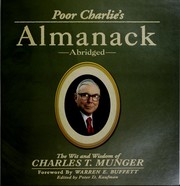
Speeches making the case for a latticework of mental models from many fields.
“…books I've recommended, highlighted to death, or forced on friends.” — Andrew Wilkinson
Source: Andrew Wilkinson's Bookshelf, neverenough.com
Recommended by: Andrew Wilkinson, Charlie Munger and 26 others
Builds out Munger's latticework idea from primary sources.
“…books I've recommended, highlighted to death, or forced on friends.” — Andrew Wilkinson
Source: Andrew Wilkinson's Bookshelf, neverenough.com
Recommended by: Andrew Wilkinson, Nat Eliason and 8 others
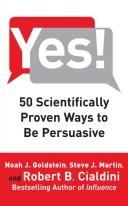
Cialdini's persuasion research condensed into fifty applied findings
Recommended by: Mohnish Pabrai, Charlie Munger
Where it sits in the reference 6
Topics