Updates

  1. Person pages list letters, writing, profiles and links as sortable tables with filters, and show each person's companies as links; Fund letters show each letter's description in its own column.
  2. Experts show a checked job title and a short description of each person; 30 more people have photographs.
  3. Every company, fund, university and publication the experts work for has a page listing the people there.
  4. Fund letters show each letter's thesis and filter by it; 225 person pages list the essays, columns and newsletter issues the person wrote.
  5. Person pages list every essay and newsletter issue a person wrote, and their own books as a table in List view.
  6. Recommends shows the five largest kinds of book and the rest under More; browse pictures load sooner.
  7. Podcasts and talks link the original episode, filter by Audio and video or Press, and list each publisher once.
  8. Pages are wider, Recommends has List and Grid, and a filter clicked again turns off.
  9. Book cards sit in a ruled grid with Open Library and Goodreads links and each book's one-line note.
  10. Funds is now Investors; each investor's styles are buttons that filter the table.
  11. Podcasts and talks on a person's page filter by year and publisher and show as a list or a grid of pictures.
  12. Quotes show only people's own words: 472 summaries written by list sites are gone.
  13. Country pages open from Browse again, and every link on the shelf lands on a page.
  14. Subject and person pages show their sections as tabs, and each book appears once on a person's page.
  15. Book cards show the quote, who said it and the source; grids show five cards to a row.
  16. On a phone, a menu holds the sections, search, Updates, Feedback and dark mode.
  17. Feedback takes a screenshot of the page with no browser prompt, opens a screenshot full size when you click it, and clears itself once sent.
  18. Book cards are centred, search names the topic each book sits in, and any text cut short shows whole on hover.
  19. Search groups its results by kind: people, companies, geographies, subjects, topics, books, funds, fund letters and papers.
  20. The Books table lists who recommended each book by name, and the browser tab names the section you are in.
  21. Feedback can take a screenshot of the page, or one you paste or choose, and opens in the corner beside Updates.
  22. Each rail button reopens its section where you left it, and Browse, Table and People show on every book and subject page.
  23. Filters grey out choices that hold nothing instead of hiding them, and Books › People filters by authors or recommenders.
  24. Feedback takes a subject line and up to three screenshots.
  25. Biographies are grouped by the person they are about: 41 new pages, from Abraham Lincoln to Lee Kuan Yew.
  26. Sport splits into 23 sports, and Religion into one topic per faith.
  27. Book lists show as cards: the cover, one recommendation quote and every recommender by name.
  28. Seventeen subjects that had two or three pages under different names now have one page each.
  29. Every page lists its Experts as authors and recommenders, with a link to them on the Experts tab.
  30. Economics, Financial history, Financial panics and Accounting are subjects of their own, with one page per financial crisis.
  31. Book, person and subject pages open inside the app, so the tabs stay in view.
  32. 996 more book covers, and photographs or logos for 227 more people and companies.
  33. Books › Browse shows every subject as cards, and the rail holds Fund letters, Papers, Experts, Books and Funds.
  34. Every topic over 150 books splits into narrower topics, each with a page of its own.

Send feedback

What is it?
Screenshots, up to 3 (optional)
or paste one with Ctrl+V

We use your email only to reply to you.

How to Win Friends and Influence People

How to Win Friends and Influence People

Dale Carnegie
1936
T2 280 pages · about 4h 40m to read Open Librarygoodreads

The original popular manual on persuasion and handling people

Summary

Carnegie assembled the book from material he taught in adult education courses in New York from 1912 onward, testing each principle against what worked for his students. It contains four sections: fundamental techniques in handling people, six ways to make people like you, twelve ways to win people to your way of thinking, and nine ways to change people without giving offence.

The core claim is that people act from self-interest and from a desire to feel important, and that anyone who wants cooperation must work from the other person's perspective rather than from their own. The specific rules follow directly: do not criticise, condemn or complain; give honest appreciation; arouse an eager want; become genuinely interested in other people; remember and use names; listen; talk in terms of the other person's interests; and let the other person feel the idea is theirs.

The evidence is anecdotal throughout, built from stories about Rockefeller, Lincoln, Roosevelt, salesmen and Carnegie's own students. The book makes no claim to research. Its durability comes from the fact that the rules describe behaviour that works and that most people do not do.

The criticisms are longstanding. The techniques can be applied insincerely, and the book's insistence that the interest must be genuine does not prevent that. The advice to avoid all direct criticism conflicts with what feedback research and modern management practice recommend. The examples are from the 1930s and the gender assumptions show it. Some readers find the tone manipulative. It works best as a description of what attentive people do naturally, offered to those who do not.

Key takeaways 8

  1. Criticism produces defensiveness rather than change, because it forces the other person to justify themselves.
  2. People act from their own interests and their own desire to feel important, so persuasion must start from what they want.
  3. Asking questions and listening produces more influence than presenting arguments does.
  4. A person's own name is the sound they attend to most, and using it correctly changes the quality of an interaction.
  5. Admitting your own error quickly and emphatically removes the other person's reason to attack.
  6. The only way to get the best of an argument is to avoid having one, because winning an argument loses the person's goodwill.
  7. Letting the other person believe the idea originated with them secures commitment that an imposed idea never gets.
  8. Giving a person a reputation to live up to changes their behaviour more effectively than pointing out their failures does.

Who should read it

Founders and operators who need to sell, recruit or manage and who are naturally more direct than persuasive.

Who recommended it 15 · 1 direct

John Doerrreported
Nat Eliasonreported
Nate O'Brienreported
Nick Huberreported
Nir Eyalreported
Paul Grahamreported
Sam Parrreported

Similar books 6

Chosen by shared topics, the entries that hold them, and the people who recommended both.
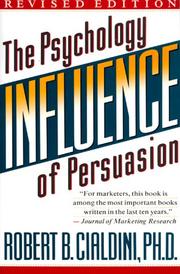
Robert B. Cialdini · 1984

Six principles of compliance, from reciprocity to scarcity, and how sellers use them.

“…books I've recommended, highlighted to death, or forced on friends.” — Andrew Wilkinson

Source: Andrew Wilkinson's Bookshelf, neverenough.com

Recommended by: Andrew Wilkinson, Charlie Munger and 29 others
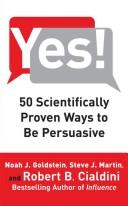
Noah J. Goldstein, Steve J. Martin, Robert B. Cialdini · 2008

Cialdini's persuasion research condensed into fifty applied findings

Robert B. Cialdini · 2016

Where you direct attention just before a message shapes how it is received.

Robert Greene · 1998

Forty-eight rules for gaining and keeping power, each shown by historical episodes.

Robert Greene · 2001

Seducer types, victim types and a step-by-step process of attraction from history.

Recommended by: Nat Eliason

Where it sits in the reference 2

Business themes
Mental models

Topics

Negotiation and PersuasionPsychology and BehaviourSocial psychology, persuasion and influence