
The 48 Laws of Power
Summary
Greene assembles forty-eight rules for acquiring and holding power, each illustrated with historical episodes drawn from courtiers, con artists, generals, monarchs and diplomats, with a reversal section noting when the law does not apply. The laws include never outshine the master, conceal your intentions, always say less than necessary, court attention at all cost, get others to do the work and take the credit, use selective honesty to disarm, make people come to you, crush your enemy totally, keep others in suspended terror by cultivating an air of unpredictability, and assume formlessness.
The sources are mostly early modern European court history, Chinese strategic texts, and Renaissance Italy, with heavy use of Machiavelli, Baltasar Gracian and Sun Tzu. Greene is descriptive rather than prescriptive in his stated intent, arguing that power dynamics operate whether or not participants acknowledge them and that the alternative to understanding them is being subject to them without knowing it.
The book has obvious problems. The laws contradict each other, which Greene acknowledges and treats as a feature since situations differ. The historical anecdotes are selected to fit and are frequently simplified past accuracy. Applied literally, several laws would destroy a career or a business, particularly in organisations that depend on trust and repeated interaction. It has been banned in some prisons.
Its defensive use is stronger than its offensive one. Reading it as a description of what manipulative people do, in order to recognise it, is more useful than treating it as instruction. The laws about not outshining superiors, about controlling the flow of information about your intentions, and about the danger of asking for too much from those who help you are the ones that describe real organisational dynamics.
Key takeaways 8
- Power dynamics operate in every organisation whether or not participants acknowledge them, and refusing to recognise them means being subject to them unknowingly.
- Making a superior feel insecure about their position produces retaliation regardless of the quality of your work.
- Concealing intentions removes the ability of others to prepare a response, which is why Greene treats openness as a tactical error.
- Reputation is the foundation of power and can be attacked more easily than it can be built, which makes defending it a continuous activity.
- People resent being made to feel obligated, so asking for a favour from someone who already helped you can produce hostility rather than further help.
- Attention has value independent of its content, which is why Greene treats being talked about as preferable to being ignored.
- Half-measures against an opponent create a resentful survivor, which is the reasoning behind the law recommending total defeat.
- Applied literally in organisations that depend on trust and repeated interaction, most of these laws would end a career, which is why the defensive reading is the useful one.
Who should read it
Readers who want to recognise manipulative behaviour in organisations, treating the book as description of what such people do rather than as instruction.
About Robert Greene
American author of books on power, strategy, mastery and human behaviour, built from historical case studies.
The 48 Laws of Power catalogues the tactics used in courts, armies and businesses, stated as rules with historical cases on both the observance and the violation of each. Mastery examines how practitioners across fields moved from apprenticeship to independent judgement over decades of deliberate work.
Who recommended it 6 · 2 direct
Similar books 6
Chosen by shared topics, the entries that hold them, and the people who recommended both.

Seducer types, victim types and a step-by-step process of attraction from history.
Recommended by: Nat Eliason

Eighteen patterns of human behaviour, from irrationality on, and how to handle them.
“If you've ever been curious about psychology or human behavior, it is by far the most comprehensive and memorable book I've found.” — Andrew Wilkinson
Source: Newsletter
Recommended by: Andrew Wilkinson, Library Mindset

Techniques for handling people, being liked and winning others to your view.
Recommended by: Mohnish Pabrai, Alex and Books and 13 others


Recommended by: Ramit Sethi, Tim Ferriss
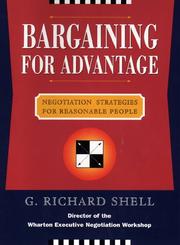
A step-by-step approach to business negotiation from Wharton's negotiation workshop.
Where it sits in the reference 2
Topics