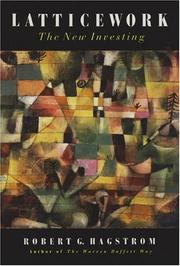
Latticework: The New Investing
Munger's multidisciplinary latticework applied to investment analysis
Summary
Hagstrom builds out Charlie Munger's idea that an investor should assemble a latticework of mental models from multiple disciplines rather than rely on finance alone. He takes chapters from physics, biology, sociology, psychology, philosophy and literature, explains a core concept from each, and then argues for its application to markets.
The specific transfers are: equilibrium from physics as a description of markets that the evidence does not support; evolution and adaptation from biology as a better description, with markets treated as complex adaptive systems in the Santa Fe Institute sense; self-organisation and emergence from sociology, including ant colony behaviour and information cascades; behavioural findings from psychology on overreaction and overconfidence; pragmatism from philosophy on how to hold beliefs; and close reading from literature as a model for how to interpret ambiguous evidence.
The book is an introduction to a way of thinking rather than a source of methods. It is most useful to investors who want a structured entry point into the complexity-economics view of markets and a reading list to follow. The weakness is that cross-disciplinary analogy is exactly what the book asks the reader to do, and the connections drawn are often suggestive rather than demonstrated, particularly the biology and literature chapters. Later work, including Mauboussin's and Beinhocker's, develops the complex-adaptive-systems argument with more rigour. Hagstrom's own later book Investing: The Last Liberal Art is a revised version of this material.
Key takeaways 7
- An investor should hold models from several disciplines, because a single framework applied to every situation produces systematic blind spots.
- Markets behave as complex adaptive systems rather than as equilibrium systems, which means they do not reliably return to a fair value.
- The physics-derived equilibrium models that underpin standard finance describe a system that markets are not.
- Diversity of participant strategies is what makes a market efficient, and efficiency breaks down when participants converge on the same model.
- Information cascades explain why prices move a long way on little new information, since each participant treats others' actions as evidence.
- Beliefs should be held as working hypotheses evaluated by their consequences, following the pragmatist position, rather than as convictions.
- Reading widely outside finance produces better investment judgement than reading more finance.
Who should read it
Investors looking for a structured introduction to multidisciplinary thinking and to the complex-systems view of markets, as a gateway to more rigorous treatments.
About Robert G. Hagstrom
American portfolio manager who ran Legg Mason's Focus Trust and later served as chief investment strategist at EquityCompass.
The Warren Buffett Way was the first book to reconstruct Buffett's purchases as a repeatable set of business, management, financial and valuation tests, and it set the template later Buffett books follow. Latticework and Investing: The Last Liberal Art carry the same argument into physics, biology and psychology as sources of investment models.
Who recommended it 1 · 1 direct
“I'd recommend reading Robert Hagstrom's outstanding book, Latticework.”
Similar books 6
Chosen by shared topics, the entries that hold them, and the people who recommended both.
What physics, biology, psychology and other fields teach about investing.
“here's a book I read, Robert Hagstrom, who has written a lot of books about Buffett” — Thomas Gayner
Source: Masters in Business transcript: Thomas S. Gayner, Markel Corp
Recommended by: Morgan Housel, Thomas Gayner
Reasoning methods of fictional detectives such as Dupin applied to stock analysis.
Recommended by: Mohnish Pabrai
Builds out Munger's latticework idea from primary sources.
“…books I've recommended, highlighted to death, or forced on friends.” — Andrew Wilkinson
Source: Andrew Wilkinson's Bookshelf, neverenough.com
Recommended by: Andrew Wilkinson, Nat Eliason and 8 others

Bevelin distilling observation and inference habits from Sherlock Holmes
Recommended by: Mohnish Pabrai, Patrick O'Shaughnessy and 1 other
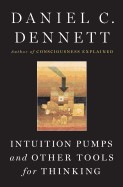
Thought experiments and other tools a philosopher uses to reason carefully.
Recommended by: Patrick Collison, Shane Parrish
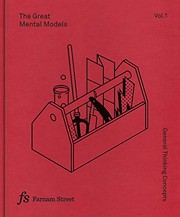
Recommended by: Ana Fabrega, Chamath Palihapitiya, Jenny Chu and 2 others
Where it sits in the reference 4
Topics