
First-Principles Reasoning
Strip a thesis to what must be true - unit economics, customer behaviour, the capital cycle - and rebuild from there rather than reasoning by analogy from comparables. Comps tell you what others paid; first principles tell you what the thing is worth. A sharp disagreement between the two is either your error or your opportunity, and the work is deciding which.
Start here
- The Great Mental Models Volume 1Shane Parrish, 2019
- Zero to OnePeter Thiel, Blake Masters, 2014
- Six Easy PiecesRichard P. Feynman, 1994

Six physics lectures with little maths: atoms, energy, gravity and quantum behaviour.
Recommended by: Naval Ravikant

How shared fictions such as money, nations and gods let humans cooperate at scale.
“…books I've recommended, highlighted to death, or forced on friends.” — Andrew Wilkinson
Source: Andrew Wilkinson's Bookshelf, neverenough.com
Recommended by: Andrew Wilkinson, Bill Gates, Mohnish Pabrai and 38 others

Why startups should build something new and own a small market before growing.
Recommended by: Balaji S. Srinivasan, Eric Weinstein and 36 others

A father and son's motorcycle trip framing an inquiry into what Quality means.
“If you pick it up and read it, I suspect most of you will give up before you get to the end—but please try.” — Mohnish Pabrai
Source: Mental Models for Running Startups and Businesses, SXSW 2026, March 16, 2026
Recommended by: Brad Feld, Mohnish Pabrai, Nick Sleep and 8 others
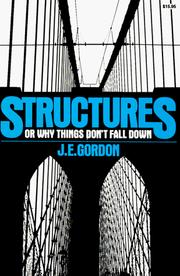
Why structures hold up or fail: tension, compression, shear and fracture explained.
Recommended by: Elon Musk
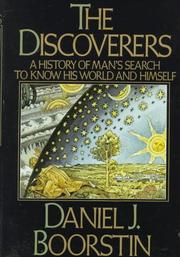
A history of discovery: time and the clock, the earth and seas, nature and society.
Recommended by: Jim Collins, Stewart Brand
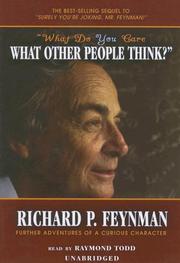
Stories of a physicist's first marriage and his inquiry into the Challenger disaster.
“Richard Feynman's books are awesome. Very bright physicist. Must-read!” — Mohnish Pabrai
Source: Mohnish's Bookshelf — Unorganized, yet Interesting, entry 169
Recommended by: Mohnish Pabrai, Naval Ravikant, Larry Page

Reality through four strands: many-worlds physics, computation, evolution, Popper.
Recommended by: Naval Ravikant, Patrick Collison and 2 others

How the sciences and humanities can be unified by causal links from physics up.
“I was inspired by E. O. Wilson's book Consilience, which came out in 1998 and is a book I'd recommend.” — Michael Mauboussin
Source: MOI Global interview with Michael Mauboussin
Recommended by: Michael Mauboussin, Mohnish Pabrai

How scientists came to know what they know, from cosmology and geology to biology.
Recommended by: Balaji S. Srinivasan, Jim Collins and 5 others
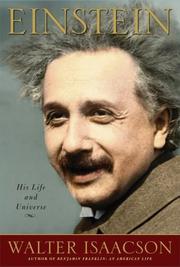
Einstein's life and science, from the Bern patent office to relativity.
Recommended by: Alfred Lin, Bill Gates, Charlie Munger and 6 others
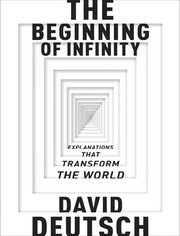
Knowledge can grow without limit through good explanations that are hard to vary.
Recommended by: Nat Eliason, Naval Ravikant, Albert Wenger and 5 others
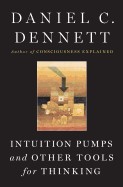
Thought experiments and other tools a philosopher uses to reason carefully.
Recommended by: Patrick Collison, Shane Parrish

What physics, biology, psychology and other fields teach about investing.
“here's a book I read, Robert Hagstrom, who has written a lot of books about Buffett” — Thomas Gayner
Source: Masters in Business transcript: Thomas S. Gayner, Markel Corp
Recommended by: Morgan Housel, Thomas Gayner

How calculus works and how it made modern technology possible.
Recommended by: Michael Mauboussin, Naval Ravikant

Early specialisation works only where rules are stable; elsewhere breadth wins.
Recommended by: Bill Gates, Abi Tyas Tunggal, Alex Lieberman and 11 others

Recommended by: Ana Fabrega, Chamath Palihapitiya, Jenny Chu and 2 others

Bacon's utopia of organised research; science as an institution
Recommended by: Patrick Collison, Peter Thiel
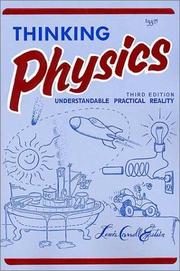
“There's another great book that's called Thinking Physics. I open this one all the time.” — Naval Ravikant
Source: The Knowledge Project (Farnam Street) — 'Naval Ravikant: The Angel Philosopher', full transcript
Recommended by: Naval Ravikant


Mental models from physics, biology and psychology, applied to investing.
“I'd recommend reading Robert Hagstrom's outstanding book, Latticework.” — Mohnish Pabrai
Source: Pabrai recommending Hagstrom's book on mental models
Recommended by: Mohnish Pabrai
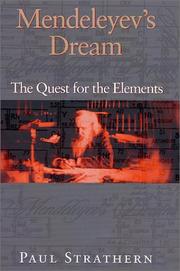
The search for the periodic table; reasoning from the elements upward
Recommended by: Bill Gates
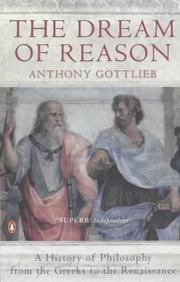
History of Western philosophy from the Greeks to the Renaissance
Recommended by: Mohnish Pabrai, Nassim Nicholas Taleb

Short essays on the scientific concepts most worth adopting
Recommended by: Morgan Housel, Patrick Collison
 Peter Thielwrote 1 book here
 Walter Isaacsonwrote 1 book here
 Mohnish Pabrairecommends 8 books here
 Naval Ravikantrecommends 7 books here
 Patrick Collisonrecommends 6 books here
 Bill Gatesrecommends 4 books here
 Alfred Linrecommends 3 books here
 Elon Muskrecommends 3 books here
 Keith Raboisrecommends 3 books here
 Mark Zuckerbergrecommends 3 books here
 Matt Mullenwegrecommends 3 books here
Show all 97
 Sam Altmanrecommends 3 books here
 Jim Collinsrecommends 2 books here
 Marc Andreessenrecommends 2 books here
 Nassim Nicholas Talebrecommends 2 books here
 Paul Grahamrecommends 2 books herePeter Thielrecommends 2 books here
 Ray Daliorecommends 2 books here
 Brad Feldrecommends 2 books here
 Chris Andersonrecommends 2 books here
 Reid Hoffmanrecommends 2 books here
 Ryan Holidayrecommends 2 books here
 Balaji S. Srinivasanrecommends 2 books here
 Brett Adcockrecommends 2 books here
 Changpeng Zhaorecommends 2 books here
 Dustin Moskovitzrecommends 2 books here
 Jamie Dimonrecommends 2 books here
 Stewart Brandrecommends 2 books here
 Vinod Khoslarecommends 2 books here
 Ben Horowitzrecommends 1 book here
 Charlie Mungerrecommends 1 book here
 Warren Buffettrecommends 1 book here
 Albert Wengerrecommends 1 book here
 Bryan Johnsonrecommends 1 book here
 Casey Neistatrecommends 1 book here
 Chamath Palihapitiyarecommends 1 book here
 Chris Dixonrecommends 1 book here
 Daniel Ekrecommends 1 book here
 Demis Hassabisrecommends 1 book here
 Drew Houstonrecommends 1 book here
 Eric Weinsteinrecommends 1 book here
 Ev Williamsrecommends 1 book here
 James Altucherrecommends 1 book here
 James Cameronrecommends 1 book here
 Jeff Bezosrecommends 1 book here
 Julie Zhuorecommends 1 book here
 Larry Pagerecommends 1 book here
 Luis von Ahnrecommends 1 book here
 Max Levchinrecommends 1 book here
 Melinda Gatesrecommends 1 book here
 Nir Eyalrecommends 1 book here
 Patrick Bet-Davidrecommends 1 book here
 Peter Attiarecommends 1 book here
 Richard Bransonrecommends 1 book here
 Ryan Petersonrecommends 1 book here
 Satya Nadellarecommends 1 book here
 Scott Belskyrecommends 1 book here
 Scott Farquharrecommends 1 book here
 Steve Jurvetsonrecommends 1 book here
 Susan Cainrecommends 1 book here
 Tobi Lütkerecommends 1 book here
 Tom Bilyeurecommends 1 book here
 Trevor Ncuberecommends 1 book here
 Zoë Foster Blakerecommends 1 book here
- First Principles: The Building Blocks of True KnowledgeShane Parrish · essay · Reason up from what must be true, not from analogy.
- Thought Experiment: How Einstein Solved Difficult ProblemsShane Parrish · essay · Testing a thesis where reality cannot be run.
- How to Get Startup IdeasPaul Graham · essay · Reasoning from noticed problems rather than from analogy.
- How to Think for YourselfPaul Graham · essay · Independent-mindedness as the source of variant perception.