Updates

  1. Person pages list letters, writing, profiles and links as sortable tables with filters, and show each person's companies as links; Fund letters show each letter's description in its own column.
  2. Experts show a checked job title and a short description of each person; 30 more people have photographs.
  3. Every company, fund, university and publication the experts work for has a page listing the people there.
  4. Fund letters show each letter's thesis and filter by it; 225 person pages list the essays, columns and newsletter issues the person wrote.
  5. Person pages list every essay and newsletter issue a person wrote, and their own books as a table in List view.
  6. Recommends shows the five largest kinds of book and the rest under More; browse pictures load sooner.
  7. Podcasts and talks link the original episode, filter by Audio and video or Press, and list each publisher once.
  8. Pages are wider, Recommends has List and Grid, and a filter clicked again turns off.
  9. Book cards sit in a ruled grid with Open Library and Goodreads links and each book's one-line note.
  10. Funds is now Investors; each investor's styles are buttons that filter the table.
  11. Podcasts and talks on a person's page filter by year and publisher and show as a list or a grid of pictures.
  12. Quotes show only people's own words: 472 summaries written by list sites are gone.
  13. Country pages open from Browse again, and every link on the shelf lands on a page.
  14. Subject and person pages show their sections as tabs, and each book appears once on a person's page.
  15. Book cards show the quote, who said it and the source; grids show five cards to a row.
  16. On a phone, a menu holds the sections, search, Updates, Feedback and dark mode.
  17. Feedback takes a screenshot of the page with no browser prompt, opens a screenshot full size when you click it, and clears itself once sent.
  18. Book cards are centred, search names the topic each book sits in, and any text cut short shows whole on hover.
  19. Search groups its results by kind: people, companies, geographies, subjects, topics, books, funds, fund letters and papers.
  20. The Books table lists who recommended each book by name, and the browser tab names the section you are in.
  21. Feedback can take a screenshot of the page, or one you paste or choose, and opens in the corner beside Updates.
  22. Each rail button reopens its section where you left it, and Browse, Table and People show on every book and subject page.
  23. Filters grey out choices that hold nothing instead of hiding them, and Books › People filters by authors or recommenders.
  24. Feedback takes a subject line and up to three screenshots.
  25. Biographies are grouped by the person they are about: 41 new pages, from Abraham Lincoln to Lee Kuan Yew.
  26. Sport splits into 23 sports, and Religion into one topic per faith.
  27. Book lists show as cards: the cover, one recommendation quote and every recommender by name.
  28. Seventeen subjects that had two or three pages under different names now have one page each.
  29. Every page lists its Experts as authors and recommenders, with a link to them on the Experts tab.
  30. Economics, Financial history, Financial panics and Accounting are subjects of their own, with one page per financial crisis.
  31. Book, person and subject pages open inside the app, so the tabs stay in view.
  32. 996 more book covers, and photographs or logos for 227 more people and companies.
  33. Books › Browse shows every subject as cards, and the rail holds Fund letters, Papers, Experts, Books and Funds.
  34. Every topic over 150 books splits into narrower topics, each with a page of its own.

Send feedback

What is it?
Screenshots, up to 3 (optional)
or paste one with Ctrl+V

We use your email only to reply to you.

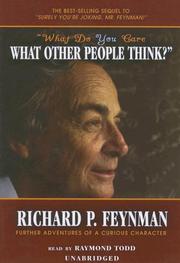
What Do You Care What Other People Think?

What Do You Care What Other People Think?

Richard P. Feynman
1988
T2 256 pages · about 4h 16m to read Open Librarygoodreads

Feynman on the Challenger inquiry and thinking from the evidence

Summary

The second collection of Feynman anecdotes, assembled by Ralph Leighton, differs from the first in containing two substantial sections rather than a sequence of short stories. The first covers his relationship with Arline Greenbaum, his first wife, who developed tuberculosis before their marriage and died while he was at Los Alamos. The title comes from her, and the account of the marriage, the illness and her death is direct and unsentimental. It also includes material about his father, who taught him to distinguish knowing the name of something from knowing something.

The second and longer section covers his service on the Rogers Commission investigating the 1986 Challenger disaster. Feynman documents the investigation as he conducted it, working independently of the commission's process, talking directly to engineers at Morton Thiokol and at Kennedy Space Center rather than to managers, and discovering that engineers had estimated failure probability at around one in a hundred while management stated one in a hundred thousand.

His demonstration with the O-ring in ice water, which showed on television that the material lost resilience at low temperature, is the episode most remembered. His minority report, which the commission attempted to exclude and which was eventually published as an appendix, concludes that reality must take precedence over public relations because nature cannot be fooled.

The Challenger material is the most useful part of either Feynman collection for a business reader, since it documents how an organisation's management and its technical staff held incompatible assessments of risk while the organisation continued to operate.

Key takeaways 8

  1. Engineers at NASA estimated the probability of catastrophic failure at around one in a hundred while management stated one in a hundred thousand.
  2. An organisation can operate for years with management and technical staff holding incompatible assessments of risk without either being reconciled.
  3. Feynman conducted his investigation by talking directly to working engineers rather than to managers, which produced the information the formal process did not.
  4. Repeated successful flights with a known defect were treated as evidence that the defect was acceptable rather than as accumulating exposure.
  5. A demonstration that anyone can see, such as the O-ring in ice water, settles a technical question more effectively than any report.
  6. Reality must take precedence over public relations because nature cannot be fooled, which is the conclusion of his minority report.
  7. Knowing the name of something is different from knowing something, which Feynman learned from his father and applied throughout his work.
  8. The commission attempted to exclude his conclusions, which were published only as an appendix after he insisted.

Who should read it

Anyone assessing organisational risk who wants a documented case of management and technical staff holding incompatible views of the same system.

Who recommended it 3 · 2 direct

“Richard Feynman's books are awesome. Very bright physicist. Must-read!”

Larry Pagereported

Similar books 6

Chosen by shared topics, the entries that hold them, and the people who recommended both.
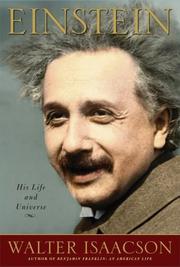
Walter Isaacson · 2007

Einstein's life and science, from the Bern patent office to relativity.

David Deutsch · 1997

Reality through four strands: many-worlds physics, computation, evolution, Popper.

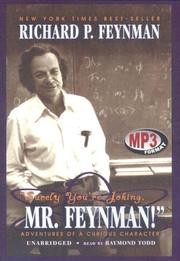
Richard P. Feynman · 1984

A physicist's stories, from fixing radios as a boy to Los Alamos and beyond.

Where it sits in the reference 2

Mental models
Mental models

Topics

Biography of ScientistsBiography and MemoirScientists, Doctors and Thinkers