Updates

  1. Person pages list letters, writing, profiles and links as sortable tables with filters, and show each person's companies as links; Fund letters show each letter's description in its own column.
  2. Experts show a checked job title and a short description of each person; 30 more people have photographs.
  3. Every company, fund, university and publication the experts work for has a page listing the people there.
  4. Fund letters show each letter's thesis and filter by it; 225 person pages list the essays, columns and newsletter issues the person wrote.
  5. Person pages list every essay and newsletter issue a person wrote, and their own books as a table in List view.
  6. Recommends shows the five largest kinds of book and the rest under More; browse pictures load sooner.
  7. Podcasts and talks link the original episode, filter by Audio and video or Press, and list each publisher once.
  8. Pages are wider, Recommends has List and Grid, and a filter clicked again turns off.
  9. Book cards sit in a ruled grid with Open Library and Goodreads links and each book's one-line note.
  10. Funds is now Investors; each investor's styles are buttons that filter the table.
  11. Podcasts and talks on a person's page filter by year and publisher and show as a list or a grid of pictures.
  12. Quotes show only people's own words: 472 summaries written by list sites are gone.
  13. Country pages open from Browse again, and every link on the shelf lands on a page.
  14. Subject and person pages show their sections as tabs, and each book appears once on a person's page.
  15. Book cards show the quote, who said it and the source; grids show five cards to a row.
  16. On a phone, a menu holds the sections, search, Updates, Feedback and dark mode.
  17. Feedback takes a screenshot of the page with no browser prompt, opens a screenshot full size when you click it, and clears itself once sent.
  18. Book cards are centred, search names the topic each book sits in, and any text cut short shows whole on hover.
  19. Search groups its results by kind: people, companies, geographies, subjects, topics, books, funds, fund letters and papers.
  20. The Books table lists who recommended each book by name, and the browser tab names the section you are in.
  21. Feedback can take a screenshot of the page, or one you paste or choose, and opens in the corner beside Updates.
  22. Each rail button reopens its section where you left it, and Browse, Table and People show on every book and subject page.
  23. Filters grey out choices that hold nothing instead of hiding them, and Books › People filters by authors or recommenders.
  24. Feedback takes a subject line and up to three screenshots.
  25. Biographies are grouped by the person they are about: 41 new pages, from Abraham Lincoln to Lee Kuan Yew.
  26. Sport splits into 23 sports, and Religion into one topic per faith.
  27. Book lists show as cards: the cover, one recommendation quote and every recommender by name.
  28. Seventeen subjects that had two or three pages under different names now have one page each.
  29. Every page lists its Experts as authors and recommenders, with a link to them on the Experts tab.
  30. Economics, Financial history, Financial panics and Accounting are subjects of their own, with one page per financial crisis.
  31. Book, person and subject pages open inside the app, so the tabs stay in view.
  32. 996 more book covers, and photographs or logos for 227 more people and companies.
  33. Books › Browse shows every subject as cards, and the rail holds Fund letters, Papers, Experts, Books and Funds.
  34. Every topic over 150 books splits into narrower topics, each with a page of its own.

Send feedback

What is it?
Screenshots, up to 3 (optional)
or paste one with Ctrl+V

We use your email only to reply to you.

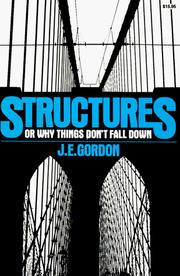
Structures: Or Why Things Don't Fall Down

Structures: Or Why Things Don't Fall Down

J. E. Gordon
1981
T2 424 pages · about 7h 4m to read Open Librarygoodreads

Why materials and structures hold; engineering reasoning made intuitive

Summary

Gordon, a materials scientist who worked on aircraft structures, explains why physical structures hold together and why they fail, covering tension, compression, bending, shear, elasticity, stress concentration and fracture, without requiring mathematics beyond arithmetic.

The central concepts are worth knowing outside engineering. Stress is force per unit area and strain is the resulting deformation, and the distinction between them explains most structural intuitions that are wrong. Materials store energy when deformed, and a structure fails when the stored energy released by a crack advancing exceeds the energy required to create the new surface, which is why brittle materials fail catastrophically and tough ones do not. Stress concentrates enormously at holes, notches and sharp corners, which is why the Comet airliners failed at their square windows and why almost every fatigue failure begins at a discontinuity. Safety comes from toughness, meaning the ability to absorb energy before breaking, rather than from strength.

Gordon covers the history alongside the physics: Gothic cathedrals, masonry arches, sailing ship rigging, iron bridges, boilers, aircraft and biological structures including bone, wood and tendon, which he treats as engineering solutions.

The book is genuinely entertaining, written with dry humour and directed at readers with no technical background. It is a classic of science writing. Its transferable content for non-engineers is the distinction between strength and toughness, and the principle that failures begin at discontinuities rather than at the point of highest load.

Key takeaways 7

  1. Stress concentrates enormously at holes, notches and sharp corners, which is why failures begin at discontinuities rather than at the point of highest load.
  2. Toughness, meaning the ability to absorb energy before breaking, matters more to safety than strength does.
  3. A structure fails when the energy released by a crack advancing exceeds the energy required to create the new surface, which explains why brittle materials fail suddenly.
  4. Brittle materials fail catastrophically with no warning while tough materials deform visibly first, which is why the second are used where failure is dangerous.
  5. Biological structures including bone, wood and tendon are engineering solutions and can be analysed with the same concepts as manufactured ones.
  6. Square windows in pressurised aircraft concentrated stress at the corners and caused the Comet failures, which is a general lesson about geometry.
  7. Understanding why things do not fall down requires knowing how they store and release energy rather than how much load they carry.

Who should read it

Readers wanting the physical principles of structural failure, with the strength-versus-toughness distinction transferable to reasoning about resilience generally.

Who recommended it 1

Similar books 6

Chosen by shared topics, the entries that hold them, and the people who recommended both.
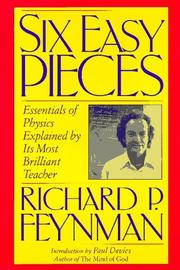
Richard P. Feynman · 1994

Six physics lectures with little maths: atoms, energy, gravity and quantum behaviour.

Recommended by: Naval Ravikant
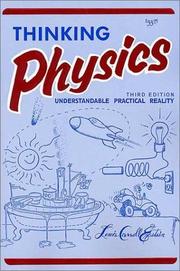
Lewis Carroll Epstein · 1979

“There's another great book that's called Thinking Physics. I open this one all the time.” — Naval Ravikant

Source: The Knowledge Project (Farnam Street) — 'Naval Ravikant: The Angel Philosopher', full transcript

Recommended by: Naval Ravikant
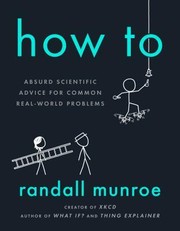
Randall Munroe · 2019

Recommended by: Bill Gates

Where it sits in the reference 2

Mental models
Mental models

Topics

ScienceTechnology and ComputingInvention, engineering and spaceInvention, engineering and energy