History and philosophy of science
Histories of discovery, lives of scientists, essays and anthologies by scientists, and books on scientific method and its limits.
Start here
- The Logic of Scientific DiscoveryKarl Popper, 1959
- The Structure of Scientific RevolutionsThomas S. Kuhn, 1962
- Conjectures and RefutationsKarl Popper, 1963
- The Double HelixJames D. Watson, 1968
- The Making of the Atomic BombRichard Rhodes, 1986
Falsifiability as the line between science and non-science.

Science moves through long stretches of normal work broken by paradigm shifts.
Recommended by: Nat Eliason, Charlie Munger, Mark Zuckerberg and 5 others
Knowledge grows by bold guesses that we then try to refute, not by proof.
Recommended by: Patrick Collison
A first-hand account of the race against Linus Pauling to find DNA's structure.
Recommended by: Patrick Collison, Paul Graham, Peter Attia
How the bomb was built, from the discovery of atomic energy to Hiroshima.
Recommended by: Chris Dixon, Elon Musk, Patrick Collison
How the Copernican revolution unfolded, as a turning point in scientific thought.
“Kuhn, The Copernican Revolution” — Paul Graham
Source: Rarely-Asked Questions — paulgraham.com
Recommended by: Patrick Collison, Paul Graham

The history of molecular biology from the 1930s to the 1970s, told by its makers.
Recommended by: Naval Ravikant
A history of discovery: time and the clock, the earth and seas, nature and society.
Recommended by: Jim Collins, Stewart Brand

A life across economics, psychology, organisations and artificial intelligence.
Recommended by: Charlie Munger, Mohnish Pabrai

How the sciences and humanities can be unified by causal links from physics up.
“I was inspired by E. O. Wilson's book Consilience, which came out in 1998 and is a book I'd recommend.” — Michael Mauboussin
Source: MOI Global interview with Michael Mauboussin
Recommended by: Michael Mauboussin, Mohnish Pabrai
Jennifer Doudna, co-developer of CRISPR gene editing, and what followed it.
Recommended by: Bill Gates, Terrance McArthur

How scientists came to know what they know, from cosmology and geology to biology.
Recommended by: Balaji S. Srinivasan, Jim Collins and 5 others
Knowledge can grow without limit through good explanations that are hard to vary.
Recommended by: Nat Eliason, Naval Ravikant, Albert Wenger and 5 others
The search for the periodic table; reasoning from the elements upward
Recommended by: Bill Gates

Short essays on the scientific concepts most worth adopting
Recommended by: Morgan Housel, Patrick Collison
The limits of scientific knowledge and what cannot be measured
Recommended by: Shane Parrish
When the simpler theory is the better one: the principle of parsimony tested.

How present certainties will look to the future; outside view applied
“Hard to read and not emerge humbled.” — Marc Andreessen
Source: @pmarca, 'Thread: Books I've recently read and recommend'
Recommended by: Marc Andreessen, Brad Feld, Bryan Johnson and 1 other
Recommended by: Mohnish Pabrai

A poem arguing that all is atoms and void, the soul dies, and religion breeds fear.
Recommended by: Stewart Brand
Essays, talks and letters from 1934 to 1950 on social, religious and school issues.
Recommended by: Eric Weinstein
Argues that scientific knowledge joins personal experience, moral judgement and data.
Recommended by: Charles Koch

Recommended by: Patrick Collison


“Bernal, The Extension of Man” — Paul Graham
Source: Rarely-Asked Questions — paulgraham.com
Recommended by: Paul Graham
How science developed, and the discoveries that set humans apart from other species.
Recommended by: Patrick Collison, Patrick O'Shaughnessy
A neurologist on the varieties of luck in scientific discovery
“wrote an outstanding book called Chase, Chance, and Creativity … It's the best book I've read on the role of luck, chance, and serendipity” — Marc Andreessen
Source: Luck and the Entrepreneur: The four kinds of luck, blog.pmarca.com
Recommended by: Marc Andreessen

Recommended by: Patrick Collison

Recommended by: Mohnish Pabrai
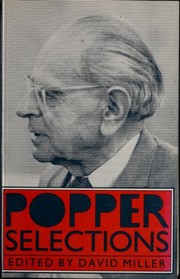
Thirty selections from Popper's writings, chosen to show the range of his ideas.
Recommended by: Patrick Collison
Recommended by: Stewart Brand

Information theory as a unifying idea across three scientists' work
Recommended by: Charlie Munger, Mohnish Pabrai

Recommended by: Eric Weinstein


Recommended by: Eric Weinstein


Recommended by: Mohnish Pabrai, Paul Graham

Recommended by: Mohnish Pabrai

A collection of Richard Feynman's best short works.
Recommended by: Brian Armstrong, Larry Page
Recommended by: Mohnish Pabrai

Myths about the sun, night and earthquakes set against what science has found.
Recommended by: Bill Gates, Mohnish Pabrai

Boulton, Watt, Wedgwood, Erasmus Darwin and the Midlands friends who experimented.
Recommended by: Mohnish Pabrai, Patrick Collison


Recommended by: Mohnish Pabrai

Recommended by: Mohnish Pabrai

Recommended by: Mohnish Pabrai

Recommended by: Brian Armstrong, Mohnish Pabrai and 1 other
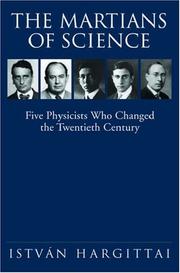
Recommended by: Mohnish Pabrai
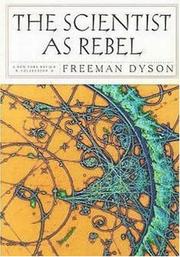
Recommended by: Patrick Collison
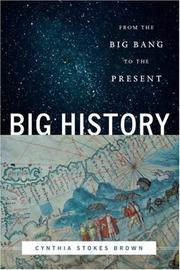

Recommended by: Mohnish Pabrai, Bill Gates

Recommended by: Mohnish Pabrai, Ray Dalio

Recommended by: Nat Eliason, Patrick Collison

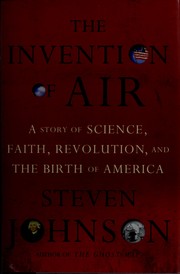
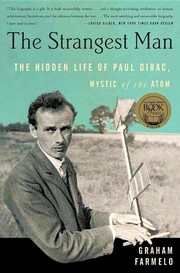
Recommended by: Patrick Collison, Eric Weinstein

Recommended by: Naval Ravikant

Recommended by: Mohnish Pabrai
Recommended by: Mohnish Pabrai

Recommended by: Mohnish Pabrai

Recommended by: Warren Buffett

Two maverick scientists, Delbrück and Gamow, who helped start genomics and cosmology.
Recommended by: Mohnish Pabrai

A scientific biography of Feynman, pairing his turbulent life with clear physics.
Recommended by: Mohnish Pabrai


Recommended by: Patrick Collison, Sahil Lavingia
Recommended by: Naval Ravikant
Recommended by: Patrick Collison

Recommended by: Arianna Huffington

The whole of history, from the big bang through the present and into the far future.
Recommended by: Bill Gates

How Dyson, Feynman, Schwinger and Tomonaga built quantum electrodynamics.
Recommended by: Eric Weinstein

Recommended by: Mohnish Pabrai

Recommended by: Mohnish Pabrai



 Mohnish Pabrairecommends 29 books here
 Patrick Collisonrecommends 28 books here
 Eric Weinsteinrecommends 7 books here
 Naval Ravikantrecommends 7 books here
 Paul Grahamrecommends 6 books here
 Bill Gatesrecommends 6 books here
 Stewart Brandrecommends 6 books here
 Charlie Mungerrecommends 3 books here
 Jim Collinsrecommends 2 books here
 Marc Andreessenrecommends 2 books here
Show all 47
 Warren Buffettrecommends 2 books here
 Brian Armstrongrecommends 2 books here
 Bryan Johnsonrecommends 2 books here
 Ed Cookerecommends 2 books here
 Mark Zuckerbergrecommends 2 books here
 Sam Altmanrecommends 2 books here
 Ray Daliorecommends 1 book here
 Brad Feldrecommends 1 book here
 Chris Andersonrecommends 1 book here
 Tyler Cowenrecommends 1 book here
 Ryan Holidayrecommends 1 book here
 Albert Wengerrecommends 1 book here
 Arianna Huffingtonrecommends 1 book here
 Balaji S. Srinivasanrecommends 1 book here
 Bertalan Meskórecommends 1 book here
 Charles Kochrecommends 1 book here
 Chris Dixonrecommends 1 book here
 Dustin Moskovitzrecommends 1 book here
 Elon Muskrecommends 1 book here
 James Cameronrecommends 1 book here
 Jamie Dimonrecommends 1 book here
 Larry Pagerecommends 1 book here
 Peter Attiarecommends 1 book here
 Richard Bransonrecommends 1 book here
 Ryan Petersonrecommends 1 book here
 Steve Jobsrecommends 1 book here