Updates

  1. Person pages list letters, writing, profiles and links as sortable tables with filters, and show each person's companies as links; Fund letters show each letter's description in its own column.
  2. Experts show a checked job title and a short description of each person; 30 more people have photographs.
  3. Every company, fund, university and publication the experts work for has a page listing the people there.
  4. Fund letters show each letter's thesis and filter by it; 225 person pages list the essays, columns and newsletter issues the person wrote.
  5. Person pages list every essay and newsletter issue a person wrote, and their own books as a table in List view.
  6. Recommends shows the five largest kinds of book and the rest under More; browse pictures load sooner.
  7. Podcasts and talks link the original episode, filter by Audio and video or Press, and list each publisher once.
  8. Pages are wider, Recommends has List and Grid, and a filter clicked again turns off.
  9. Book cards sit in a ruled grid with Open Library and Goodreads links and each book's one-line note.
  10. Funds is now Investors; each investor's styles are buttons that filter the table.
  11. Podcasts and talks on a person's page filter by year and publisher and show as a list or a grid of pictures.
  12. Quotes show only people's own words: 472 summaries written by list sites are gone.
  13. Country pages open from Browse again, and every link on the shelf lands on a page.
  14. Subject and person pages show their sections as tabs, and each book appears once on a person's page.
  15. Book cards show the quote, who said it and the source; grids show five cards to a row.
  16. On a phone, a menu holds the sections, search, Updates, Feedback and dark mode.
  17. Feedback takes a screenshot of the page with no browser prompt, opens a screenshot full size when you click it, and clears itself once sent.
  18. Book cards are centred, search names the topic each book sits in, and any text cut short shows whole on hover.
  19. Search groups its results by kind: people, companies, geographies, subjects, topics, books, funds, fund letters and papers.
  20. The Books table lists who recommended each book by name, and the browser tab names the section you are in.
  21. Feedback can take a screenshot of the page, or one you paste or choose, and opens in the corner beside Updates.
  22. Each rail button reopens its section where you left it, and Browse, Table and People show on every book and subject page.
  23. Filters grey out choices that hold nothing instead of hiding them, and Books › People filters by authors or recommenders.
  24. Feedback takes a subject line and up to three screenshots.
  25. Biographies are grouped by the person they are about: 41 new pages, from Abraham Lincoln to Lee Kuan Yew.
  26. Sport splits into 23 sports, and Religion into one topic per faith.
  27. Book lists show as cards: the cover, one recommendation quote and every recommender by name.
  28. Seventeen subjects that had two or three pages under different names now have one page each.
  29. Every page lists its Experts as authors and recommenders, with a link to them on the Experts tab.
  30. Economics, Financial history, Financial panics and Accounting are subjects of their own, with one page per financial crisis.
  31. Book, person and subject pages open inside the app, so the tabs stay in view.
  32. 996 more book covers, and photographs or logos for 227 more people and companies.
  33. Books › Browse shows every subject as cards, and the rail holds Fund letters, Papers, Experts, Books and Funds.
  34. Every topic over 150 books splits into narrower topics, each with a page of its own.

Send feedback

What is it?
Screenshots, up to 3 (optional)
or paste one with Ctrl+V

We use your email only to reply to you.

The Eighth Day of Creation

The Eighth Day of Creation

Horace Freeland Judson
1969
T2 686 pages · about 11h 26m to read Open Librarygoodreads

The definitive history of molecular biology's founding discoveries

Summary

Judson wrote the definitive history of molecular biology, based on extensive interviews with the participants conducted while most were still alive, covering the period from the 1930s through the early 1970s.

The narrative runs through three problems. The structure of DNA, covering Avery's demonstration that DNA carries heredity, the work at King's College by Rosalind Franklin and Maurice Wilkins, Pauling's incorrect model, and the Watson and Crick solution. The genetic code, covering how the sequence of bases specifies proteins, the work of Crick, Brenner, Nirenberg and others, and the experiments that cracked it. And the regulation of gene expression, covering Jacob and Monod's operon model, which explained how a cell with identical DNA in every cell produces different behaviour in different tissues.

Judson's method is to reconstruct the reasoning as the participants experienced it, including the wrong turns, the misinterpreted data and the disputes over priority, which makes it a study of how scientific discovery actually proceeds rather than a chronology of results. His treatment of Rosalind Franklin's contribution and of how her data reached Watson and Crick is careful and predates most of the subsequent argument.

The book is long and demanding, and the science requires attention. It is regarded as among the best histories of science written and its interview material is irreplaceable. It ends in the early 1970s and covers nothing of recombinant DNA, sequencing or the subsequent biotechnology industry.

Key takeaways 7

  1. Molecular biology solved three connected problems in sequence: what carries heredity, how the sequence specifies proteins, and how gene expression is regulated.
  2. Scientific discovery proceeds through wrong turns and misinterpreted data, and reconstructing the reasoning as participants experienced it shows a different process than the published results suggest.
  3. Rosalind Franklin's crystallographic data was essential to the DNA structure and reached Watson and Crick through channels she had not authorised.
  4. Pauling, the most accomplished structural chemist of the period, produced an incorrect DNA model, which shows expertise does not guarantee the right answer.
  5. The operon model explained how cells with identical DNA produce different behaviour in different tissues, which was the regulation problem the structure did not solve.
  6. Priority disputes and competition for credit shaped what was published and when throughout the period.
  7. Interviews conducted while participants were alive produced material about the reasoning that no documentary record contains.

Who should read it

Readers who want the definitive account of how molecular biology was actually done, including the errors and disputes the published record omits.

Who recommended it 1 · 1 direct

Similar books 6

Chosen by shared topics, the entries that hold them, and the people who recommended both.
Siddhartha Mukherjee · 2016

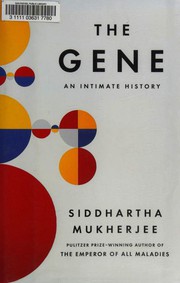
The gene from Mendel and Darwin to genome editing, beside a family's mental illness.

David Reich · 2018

How ancient DNA has rewritten the story of human prehistory and migration.

James D. Watson · 1968

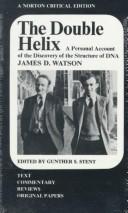
A first-hand account of the race against Linus Pauling to find DNA's structure.

Siddhartha Mukherjee · 2010

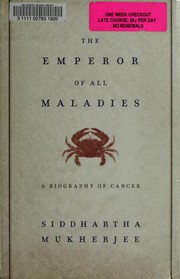
A biography of cancer, by a physician and oncologist.

Jared Diamond · 1991

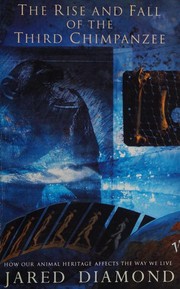
Human behaviour read from evolutionary biology; a Munger latticework staple

Where it sits in the reference 2

Industries
Mental models

Topics

ScienceGeneral HistoryScience, Technology and MedicineHistory and philosophy of science