
Investing: The Last Liberal Art
Investing read through physics, biology, sociology and literature
Summary
Hagstrom applies Munger's argument for a latticework of mental models by taking a set of disciplines and drawing out what each contributes to investment thinking. The chapters cover physics, biology, sociology, psychology, philosophy, literature, mathematics and decision making.
The physics chapter covers equilibrium and the extent to which economics borrowed it, and argues that markets are not equilibrium systems. The biology chapter covers evolution, adaptation and the treatment of the economy as an evolving system rather than a mechanical one, drawing on Santa Fe Institute work. The sociology chapter covers complex adaptive systems, information cascades, herding and the conditions under which crowds are accurate or wrong. The psychology chapter covers the standard behavioural findings. The philosophy chapter covers pragmatism and the epistemology of what an investor can claim to know. The literature chapter argues for reading fiction as a means of understanding behaviour and for the discipline of close reading. The mathematics chapter covers probability, Bayes and the Kelly criterion.
Hagstrom's argument is that no single discipline provides an adequate model of markets and that an investor forcing every situation into a financial framework will be systematically wrong in the same way each time.
The book is a synthesis and it is thin on each discipline, which specialists will find frustrating. It repeats Munger's argument without adding to it substantially. The chapters function as an introduction to what each field offers rather than as a working knowledge of any. It is best used as a reading list with commentary.
Key takeaways 8
- No single discipline provides an adequate model of markets, so an investor working from finance alone will make the same category of error repeatedly.
- Economics borrowed equilibrium from physics, and markets do not behave as equilibrium systems.
- Treating the economy as an evolving adaptive system rather than a mechanical one changes what predictions are available.
- Crowds are accurate under specific conditions of independence and diversity, and they herd catastrophically when those conditions fail.
- Probability, Bayesian updating and position sizing are the mathematical tools an investor actually needs rather than more elaborate models.
- Close reading, developed through literature, is a transferable discipline for extracting meaning from documents.
- Pragmatism supplies a usable answer to what an investor can claim to know, which is whatever survives testing against outcomes.
- The book introduces what each discipline offers rather than providing working knowledge of any, which limits it to a reading list with commentary.
Who should read it
Investors persuaded by Munger's latticework argument who want an introduction to what each discipline contributes, treated as a reading list.
About Robert G. Hagstrom
American portfolio manager who ran Legg Mason's Focus Trust and later served as chief investment strategist at EquityCompass.
The Warren Buffett Way was the first book to reconstruct Buffett's purchases as a repeatable set of business, management, financial and valuation tests, and it set the template later Buffett books follow. Latticework and Investing: The Last Liberal Art carry the same argument into physics, biology and psychology as sources of investment models.
Who recommended it 2 · 2 direct
“here's a book I read, Robert Hagstrom, who has written a lot of books about Buffett”
Similar books 6
Chosen by shared topics, the entries that hold them, and the people who recommended both.

Mental models from physics, biology and psychology, applied to investing.
“I'd recommend reading Robert Hagstrom's outstanding book, Latticework.” — Mohnish Pabrai
Source: Pabrai recommending Hagstrom's book on mental models
Recommended by: Mohnish Pabrai

Builds out Munger's latticework idea from primary sources.
“…books I've recommended, highlighted to death, or forced on friends.” — Andrew Wilkinson
Source: Andrew Wilkinson's Bookshelf, neverenough.com
Recommended by: Andrew Wilkinson, Nat Eliason and 8 others

Reasoning methods of fictional detectives such as Dupin applied to stock analysis.
Recommended by: Mohnish Pabrai

Bevelin distilling observation and inference habits from Sherlock Holmes
Recommended by: Mohnish Pabrai, Patrick O'Shaughnessy and 1 other
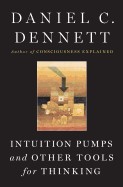
Thought experiments and other tools a philosopher uses to reason carefully.
Recommended by: Patrick Collison, Shane Parrish

Recommended by: Ana Fabrega, Chamath Palihapitiya, Jenny Chu and 2 others
Where it sits in the reference 4
Topics