Updates

  1. Person pages list letters, writing, profiles and links as sortable tables with filters, and show each person's companies as links; Fund letters show each letter's description in its own column.
  2. Experts show a checked job title and a short description of each person; 30 more people have photographs.
  3. Every company, fund, university and publication the experts work for has a page listing the people there.
  4. Fund letters show each letter's thesis and filter by it; 225 person pages list the essays, columns and newsletter issues the person wrote.
  5. Person pages list every essay and newsletter issue a person wrote, and their own books as a table in List view.
  6. Recommends shows the five largest kinds of book and the rest under More; browse pictures load sooner.
  7. Podcasts and talks link the original episode, filter by Audio and video or Press, and list each publisher once.
  8. Pages are wider, Recommends has List and Grid, and a filter clicked again turns off.
  9. Book cards sit in a ruled grid with Open Library and Goodreads links and each book's one-line note.
  10. Funds is now Investors; each investor's styles are buttons that filter the table.
  11. Podcasts and talks on a person's page filter by year and publisher and show as a list or a grid of pictures.
  12. Quotes show only people's own words: 472 summaries written by list sites are gone.
  13. Country pages open from Browse again, and every link on the shelf lands on a page.
  14. Subject and person pages show their sections as tabs, and each book appears once on a person's page.
  15. Book cards show the quote, who said it and the source; grids show five cards to a row.
  16. On a phone, a menu holds the sections, search, Updates, Feedback and dark mode.
  17. Feedback takes a screenshot of the page with no browser prompt, opens a screenshot full size when you click it, and clears itself once sent.
  18. Book cards are centred, search names the topic each book sits in, and any text cut short shows whole on hover.
  19. Search groups its results by kind: people, companies, geographies, subjects, topics, books, funds, fund letters and papers.
  20. The Books table lists who recommended each book by name, and the browser tab names the section you are in.
  21. Feedback can take a screenshot of the page, or one you paste or choose, and opens in the corner beside Updates.
  22. Each rail button reopens its section where you left it, and Browse, Table and People show on every book and subject page.
  23. Filters grey out choices that hold nothing instead of hiding them, and Books › People filters by authors or recommenders.
  24. Feedback takes a subject line and up to three screenshots.
  25. Biographies are grouped by the person they are about: 41 new pages, from Abraham Lincoln to Lee Kuan Yew.
  26. Sport splits into 23 sports, and Religion into one topic per faith.
  27. Book lists show as cards: the cover, one recommendation quote and every recommender by name.
  28. Seventeen subjects that had two or three pages under different names now have one page each.
  29. Every page lists its Experts as authors and recommenders, with a link to them on the Experts tab.
  30. Economics, Financial history, Financial panics and Accounting are subjects of their own, with one page per financial crisis.
  31. Book, person and subject pages open inside the app, so the tabs stay in view.
  32. 996 more book covers, and photographs or logos for 227 more people and companies.
  33. Books › Browse shows every subject as cards, and the rail holds Fund letters, Papers, Experts, Books and Funds.
  34. Every topic over 150 books splits into narrower topics, each with a page of its own.

Send feedback

What is it?
Screenshots, up to 3 (optional)
or paste one with Ctrl+V

We use your email only to reply to you.

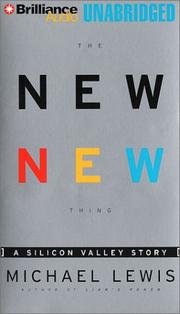
The New New Thing

The New New Thing

Michael Lewis
1999
T2 268 pages · about 4h 28m to read Open Librarygoodreads

Summary

Lewis follows Jim Clark, who founded Silicon Graphics, Netscape and Healtheon, during the period around 1998 and 1999 when Clark was building a large computerised sailboat and starting his third billion dollar company. The book is a portrait of the late 1990s technology economy through one person.

The business material covers Clark's role in changing how technology companies were financed. Netscape went public in 1995 with almost no revenue and a large loss, which had not previously been possible, and Lewis argues that this single event opened the window through which every subsequent unprofitable technology public offering passed. Clark's insistence on retaining a large founder stake, and his willingness to walk away from investors who would not accept his terms, changed the balance between founders and venture capitalists.

The Healtheon sections document a company built on a story about restructuring healthcare transactions, funded and taken public on the strength of Clark's record rather than on any working business. Lewis is ambivalent about his subject and does not resolve whether Clark was a visionary or a person who had learned to extract capital from a system that wanted to give it to him. The recurring theme is that Clark could not stop, and that each success made the next objective larger rather than sufficient.

The book is journalism written during the bubble and published shortly before it burst, which gives it an unintended documentary quality. It offers no analysis of what the period meant. The account of how the Netscape offering changed public market financing is the substantive contribution.

Key takeaways 8

  1. Netscape's 1995 public offering with almost no revenue opened the window through which subsequent unprofitable technology offerings passed.
  2. Clark's insistence on retaining a large founder stake and his willingness to refuse investors shifted the balance between founders and venture capital.
  3. A company could be funded and taken public on the strength of a founder's record and a story rather than on any working business.
  4. The value in the period attached to the new thing itself, which meant a company's prospects depended on how the story was framed rather than on its operations.
  5. Engineers rather than professional managers ran the companies Clark founded, which he treated as the source of their capability.
  6. Clark could not stop after each success, and the objective became larger rather than sufficient, which Lewis presents as the defining trait.
  7. The technology economy of the period transferred wealth to people who could construct a narrative about the future, whether or not it materialised.
  8. Lewis wrote during the bubble and does not resolve whether his subject was a visionary or an extractor of available capital.

Who should read it

Readers who want a contemporaneous portrait of the late 1990s technology financing environment and how public market appetite for unprofitable companies began.

About Michael Lewis

Financial journalist and author; former Salomon Brothers bond salesman

Liar's Poker, The Big Short and Flash Boys are the primary narrative sources later writers build on for Wall Street of the 1980s, the subprime crisis and high-frequency trading.

Vanity Fair, Salomon Brothers

Who recommended it 4 · 1 direct

Andrew Chenreported
Keith Raboisreported

Similar books 6

Chosen by shared topics, the entries that hold them, and the people who recommended both.

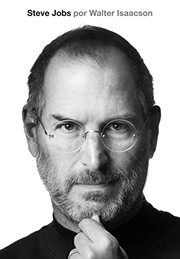
Walter Isaacson · 2011

Steve Jobs's life and Apple's products, from forty interviews with him and many more.

Christian Davenport · 2018

SpaceX against Blue Origin and the legacy contractors.
Where it sits in the reference 2

Journalists
Assets

Topics

Entrepreneurship and StartupsTechnology and ComputingBiography and MemoirFounders and EntrepreneursFounder Profiles and Startup StoriesTech company storiesTechnology founders