Updates

  1. Person pages list letters, writing, profiles and links as sortable tables with filters, and show each person's companies as links; Fund letters show each letter's description in its own column.
  2. Experts show a checked job title and a short description of each person; 30 more people have photographs.
  3. Every company, fund, university and publication the experts work for has a page listing the people there.
  4. Fund letters show each letter's thesis and filter by it; 225 person pages list the essays, columns and newsletter issues the person wrote.
  5. Person pages list every essay and newsletter issue a person wrote, and their own books as a table in List view.
  6. Recommends shows the five largest kinds of book and the rest under More; browse pictures load sooner.
  7. Podcasts and talks link the original episode, filter by Audio and video or Press, and list each publisher once.
  8. Pages are wider, Recommends has List and Grid, and a filter clicked again turns off.
  9. Book cards sit in a ruled grid with Open Library and Goodreads links and each book's one-line note.
  10. Funds is now Investors; each investor's styles are buttons that filter the table.
  11. Podcasts and talks on a person's page filter by year and publisher and show as a list or a grid of pictures.
  12. Quotes show only people's own words: 472 summaries written by list sites are gone.
  13. Country pages open from Browse again, and every link on the shelf lands on a page.
  14. Subject and person pages show their sections as tabs, and each book appears once on a person's page.
  15. Book cards show the quote, who said it and the source; grids show five cards to a row.
  16. On a phone, a menu holds the sections, search, Updates, Feedback and dark mode.
  17. Feedback takes a screenshot of the page with no browser prompt, opens a screenshot full size when you click it, and clears itself once sent.
  18. Book cards are centred, search names the topic each book sits in, and any text cut short shows whole on hover.
  19. Search groups its results by kind: people, companies, geographies, subjects, topics, books, funds, fund letters and papers.
  20. The Books table lists who recommended each book by name, and the browser tab names the section you are in.
  21. Feedback can take a screenshot of the page, or one you paste or choose, and opens in the corner beside Updates.
  22. Each rail button reopens its section where you left it, and Browse, Table and People show on every book and subject page.
  23. Filters grey out choices that hold nothing instead of hiding them, and Books › People filters by authors or recommenders.
  24. Feedback takes a subject line and up to three screenshots.
  25. Biographies are grouped by the person they are about: 41 new pages, from Abraham Lincoln to Lee Kuan Yew.
  26. Sport splits into 23 sports, and Religion into one topic per faith.
  27. Book lists show as cards: the cover, one recommendation quote and every recommender by name.
  28. Seventeen subjects that had two or three pages under different names now have one page each.
  29. Every page lists its Experts as authors and recommenders, with a link to them on the Experts tab.
  30. Economics, Financial history, Financial panics and Accounting are subjects of their own, with one page per financial crisis.
  31. Book, person and subject pages open inside the app, so the tabs stay in view.
  32. 996 more book covers, and photographs or logos for 227 more people and companies.
  33. Books › Browse shows every subject as cards, and the rail holds Fund letters, Papers, Experts, Books and Funds.
  34. Every topic over 150 books splits into narrower topics, each with a page of its own.

Send feedback

What is it?
Screenshots, up to 3 (optional)
or paste one with Ctrl+V

We use your email only to reply to you.

Founders at Work

Founders at Work

Jessica Livingston
2007
T3 482 pages · about 8h 2m to read Open Librarygoodreads

Summary

Livingston, a co-founder of Y Combinator, interviewed thirty-two founders about the early days of their companies, deliberately concentrating on the period before success was apparent. The subjects include Steve Wozniak, Paul Buchheit on Gmail, Max Levchin on PayPal, Sabeer Bhatia on Hotmail, Mitch Kapor, Ray Ozzie, Craig Newmark, Caterina Fake on Flickr, Joe Kraus on Excite, Evan Williams on Blogger and Joshua Schachter on Delicious.

The interview format preserves specifics that retrospective accounts remove. Levchin describes PayPal's fraud problem and the technical response in detail. Buchheit describes building Gmail as a side project and the internal opposition to launching it. Fake describes Flickr emerging as a feature of a failing game. Several describe pivots that were not called pivots at the time, and near-death financing episodes that later summaries omit.

The recurring patterns Livingston identifies include determination mattering more than intelligence, the frequency with which the eventual product differed from the original plan, the ordinariness of the founders relative to their later reputations, and the near-universal presence of a period where the company nearly failed.

The book was published in 2007, so the companies described are from the 1970s through the early 2000s and the technical and funding conditions have changed considerably. The selection is entirely of successful companies, which means the patterns cannot distinguish what caused success from what merely accompanied it. The interviews are lightly edited and some are more forthcoming than others. Its value is the primary material about the early period, which almost no other source preserves at this level of detail.

Key takeaways 8

  1. The product a company eventually succeeded with usually differed substantially from the one the founders originally intended to build.
  2. Persistence through periods where the company appeared to be failing was the trait most consistently present across these founders.
  3. Most of these companies had a near-death episode, usually involving funding, that is absent from later accounts of their history.
  4. Founders repeatedly ignored advice from experienced people who told them their idea would not work.
  5. Technical founders solving their own problem produced several of these companies, and the market discovery came afterwards.
  6. Launching an incomplete product and responding to what users did was more common than developing a complete product before release.
  7. Internal opposition inside larger companies, rather than external competition, was the main obstacle for products built within them.
  8. The founders described here were not exceptional in ways visible at the time, which undermines retrospective accounts that treat their success as predictable.

Who should read it

Founders who want primary accounts of the early period from people who were in it, before the narratives were cleaned up.

Who recommended it 9 · 1 direct

Andrew Chenreported
Brad Feldreported
Drew Houstonreported
Fred Wilsonreported
Paul Grahamreported
Ron Conwayreported
Ryan Hooverreported

Similar books 6

Chosen by shared topics, the entries that hold them, and the people who recommended both.
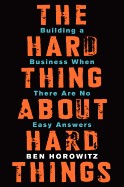
Ben Horowitz · 2014

Subtitled 'Building a Business When There Are No Easy Answers'

“…books I've recommended, highlighted to death, or forced on friends.” — Andrew Wilkinson

Source: Andrew Wilkinson's Bookshelf, neverenough.com

Recommended by: Andrew Wilkinson, Balaji S. Srinivasan and 34 others
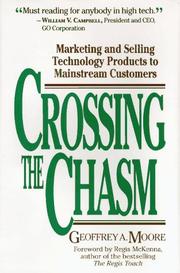
Geoffrey A. Moore · 1991

Why tech products stall between early adopters and the mainstream, and how to cross.

Randall E. Stross · 2012

Inside Y Combinator in the years before Altman ran it.

Recommended by: Garry Tan, Paul Graham
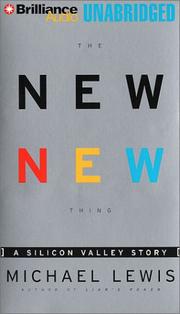
Michael Lewis · 1999

Jim Clark, founder of Silicon Graphics and Netscape, starts a third company in 1999.

Where it sits in the reference 3

Companies
Industries
Business themes

Topics

Entrepreneurship and StartupsBiography and MemoirFounders and EntrepreneursFounder Profiles and Startup StoriesFounder stories and advice