Updates

  1. Person pages list letters, writing, profiles and links as sortable tables with filters, and show each person's companies as links; Fund letters show each letter's description in its own column.
  2. Experts show a checked job title and a short description of each person; 30 more people have photographs.
  3. Every company, fund, university and publication the experts work for has a page listing the people there.
  4. Fund letters show each letter's thesis and filter by it; 225 person pages list the essays, columns and newsletter issues the person wrote.
  5. Person pages list every essay and newsletter issue a person wrote, and their own books as a table in List view.
  6. Recommends shows the five largest kinds of book and the rest under More; browse pictures load sooner.
  7. Podcasts and talks link the original episode, filter by Audio and video or Press, and list each publisher once.
  8. Pages are wider, Recommends has List and Grid, and a filter clicked again turns off.
  9. Book cards sit in a ruled grid with Open Library and Goodreads links and each book's one-line note.
  10. Funds is now Investors; each investor's styles are buttons that filter the table.
  11. Podcasts and talks on a person's page filter by year and publisher and show as a list or a grid of pictures.
  12. Quotes show only people's own words: 472 summaries written by list sites are gone.
  13. Country pages open from Browse again, and every link on the shelf lands on a page.
  14. Subject and person pages show their sections as tabs, and each book appears once on a person's page.
  15. Book cards show the quote, who said it and the source; grids show five cards to a row.
  16. On a phone, a menu holds the sections, search, Updates, Feedback and dark mode.
  17. Feedback takes a screenshot of the page with no browser prompt, opens a screenshot full size when you click it, and clears itself once sent.
  18. Book cards are centred, search names the topic each book sits in, and any text cut short shows whole on hover.
  19. Search groups its results by kind: people, companies, geographies, subjects, topics, books, funds, fund letters and papers.
  20. The Books table lists who recommended each book by name, and the browser tab names the section you are in.
  21. Feedback can take a screenshot of the page, or one you paste or choose, and opens in the corner beside Updates.
  22. Each rail button reopens its section where you left it, and Browse, Table and People show on every book and subject page.
  23. Filters grey out choices that hold nothing instead of hiding them, and Books › People filters by authors or recommenders.
  24. Feedback takes a subject line and up to three screenshots.
  25. Biographies are grouped by the person they are about: 41 new pages, from Abraham Lincoln to Lee Kuan Yew.
  26. Sport splits into 23 sports, and Religion into one topic per faith.
  27. Book lists show as cards: the cover, one recommendation quote and every recommender by name.
  28. Seventeen subjects that had two or three pages under different names now have one page each.
  29. Every page lists its Experts as authors and recommenders, with a link to them on the Experts tab.
  30. Economics, Financial history, Financial panics and Accounting are subjects of their own, with one page per financial crisis.
  31. Book, person and subject pages open inside the app, so the tabs stay in view.
  32. 996 more book covers, and photographs or logos for 227 more people and companies.
  33. Books › Browse shows every subject as cards, and the rail holds Fund letters, Papers, Experts, Books and Funds.
  34. Every topic over 150 books splits into narrower topics, each with a page of its own.

Send feedback

What is it?
Screenshots, up to 3 (optional)
or paste one with Ctrl+V

We use your email only to reply to you.

The Space Barons

The Space Barons

Christian Davenport
2018
T3 318 pages · about 5h 18m to read Open Librarygoodreads

SpaceX against Blue Origin and the legacy contractors.

Summary

Davenport, a Washington Post reporter, wrote a comparative account of the entrepreneurs who entered spaceflight: Elon Musk at SpaceX, Jeff Bezos at Blue Origin, Richard Branson at Virgin Galactic and Paul Allen through Stratolaunch and the earlier SpaceShipOne.

The narrative covers the period from the Ansari X Prize, won by SpaceShipOne in 2004, through to around 2017. Davenport traces the different strategies. SpaceX pursued orbital launch from the start, competed for government contracts aggressively including by suing the Air Force over a sole-source award to United Launch Alliance, and pursued reusability of the first stage. Blue Origin started with suborbital tourism and a deliberately slow approach captured in its motto about gradual progress, funded entirely by Bezos's stock sales, and worked toward orbital capability over a much longer horizon. Virgin Galactic pursued suborbital tourism with an air-launched vehicle and suffered a fatal test accident in 2014. Allen funded the original prize-winning vehicle and later a very large carrier aircraft.

Davenport covers the relationship with the established industry and with NASA: the Commercial Orbital Transportation Services programme that funded SpaceX and Orbital, the resistance from incumbent contractors and their congressional supporters, and the argument over whether commercial providers could be trusted with crew.

The book has good access to the participants and covers the personalities well. It is journalism rather than technical or business analysis, so it says little about launch economics, about whether the cost reductions claimed were real, or about the capital requirements. It ends before Falcon Heavy's flight, before crewed Dragon, before Starship and before the divergence in outcomes between the companies became clear.

Key takeaways 7

  1. SpaceX pursued orbital launch and government contracts from the start while Blue Origin began with suborbital flight and a much longer horizon.
  2. SpaceX sued the Air Force over a sole-source launch award, which opened national security launch to competition.
  3. NASA's commercial cargo programme funded fixed-price milestone-based development rather than cost-plus contracting, which changed the incentives.
  4. Blue Origin was funded entirely by Bezos selling Amazon stock, which removed the need for external investors and for schedule pressure.
  5. Reusing the first stage was the specific technical bet that separated SpaceX's cost structure from that of established providers.
  6. Incumbent contractors and their congressional supporters resisted commercial competition because their programmes depended on the existing structure.
  7. Suborbital tourism and orbital launch are different businesses requiring different technology, and conflating them misled observers about progress.

Who should read it

Investors and founders in space and deep technology who want the comparative history of how four differently funded approaches to the same industry developed.

Similar books 6

Chosen by shared topics, the entries that hold them, and the people who recommended both.

Tim Fernholz · 2018

The commercial-space policy fight that let SpaceX in.

Ashlee Vance · 2023

Four companies, from Planet Labs to Rocket Lab, racing to build cheap satellites.

Lori Garver · 2022

NASA insider on the policy fight that funded commercial crew.

Eric Berger · 2021

SpaceX's first six years, when it nearly failed four times before Falcon 1 flew.

Eric Berger · 2024

SpaceX from 2008 through Falcon 9, the Dragon capsule and reusable boosters.
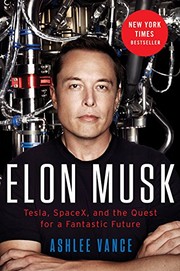
Ashlee Vance · 2015

Musk's life from South Africa and PayPal to running SpaceX and Tesla at once.

Where it sits in the reference 3

Companies
Biographies
Secular themes

Topics

Technology and ComputingEntrepreneurship and StartupsBiography and MemoirFounders and EntrepreneursFounder Profiles and Startup StoriesAviation and spaceflightTechnology founders