Updates

  1. Person pages list letters, writing, profiles and links as sortable tables with filters, and show each person's companies as links; Fund letters show each letter's description in its own column.
  2. Experts show a checked job title and a short description of each person; 30 more people have photographs.
  3. Every company, fund, university and publication the experts work for has a page listing the people there.
  4. Fund letters show each letter's thesis and filter by it; 225 person pages list the essays, columns and newsletter issues the person wrote.
  5. Person pages list every essay and newsletter issue a person wrote, and their own books as a table in List view.
  6. Recommends shows the five largest kinds of book and the rest under More; browse pictures load sooner.
  7. Podcasts and talks link the original episode, filter by Audio and video or Press, and list each publisher once.
  8. Pages are wider, Recommends has List and Grid, and a filter clicked again turns off.
  9. Book cards sit in a ruled grid with Open Library and Goodreads links and each book's one-line note.
  10. Funds is now Investors; each investor's styles are buttons that filter the table.
  11. Podcasts and talks on a person's page filter by year and publisher and show as a list or a grid of pictures.
  12. Quotes show only people's own words: 472 summaries written by list sites are gone.
  13. Country pages open from Browse again, and every link on the shelf lands on a page.
  14. Subject and person pages show their sections as tabs, and each book appears once on a person's page.
  15. Book cards show the quote, who said it and the source; grids show five cards to a row.
  16. On a phone, a menu holds the sections, search, Updates, Feedback and dark mode.
  17. Feedback takes a screenshot of the page with no browser prompt, opens a screenshot full size when you click it, and clears itself once sent.
  18. Book cards are centred, search names the topic each book sits in, and any text cut short shows whole on hover.
  19. Search groups its results by kind: people, companies, geographies, subjects, topics, books, funds, fund letters and papers.
  20. The Books table lists who recommended each book by name, and the browser tab names the section you are in.
  21. Feedback can take a screenshot of the page, or one you paste or choose, and opens in the corner beside Updates.
  22. Each rail button reopens its section where you left it, and Browse, Table and People show on every book and subject page.
  23. Filters grey out choices that hold nothing instead of hiding them, and Books › People filters by authors or recommenders.
  24. Feedback takes a subject line and up to three screenshots.
  25. Biographies are grouped by the person they are about: 41 new pages, from Abraham Lincoln to Lee Kuan Yew.
  26. Sport splits into 23 sports, and Religion into one topic per faith.
  27. Book lists show as cards: the cover, one recommendation quote and every recommender by name.
  28. Seventeen subjects that had two or three pages under different names now have one page each.
  29. Every page lists its Experts as authors and recommenders, with a link to them on the Experts tab.
  30. Economics, Financial history, Financial panics and Accounting are subjects of their own, with one page per financial crisis.
  31. Book, person and subject pages open inside the app, so the tabs stay in view.
  32. 996 more book covers, and photographs or logos for 227 more people and companies.
  33. Books › Browse shows every subject as cards, and the rail holds Fund letters, Papers, Experts, Books and Funds.
  34. Every topic over 150 books splits into narrower topics, each with a page of its own.

Send feedback

What is it?
Screenshots, up to 3 (optional)
or paste one with Ctrl+V

We use your email only to reply to you.

Elon Musk

Elon Musk

Ashlee Vance
2015
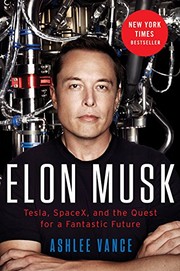
T2 396 pages · about 6h 36m to read Open Librarygoodreads

Contains the fullest early narrative of SpaceX's founding.

Summary

Vance wrote the first substantial Musk biography, published in 2015, with roughly thirty hours of Musk's cooperation plus interviews with about three hundred people. It covers the South African childhood, Zip2, X.com and PayPal, and then SpaceX and Tesla through the near-simultaneous near-death of both companies in 2008.

The strongest material concerns 2008. Vance documents SpaceX's first three Falcon 1 launch failures, Tesla running out of money during the financial crisis, Musk borrowing from friends to pay rent, and the fourth Falcon 1 launch succeeding in September 2008 followed by the NASA contract in December. He also covers the Roadster's cost overruns, the removal of Martin Eberhard, and the physical and organisational detail of building rockets in Hawthorne.

Vance describes Musk's management directly: the first-principles reasoning applied to rocket component costs, the willingness to fire long-serving employees abruptly, the demand for schedules everyone knows are impossible, and what employees around him described as the effect of proximity on their careers and health. He treats these as inseparable from the results rather than as flaws.

The book stops in 2015, so it predates Tesla's mass production, the Model 3 period, the Falcon 9 landings, Starlink, the Twitter acquisition and Musk's political activity. The access was cooperative, which shapes the tone toward admiration. Isaacson's 2023 biography covers the later period with different access. Vance remains the better account of the founding years and of the 2008 survival, which is the part most relevant to operators.

Key takeaways 8

  1. Musk reasons from physical first principles, calculating what a component's raw materials should cost and then treating the market price as the problem to be solved.
  2. Both SpaceX and Tesla came within weeks of failing in late 2008, and Musk kept them alive with his own remaining capital and personal borrowing.
  3. Vertical integration was chosen deliberately at SpaceX to control cost and schedule, against the aerospace industry's standard supplier model.
  4. Musk sets schedules that are known to be impossible and treats the resulting shortfall as acceptable, which produces faster outcomes and high turnover.
  5. Recruiting engineers who would accept extreme conditions in exchange for the mission was the core hiring strategy at both companies.
  6. Musk's willingness to bet all of his PayPal proceeds across two capital-intensive ventures was the specific decision that made both possible.
  7. Government contracts and subsidies, including the NASA award and Department of Energy loans, were necessary to the survival of both companies.
  8. The personal cost imposed on employees and family is documented throughout and presented by Vance as a component of the method.

Who should read it

Founders and investors interested in first-principles cost reasoning and in what running two capital-intensive companies through a near-death year actually required.

Who recommended it 12 · 1 direct

Brett Adcockreported
David Cancelreported
Mr. Beastreported
Niki Scevakreported

Similar books 6

Chosen by shared topics, the entries that hold them, and the people who recommended both.
Walter Isaacson · 2023

Two years shadowing Musk, across SpaceX, Tesla, Neuralink and the buying of Twitter.

Christian Davenport · 2018

SpaceX against Blue Origin and the legacy contractors.
Walter Isaacson · 2011

Steve Jobs's life and Apple's products, from forty interviews with him and many more.

Phil Knight · 2016

How a running-shoe importer became Nike, surviving one cash crisis after another.

“…books I've recommended, highlighted to death, or forced on friends.” — Andrew Wilkinson

Source: Andrew Wilkinson's Bookshelf, neverenough.com

Recommended by: Andrew Wilkinson, Bill Gates, Mohnish Pabrai and 25 others

Edward Niedermeyer · 2019

Sceptical account of Tesla's manufacturing and safety claims.

Tim Higgins · 2021

Tesla from its founding disputes through the Model 3 production crisis to 2020.

Where it sits in the reference 3

Companies
Companies
Biographies

Topics

Biography and MemoirEntrepreneurship and StartupsFounders and EntrepreneursFounder Profiles and Startup Stories