Updates

  1. Person pages list letters, writing, profiles and links as sortable tables with filters, and show each person's companies as links; Fund letters show each letter's description in its own column.
  2. Experts show a checked job title and a short description of each person; 30 more people have photographs.
  3. Every company, fund, university and publication the experts work for has a page listing the people there.
  4. Fund letters show each letter's thesis and filter by it; 225 person pages list the essays, columns and newsletter issues the person wrote.
  5. Person pages list every essay and newsletter issue a person wrote, and their own books as a table in List view.
  6. Recommends shows the five largest kinds of book and the rest under More; browse pictures load sooner.
  7. Podcasts and talks link the original episode, filter by Audio and video or Press, and list each publisher once.
  8. Pages are wider, Recommends has List and Grid, and a filter clicked again turns off.
  9. Book cards sit in a ruled grid with Open Library and Goodreads links and each book's one-line note.
  10. Funds is now Investors; each investor's styles are buttons that filter the table.
  11. Podcasts and talks on a person's page filter by year and publisher and show as a list or a grid of pictures.
  12. Quotes show only people's own words: 472 summaries written by list sites are gone.
  13. Country pages open from Browse again, and every link on the shelf lands on a page.
  14. Subject and person pages show their sections as tabs, and each book appears once on a person's page.
  15. Book cards show the quote, who said it and the source; grids show five cards to a row.
  16. On a phone, a menu holds the sections, search, Updates, Feedback and dark mode.
  17. Feedback takes a screenshot of the page with no browser prompt, opens a screenshot full size when you click it, and clears itself once sent.
  18. Book cards are centred, search names the topic each book sits in, and any text cut short shows whole on hover.
  19. Search groups its results by kind: people, companies, geographies, subjects, topics, books, funds, fund letters and papers.
  20. The Books table lists who recommended each book by name, and the browser tab names the section you are in.
  21. Feedback can take a screenshot of the page, or one you paste or choose, and opens in the corner beside Updates.
  22. Each rail button reopens its section where you left it, and Browse, Table and People show on every book and subject page.
  23. Filters grey out choices that hold nothing instead of hiding them, and Books › People filters by authors or recommenders.
  24. Feedback takes a subject line and up to three screenshots.
  25. Biographies are grouped by the person they are about: 41 new pages, from Abraham Lincoln to Lee Kuan Yew.
  26. Sport splits into 23 sports, and Religion into one topic per faith.
  27. Book lists show as cards: the cover, one recommendation quote and every recommender by name.
  28. Seventeen subjects that had two or three pages under different names now have one page each.
  29. Every page lists its Experts as authors and recommenders, with a link to them on the Experts tab.
  30. Economics, Financial history, Financial panics and Accounting are subjects of their own, with one page per financial crisis.
  31. Book, person and subject pages open inside the app, so the tabs stay in view.
  32. 996 more book covers, and photographs or logos for 227 more people and companies.
  33. Books › Browse shows every subject as cards, and the rail holds Fund letters, Papers, Experts, Books and Funds.
  34. Every topic over 150 books splits into narrower topics, each with a page of its own.

Send feedback

What is it?
Screenshots, up to 3 (optional)
or paste one with Ctrl+V

We use your email only to reply to you.

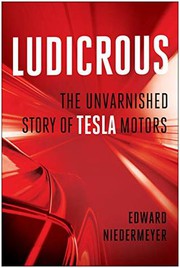
Ludicrous

Ludicrous

Edward Niedermeyer
2019
T3 220 pages · about 3h 40m to read Open Librarygoodreads

Sceptical account of Tesla's manufacturing and safety claims.

Summary

Niedermeyer, an automotive journalist who covered Tesla critically for years, wrote a sceptical account of the company arguing that the gap between its public narrative and its operating reality is the central fact about it.

The manufacturing chapters are the strongest. Niedermeyer argues that Tesla repeatedly attempted to solve production problems through automation and vertical integration in ways that established manufacturers had already tested and rejected, most visibly in the Model 3 ramp where the highly automated general assembly line had to be partially dismantled and replaced with manual work in a tent outside the factory. He documents quality problems including panel gaps, paint defects and service delays, and argues that the company's service capacity did not grow with its fleet.

Other chapters cover the Autopilot marketing and the gap between the driver assistance system's actual capability and the language used to sell it, including the full self-driving claims and the fatalities in which the system was engaged. He covers the direct sales model and the dealer franchise law fights, the regulatory credit revenue that supported reported results, the relationship between Tesla's share price and its ability to raise capital, and Musk's use of announcements to move the stock.

The book is a critique and does not pretend otherwise. Its main analytical weakness is that it treats the automotive industry's accumulated manufacturing knowledge as settled in a way that assumes Tesla's approach must fail, and the company subsequently reached sustained profitability and production volumes the book implies it could not. The specific criticisms of quality, service, autonomy claims and communication have held up better than the general prediction. Readers should treat it as the prosecution case, worth reading alongside more sympathetic accounts.

Key takeaways 7

  1. Tesla attempted to automate general assembly to a degree that established manufacturers had tested and abandoned, and had to reverse it.
  2. Vertical integration in automotive manufacturing raises fixed cost and reduces flexibility, which is why the industry outsourced components.
  3. Service capacity did not grow in proportion to the fleet, which produced the delays that the direct sales model made harder to resolve.
  4. Autopilot marketing described capabilities beyond what the system delivered, and drivers relied on it accordingly.
  5. Regulatory credit sales rather than vehicle margin supported reported profitability in several periods.
  6. The company's ability to raise capital depended on the share price, which depended on announcements about future products.
  7. Direct sales required fighting state franchise laws individually, which shaped where the company could sell.

Who should read it

Investors who want the sceptical case on Tesla's manufacturing and claims, read alongside accounts that explain what the company subsequently achieved.

Similar books 6

Chosen by shared topics, the entries that hold them, and the people who recommended both.
Tim Higgins · 2021

Tesla from its founding disputes through the Model 3 production crisis to 2020.
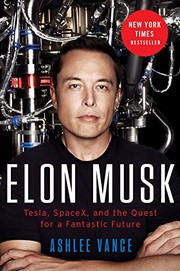
Ashlee Vance · 2015

Musk's life from South Africa and PayPal to running SpaceX and Tesla at once.

Walter Isaacson · 2023

Two years shadowing Musk, across SpaceX, Tesla, Neuralink and the buying of Twitter.

Lawrence D. Burns, Christopher Shulgan · 2018

Autonomy from the incumbent and Waymo side.

Ben Mezrich · 2023

Fast narrative of the takeover and the layoffs.
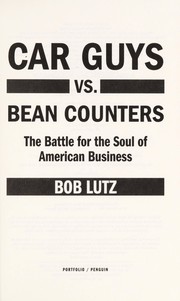
Bob Lutz · 2011

Insider account: Lutz on product culture versus finance control.

Recommended by: Mohnish Pabrai

Where it sits in the reference 3

Companies
Biographies
Industries

Topics

Company Histories