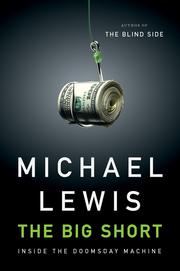
The Big Short
Summary
Lewis tells the story of the 2008 financial crisis through the small number of investors who identified that subprime mortgage securities would fail and constructed positions against them. The main figures are Michael Burry of Scion Capital, a doctor with Asperger's who read the underlying mortgage bond prospectuses; Steve Eisman of FrontPoint; Greg Lippmann at Deutsche Bank, who sold the trade while holding it himself; and Charlie Ledley and Jamie Mai of Cornwall Capital.
The mechanics are explained through these people rather than abstractly. Lewis covers how mortgage pools were assembled from loans with deteriorating standards, how tranching allowed a pool of poor loans to produce triple-A rated paper, how collateralised debt obligations repackaged the lower tranches into new securities that were again rated triple-A, and how credit default swaps allowed investors to buy insurance on securities they did not own, which then allowed synthetic CDOs to multiply the exposure far beyond the underlying mortgages.
The most useful analytical material concerns why the trade was hard to hold. The positions cost money every month, marks were controlled by the same banks on the other side, investors withdrew, and Burry restricted redemptions and was attacked by his own clients while being right.
Lewis simplifies and dramatises, and finance professionals dispute details, including his treatment of the rating agencies and of who understood what. The book concentrates on the individuals who won, which gives an incomplete picture of a system-wide failure. It is the most readable account of the securitisation mechanics and of how a correct position can destroy a fund before it pays.
Key takeaways 8
- Tranching allowed pools of low-quality mortgages to produce securities rated triple-A, and the rating agencies applied models that assumed regional rather than national correlation in defaults.
- Collateralised debt obligations repackaged the worst tranches of mortgage bonds into new securities that again received top ratings.
- Credit default swaps let investors take positions against securities they did not own, which multiplied the total exposure far beyond the underlying loans.
- Very few people read the underlying loan documentation, and the investors who profited did so mainly by reading what everyone else assumed.
- A correct position can bankrupt the holder before it pays, because carrying costs, mark-to-market control by counterparties and investor redemptions all work against it.
- Investors who bet against the mortgage market were attacked by their own clients while the position was still losing money.
- The banks selling the insurance frequently did not understand the exposure they were accumulating on their own balance sheets.
- Compensation structures rewarded volume of securities created rather than their quality, which explains the deterioration in underwriting without requiring any individual to intend fraud.
Who should read it
Investors who want the securitisation mechanics explained through the people who traded them, and a case study in the cost of being early.
About Michael Lewis
Financial journalist and author; former Salomon Brothers bond salesman
Liar's Poker, The Big Short and Flash Boys are the primary narrative sources later writers build on for Wall Street of the 1980s, the subprime crisis and high-frequency trading.
Who recommended it 6 · 3 direct
Similar books 6
Chosen by shared topics, the entries that hold them, and the people who recommended both.
Journalism written during four crises, from the 1987 crash to LTCM's collapse.
Recommended by: Mohnish Pabrai, Seth Klarman
Inside the meetings of bankers and regulators during the 2008 financial crisis.
Recommended by: Mohnish Pabrai, Bill Gates, Max Levchin and 1 other

County data showing household debt, not the banks, caused the Great Recession.
How a hedge fund's bond bets on borrowed money lost $4.6 billion in four months.
Recommended by: Mohnish Pabrai and 7 others

The 2008 crisis grew from political and economic imbalances, not just banker greed.
The Stuyvesant Town deal and the largest real estate loss on record.
Recommended by: Vinod Khosla
Where it sits in the reference 6
Topics