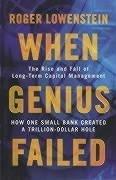
When Genius Failed: The Rise and Fall of Long-Term Capital Management
The canonical account.
Summary
Lowenstein reconstructs the founding, operation and 1998 collapse of Long-Term Capital Management, the hedge fund founded by Salomon Brothers bond trader John Meriwether with a partnership that included Nobel laureates Myron Scholes and Robert Merton. The fund returned over forty percent annually in its first years and then lost about 4.6 billion dollars in four months.
The strategy was convergence arbitrage: identifying small pricing differences between closely related securities, judging that they would converge, and applying enormous leverage to make small spreads meaningful. LTCM ran leverage above twenty-five to one on balance sheet, with much larger notional exposure through derivatives, and it obtained financing terms from banks that no other fund received, including trades with no haircut.
The failure sequence began with Russia's default in August 1998. Correlations that the models treated as independent moved together, liquidity disappeared, and the positions could not be exited because LTCM was the market in many of them. Counterparties knew the positions and traded against them. The Federal Reserve Bank of New York convened fourteen banks to recapitalise the fund in September to prevent forced liquidation.
Lowenstein is a journalist and the finance is explained clearly for non-specialists, sometimes at the cost of technical precision. The book is strongest on the partnership's internal culture, the arrogance toward counterparties, and the risk model's assumption that historical volatility and correlation would hold. Critics note that Lowenstein moralises about intellectual pride rather than analysing the market structure failures. The episode is the standard case study for leverage, liquidity and model risk.
Key takeaways 8
- Leverage converts a small adverse price move into insolvency, and LTCM's positions were individually sound while its capital structure was not.
- Risk models calibrated on historical volatility and correlation fail exactly when a stress event makes previously independent positions move together.
- Liquidity vanishes when a large position needs to be exited, so the exit price bears no relation to the model price.
- A fund whose positions are known to counterparties can be traded against, which turns a crowded position into a trap.
- Academic credentials and Nobel-recognised theory provided no protection and contributed to the confidence that allowed the leverage.
- Banks extended LTCM financing terms unavailable to anyone else because they wanted the relationship, which removed the market discipline that would have limited the fund.
- Convergence trades have limited upside and unlimited downside, which is the reverse of the payoff structure a leveraged fund should hold.
- The rescue set a precedent for intervention that shaped expectations of official support in later crises.
Who should read it
Investors and risk managers who want the definitive case study on leverage, model risk and liquidity, applicable well beyond fixed income arbitrage.
About Roger Lowenstein
Financial journalist and author; Wall Street Journal reporter for over a decade
Buffett: The Making of an American Capitalist and When Genius Failed are the standard reference accounts of Buffett's rise and of the LTCM collapse.
Who recommended it 8 · 2 direct
Similar books 6
Chosen by shared topics, the entries that hold them, and the people who recommended both.
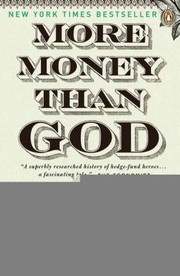
Hedge funds from Alfred Winslow Jones in 1949 through Soros, Robertson and beyond.
“It's hard to imagine anyone will ever write a better book on the subject.” — Paul Graham
Source: Paul Graham on X (Apr 8, 2021)
Recommended by: Mohnish Pabrai, Paul Graham, Josh Wolfe and 1 other
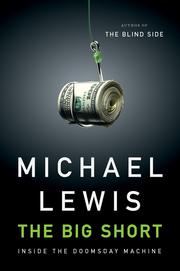
The few investors who saw subprime mortgage bonds would fail, and bet against them.
Recommended by: Mohnish Pabrai and 5 others
Primary source: the official post-mortem.
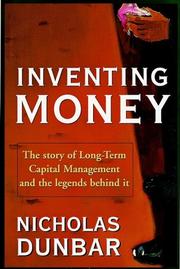
Long-Term Capital Management's actual positions, and the option theory behind them.
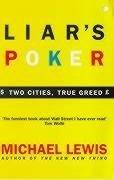
Life on Salomon Brothers' bond trading floor in the 1980s mortgage-bond boom.
“I do believe, as Michael Lewis writes in his intriguing 1989 book, "Liar's Poker," that it is unlikely that an individual unable to buck convention in one's life will suddenly be able to buck…” — Michael Burry
Source: MSN Money Strategy Lab journal, March 2, 2001 — archived
Recommended by: Michael Burry, Mohnish Pabrai, Nat Eliason and 3 others

Recommended by: Mohnish Pabrai, Seth Klarman
Where it sits in the reference 6
Topics