Hedge Funds, Leverage, and the Lessons of Long-Term Capital Management
Primary source: the official post-mortem.
Summary
The President's Working Group on Financial Markets, comprising the Treasury, the Federal Reserve, the Securities and Exchange Commission and the Commodity Futures Trading Commission, produced this report in April 1999 following the near-failure of Long-Term Capital Management the previous September.
The report's analysis identifies the central issue as leverage rather than hedge funds as such. Long-Term Capital had balance sheet leverage of roughly twenty-five to one before its losses and far higher afterward, plus derivative positions with notional values in the trillions that did not appear on the balance sheet at all. The report finds that this leverage was extended by the fund's counterparties, who were the major banks and securities firms, and that those counterparties had failed to obtain adequate information about the fund's overall positions, had competed for its business by offering favourable terms including low or zero initial margin, and had each assessed their own exposure without knowing the aggregate.
The conclusions follow from this. The report declines to recommend direct regulation of hedge funds, on the grounds that the effective constraint on leverage is the willingness of counterparties to extend it. Instead it recommends improved counterparty risk management including better information from funds, stress testing against extreme scenarios rather than only historical volatility, more conservative collateral practices, greater public disclosure by publicly traded financial institutions of their exposures, and consideration of regulatory capital rules that reflect counterparty leverage.
The report is an official document and reads as one: measured, consensus-driven and reluctant to recommend anything contested.
Its central recommendations were not implemented in any binding form, and the 2008 crisis reproduced the same failures at far greater scale: leverage extended without knowledge of aggregate positions, risk measured against historical volatility, and collateral practices that tightened simultaneously. The report is worth reading as evidence that the mechanism was correctly diagnosed nine years before it mattered.
Key takeaways 7
- The central problem was leverage rather than hedge funds, and leverage is extended by counterparties who can therefore constrain it.
- Long-Term Capital's counterparties competed for its business by offering favourable terms including minimal initial margin.
- Each counterparty assessed its own exposure without knowing the fund's aggregate positions across all of them.
- Derivative positions with very large notional values did not appear on the balance sheet, so leverage measures understated the exposure.
- Stress testing against extreme scenarios rather than historical volatility was recommended and not adopted in binding form.
- The report declined to recommend direct regulation of funds, relying instead on counterparty discipline that subsequently failed.
- The same mechanisms reproduced themselves at far greater scale in 2008, nine years after this diagnosis was published.
Who should read it
Risk managers and regulators who want the official diagnosis of leverage and counterparty failure, and evidence of how long a correct diagnosis can go unacted on.
Similar books 6
Chosen by shared topics, the entries that hold them, and the people who recommended both.
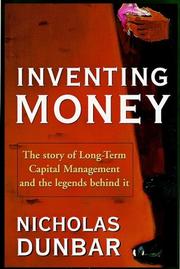
Long-Term Capital Management's actual positions, and the option theory behind them.
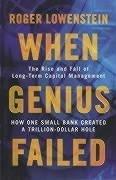
How a hedge fund's bond bets on borrowed money lost $4.6 billion in four months.
Recommended by: Mohnish Pabrai and 7 others
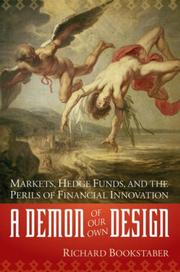
How financial innovation made markets more crisis-prone, from a risk manager.
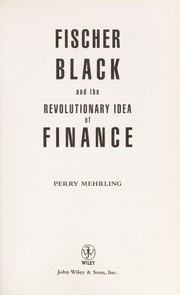
Fischer Black's life and ideas, from option pricing on, that shaped modern finance.
Recommended by: Mohnish Pabrai
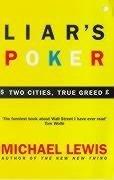
Life on Salomon Brothers' bond trading floor in the 1980s mortgage-bond boom.
“I do believe, as Michael Lewis writes in his intriguing 1989 book, "Liar's Poker," that it is unlikely that an individual unable to buck convention in one's life will suddenly be able to buck…” — Michael Burry
Source: MSN Money Strategy Lab journal, March 2, 2001 — archived
Recommended by: Michael Burry, Mohnish Pabrai, Nat Eliason and 3 others
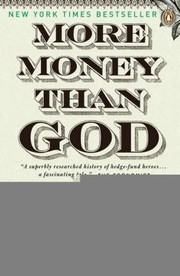
Hedge funds from Alfred Winslow Jones in 1949 through Soros, Robertson and beyond.
“It's hard to imagine anyone will ever write a better book on the subject.” — Paul Graham
Source: Paul Graham on X (Apr 8, 2021)
Recommended by: Mohnish Pabrai, Paul Graham, Josh Wolfe and 1 other
Where it sits in the reference 2
Topics