Updates

  1. Person pages list letters, writing, profiles and links as sortable tables with filters, and show each person's companies as links; Fund letters show each letter's description in its own column.
  2. Experts show a checked job title and a short description of each person; 30 more people have photographs.
  3. Every company, fund, university and publication the experts work for has a page listing the people there.
  4. Fund letters show each letter's thesis and filter by it; 225 person pages list the essays, columns and newsletter issues the person wrote.
  5. Person pages list every essay and newsletter issue a person wrote, and their own books as a table in List view.
  6. Recommends shows the five largest kinds of book and the rest under More; browse pictures load sooner.
  7. Podcasts and talks link the original episode, filter by Audio and video or Press, and list each publisher once.
  8. Pages are wider, Recommends has List and Grid, and a filter clicked again turns off.
  9. Book cards sit in a ruled grid with Open Library and Goodreads links and each book's one-line note.
  10. Funds is now Investors; each investor's styles are buttons that filter the table.
  11. Podcasts and talks on a person's page filter by year and publisher and show as a list or a grid of pictures.
  12. Quotes show only people's own words: 472 summaries written by list sites are gone.
  13. Country pages open from Browse again, and every link on the shelf lands on a page.
  14. Subject and person pages show their sections as tabs, and each book appears once on a person's page.
  15. Book cards show the quote, who said it and the source; grids show five cards to a row.
  16. On a phone, a menu holds the sections, search, Updates, Feedback and dark mode.
  17. Feedback takes a screenshot of the page with no browser prompt, opens a screenshot full size when you click it, and clears itself once sent.
  18. Book cards are centred, search names the topic each book sits in, and any text cut short shows whole on hover.
  19. Search groups its results by kind: people, companies, geographies, subjects, topics, books, funds, fund letters and papers.
  20. The Books table lists who recommended each book by name, and the browser tab names the section you are in.
  21. Feedback can take a screenshot of the page, or one you paste or choose, and opens in the corner beside Updates.
  22. Each rail button reopens its section where you left it, and Browse, Table and People show on every book and subject page.
  23. Filters grey out choices that hold nothing instead of hiding them, and Books › People filters by authors or recommenders.
  24. Feedback takes a subject line and up to three screenshots.
  25. Biographies are grouped by the person they are about: 41 new pages, from Abraham Lincoln to Lee Kuan Yew.
  26. Sport splits into 23 sports, and Religion into one topic per faith.
  27. Book lists show as cards: the cover, one recommendation quote and every recommender by name.
  28. Seventeen subjects that had two or three pages under different names now have one page each.
  29. Every page lists its Experts as authors and recommenders, with a link to them on the Experts tab.
  30. Economics, Financial history, Financial panics and Accounting are subjects of their own, with one page per financial crisis.
  31. Book, person and subject pages open inside the app, so the tabs stay in view.
  32. 996 more book covers, and photographs or logos for 227 more people and companies.
  33. Books › Browse shows every subject as cards, and the rail holds Fund letters, Papers, Experts, Books and Funds.
  34. Every topic over 150 books splits into narrower topics, each with a page of its own.

Send feedback

What is it?
Screenshots, up to 3 (optional)
or paste one with Ctrl+V

We use your email only to reply to you.

House of Debt

House of Debt

Atif Mian, Amir Sufi
2014
T2 232 pages · about 3h 52m to read Open Librarygoodreads

Household leverage, not banks, as the transmission mechanism of the 2008 bust.

Summary

Mian and Sufi argue that the Great Recession was caused by household debt rather than by a banking crisis, and they support this with county-level data on household leverage, house prices, consumption and employment across the United States.

Their central finding is that spending fell first and fell hardest in the counties where households had borrowed most against housing during the boom, and that this happened before the banking system seized in late 2008. They show that the wealth effect from falling house prices was concentrated among leveraged households with high marginal propensity to consume, so a given fall in aggregate wealth produced a far larger fall in spending than an unleveraged distribution would have. Job losses in non-tradeable local sectors followed the spending collapse geographically, which is evidence that demand rather than credit supply drove the employment fall.

From the diagnosis they draw a policy argument. Debt contracts concentrate losses on the borrower, who has the least capacity to bear them, while creditors are protected. They advocate mortgage contracts with equity features, in which payments adjust to local house price indices, so that losses are shared and the aggregate demand collapse is prevented. They also argue that bailing out banks without writing down household debt addressed the wrong problem.

The empirical work is well regarded and the county-level identification is the book's strength. The policy proposal has been criticised as difficult to implement and as creating its own moral hazard and pricing problems. Other economists continue to argue the credit supply channel mattered more than Mian and Sufi allow.

Key takeaways 7

  1. Household spending collapsed first and hardest in the counties with the highest household leverage, and it fell before the banking system froze.
  2. Debt concentrates the losses from falling asset prices on the borrower, who has the least net worth and the highest propensity to cut spending.
  3. The employment collapse began in non-tradeable local sectors in high-leverage counties, which shows demand rather than credit supply drove it.
  4. Bailing out creditors while leaving household debt untouched addressed the wrong side of the problem and prolonged the demand shortfall.
  5. Mortgage contracts that link payments to local house price indices would share losses between lender and borrower and prevent the spending collapse.
  6. Credit expansion to marginal borrowers during the boom raised house prices, and the price increases then justified further lending, which is a self-reinforcing loop rather than a response to fundamentals.
  7. Monetary policy loses effectiveness when the households who would respond to lower rates are the ones constrained by negative equity.

Who should read it

Macro investors and policy-minded readers who want the household-leverage account of the recession, supported by unusually good geographic data.

Similar books 6

Chosen by shared topics, the entries that hold them, and the people who recommended both.

Adam Tooze · 2018

The 2008 crash, the eurozone crisis and the politics after as one connected story.

Raghuram G. Rajan · 2010

The 2008 crisis grew from political and economic imbalances, not just banker greed.
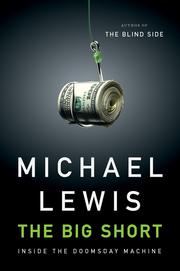
Michael Lewis · 2010

The few investors who saw subprime mortgage bonds would fail, and bet against them.

Ray Dalio · 2018

A template for how big debt crises unfold, with detailed case studies.
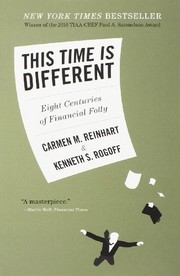
Carmen M. Reinhart, Kenneth S. Rogoff · 2009

Eight centuries of defaults and banking crises show the same patterns recurring.

Alan S. Blinder · 2013

The 2008 crisis, the policy response and the aftermath, for general readers.

Where it sits in the reference 5

Geographies
Assets
Secular themes
Financial panics
Economics

Topics

EconomicsPolitics and GovernmentRegulation, central banks and public policy