Updates

  1. Person pages list letters, writing, profiles and links as sortable tables with filters, and show each person's companies as links; Fund letters show each letter's description in its own column.
  2. Experts show a checked job title and a short description of each person; 30 more people have photographs.
  3. Every company, fund, university and publication the experts work for has a page listing the people there.
  4. Fund letters show each letter's thesis and filter by it; 225 person pages list the essays, columns and newsletter issues the person wrote.
  5. Person pages list every essay and newsletter issue a person wrote, and their own books as a table in List view.
  6. Recommends shows the five largest kinds of book and the rest under More; browse pictures load sooner.
  7. Podcasts and talks link the original episode, filter by Audio and video or Press, and list each publisher once.
  8. Pages are wider, Recommends has List and Grid, and a filter clicked again turns off.
  9. Book cards sit in a ruled grid with Open Library and Goodreads links and each book's one-line note.
  10. Funds is now Investors; each investor's styles are buttons that filter the table.
  11. Podcasts and talks on a person's page filter by year and publisher and show as a list or a grid of pictures.
  12. Quotes show only people's own words: 472 summaries written by list sites are gone.
  13. Country pages open from Browse again, and every link on the shelf lands on a page.
  14. Subject and person pages show their sections as tabs, and each book appears once on a person's page.
  15. Book cards show the quote, who said it and the source; grids show five cards to a row.
  16. On a phone, a menu holds the sections, search, Updates, Feedback and dark mode.
  17. Feedback takes a screenshot of the page with no browser prompt, opens a screenshot full size when you click it, and clears itself once sent.
  18. Book cards are centred, search names the topic each book sits in, and any text cut short shows whole on hover.
  19. Search groups its results by kind: people, companies, geographies, subjects, topics, books, funds, fund letters and papers.
  20. The Books table lists who recommended each book by name, and the browser tab names the section you are in.
  21. Feedback can take a screenshot of the page, or one you paste or choose, and opens in the corner beside Updates.
  22. Each rail button reopens its section where you left it, and Browse, Table and People show on every book and subject page.
  23. Filters grey out choices that hold nothing instead of hiding them, and Books › People filters by authors or recommenders.
  24. Feedback takes a subject line and up to three screenshots.
  25. Biographies are grouped by the person they are about: 41 new pages, from Abraham Lincoln to Lee Kuan Yew.
  26. Sport splits into 23 sports, and Religion into one topic per faith.
  27. Book lists show as cards: the cover, one recommendation quote and every recommender by name.
  28. Seventeen subjects that had two or three pages under different names now have one page each.
  29. Every page lists its Experts as authors and recommenders, with a link to them on the Experts tab.
  30. Economics, Financial history, Financial panics and Accounting are subjects of their own, with one page per financial crisis.
  31. Book, person and subject pages open inside the app, so the tabs stay in view.
  32. 996 more book covers, and photographs or logos for 227 more people and companies.
  33. Books › Browse shows every subject as cards, and the rail holds Fund letters, Papers, Experts, Books and Funds.
  34. Every topic over 150 books splits into narrower topics, each with a page of its own.

Send feedback

What is it?
Screenshots, up to 3 (optional)
or paste one with Ctrl+V

We use your email only to reply to you.

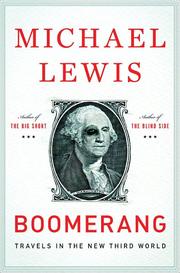
Boomerang

Boomerang

Michael Lewis
2011
T1 215 pages · about 3h 35m to read Open Librarygoodreads

The Greece chapter on hidden deficits, the tax base and off-balance-sheet borrowing.

Summary

Lewis collects reporting from Iceland, Greece, Ireland, Germany and California, examining how the credit available before 2008 was used differently in each place and arguing that the pattern reveals something about each society. His framing device is that cheap money functioned as a test of what each country did when nobody was watching.

Iceland's fishermen and small-country bankers built a leveraged financial sector many times the size of the economy on trades they did not understand. Ireland's banks lent against domestic property to a degree that made the state insolvent when it guaranteed them, and Lewis focuses on why the government issued a blanket guarantee without knowing the size of the exposure. Greece's problem was a state that had lost the ability to collect taxes and had concealed its deficits, with public sector employment and pensions as the mechanism. Germany's banks bought the worst of everyone else's securities, which Lewis attributes to a rule-following disposition that trusted the ratings. California's chapter covers municipal finances and public pension obligations.

The reporting is vivid and Lewis is a very good writer of scenes.

The method is the problem. Lewis explains national outcomes through national character in ways that reduce to stereotype, and the Greek and German chapters in particular drew heavy criticism on this basis. He selects colourful sources and the analysis is thin relative to the storytelling. Several predictions, particularly about municipal defaults in the United States, did not occur. The reporting on Ireland's guarantee decision and on Iceland's banking expansion is the most substantive material, and the national character framing should be disregarded.

Key takeaways 8

  1. Cheap credit before 2008 was used differently in each country, and the differences reveal what each financial system was actually doing.
  2. Iceland built a banking sector many times its economy on trades its participants did not understand, funded entirely by foreign borrowing.
  3. Ireland's government issued a blanket guarantee of its banks without knowing the size of the liabilities, which converted a banking crisis into a sovereign one.
  4. Greece's central problem was a state that could not collect taxes and had misreported its deficits for years.
  5. German banks bought the worst securities other countries produced, and Lewis attributes this to trust in ratings and in stated rules.
  6. Public pension obligations at the municipal level in the United States represent commitments made without any funding mechanism.
  7. Sovereign and banking crises are the same crisis once a state guarantees its banks, since the guarantee transfers the liability without reducing it.
  8. Lewis explains national outcomes through national character, which is the book's central weakness and should be set aside.

Who should read it

Readers who want vivid reporting on how the 2008 credit cycle played out differently by country, discounting the national character explanations.

About Michael Lewis

Financial journalist and author; former Salomon Brothers bond salesman

Liar's Poker, The Big Short and Flash Boys are the primary narrative sources later writers build on for Wall Street of the 1980s, the subprime crisis and high-frequency trading.

Vanity Fair, Salomon Brothers

Who recommended it 3 · 1 direct

Alfred Linreported

Similar books 6

Chosen by shared topics, the entries that hold them, and the people who recommended both.
Philipp Bagus, David Howden · 2011

Austrian-school reading of the credit boom and currency mismatch.
Jason Manolopoulos · 2011

Written by a hedge fund manager; strongest on the bond market's role in the build-up.
Eirikur Bergmann · 2014

Political economy of the boom, the Icesave dispute and the aftermath.

Valur Ingimundarson, Philippe Urfalino, Irma Erlingsdottir · 2016

Academic collection on blame, protest and institutional reconstruction after 2008.

Donal Donovan, Antoin E. Murphy · 2013

Sober macro account by a former IMF official; the counterweight to the journalism.
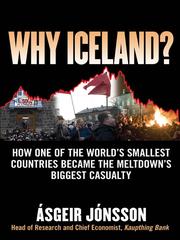
Ásgeir Jónsson · 2009

By Kaupthing's former chief economist; insider view of the funding model that failed.

Where it sits in the reference 7

Journalists
Geographies
Geographies
Geographies
Assets
Financial panics
Economics

Topics

Financial HistoryEconomicsTravel and Exploration