Updates

  1. Person pages list letters, writing, profiles and links as sortable tables with filters, and show each person's companies as links; Fund letters show each letter's description in its own column.
  2. Experts show a checked job title and a short description of each person; 30 more people have photographs.
  3. Every company, fund, university and publication the experts work for has a page listing the people there.
  4. Fund letters show each letter's thesis and filter by it; 225 person pages list the essays, columns and newsletter issues the person wrote.
  5. Person pages list every essay and newsletter issue a person wrote, and their own books as a table in List view.
  6. Recommends shows the five largest kinds of book and the rest under More; browse pictures load sooner.
  7. Podcasts and talks link the original episode, filter by Audio and video or Press, and list each publisher once.
  8. Pages are wider, Recommends has List and Grid, and a filter clicked again turns off.
  9. Book cards sit in a ruled grid with Open Library and Goodreads links and each book's one-line note.
  10. Funds is now Investors; each investor's styles are buttons that filter the table.
  11. Podcasts and talks on a person's page filter by year and publisher and show as a list or a grid of pictures.
  12. Quotes show only people's own words: 472 summaries written by list sites are gone.
  13. Country pages open from Browse again, and every link on the shelf lands on a page.
  14. Subject and person pages show their sections as tabs, and each book appears once on a person's page.
  15. Book cards show the quote, who said it and the source; grids show five cards to a row.
  16. On a phone, a menu holds the sections, search, Updates, Feedback and dark mode.
  17. Feedback takes a screenshot of the page with no browser prompt, opens a screenshot full size when you click it, and clears itself once sent.
  18. Book cards are centred, search names the topic each book sits in, and any text cut short shows whole on hover.
  19. Search groups its results by kind: people, companies, geographies, subjects, topics, books, funds, fund letters and papers.
  20. The Books table lists who recommended each book by name, and the browser tab names the section you are in.
  21. Feedback can take a screenshot of the page, or one you paste or choose, and opens in the corner beside Updates.
  22. Each rail button reopens its section where you left it, and Browse, Table and People show on every book and subject page.
  23. Filters grey out choices that hold nothing instead of hiding them, and Books › People filters by authors or recommenders.
  24. Feedback takes a subject line and up to three screenshots.
  25. Biographies are grouped by the person they are about: 41 new pages, from Abraham Lincoln to Lee Kuan Yew.
  26. Sport splits into 23 sports, and Religion into one topic per faith.
  27. Book lists show as cards: the cover, one recommendation quote and every recommender by name.
  28. Seventeen subjects that had two or three pages under different names now have one page each.
  29. Every page lists its Experts as authors and recommenders, with a link to them on the Experts tab.
  30. Economics, Financial history, Financial panics and Accounting are subjects of their own, with one page per financial crisis.
  31. Book, person and subject pages open inside the app, so the tabs stay in view.
  32. 996 more book covers, and photographs or logos for 227 more people and companies.
  33. Books › Browse shows every subject as cards, and the rail holds Fund letters, Papers, Experts, Books and Funds.
  34. Every topic over 150 books splits into narrower topics, each with a page of its own.

Send feedback

What is it?
Screenshots, up to 3 (optional)
or paste one with Ctrl+V

We use your email only to reply to you.

Why Iceland?

Why Iceland?

Ásgeir Jónsson
2009
T3 Open Librarygoodreads

By Kaupthing's former chief economist; insider view of the funding model that failed.

Summary

Asgeir Jonsson was chief economist at Kaupthing until its collapse and later became governor of the Central Bank of Iceland. He wrote this within a year of the failure, before his more technical later book with Hersir Sigurgeirsson.

The account covers Iceland's economic history, the liberalisation and bank privatisation of the early 2000s, the banks' rapid international expansion, the funding shift from wholesale markets to retail internet deposits in Britain and the Netherlands, the carry trade inflows that the high domestic interest rates attracted, and the collapse of all three banks within a week in October 2008.

Jonsson argues that the fundamental problem was the mismatch between the banks' foreign currency obligations and the central bank's reserves, which meant Iceland could not act as lender of last resort to its own banking system in the currencies the banks owed. He also covers the international dimension, including the refusal of foreign central banks to extend swap lines to Iceland while extending them to others, which he treats as decisive. He is writing about institutions he worked for and had a personal stake in, which readers should weigh throughout. The book was written before the Special Investigation Commission report and before the prosecutions, and his later work with Sigurgeirsson is more technically complete.

Key takeaways 7

  1. Icelandic banks owed foreign currency obligations far exceeding the central bank's reserves, which made lender of last resort support impossible.
  2. High domestic interest rates attracted carry trade inflows that funded domestic credit expansion and made the currency vulnerable.
  3. Retail internet deposits gathered in Britain and the Netherlands looked like stable funding and behaved like wholesale funding.
  4. Foreign central banks declined to extend swap lines to Iceland while extending them to others, which Jonsson treats as decisive.
  5. All three banks failed within a week, which indicates they were funding each other and holding each other's paper.
  6. Jonsson worked at one of the failed banks and had a personal stake in the events, which readers should weigh.
  7. The book predates the Special Investigation Commission report and his own later and more complete technical account.

Who should read it

Readers wanting an early insider account of the Icelandic collapse, with the author's later and more rigorous book read afterward.

Similar books 6

Chosen by shared topics, the entries that hold them, and the people who recommended both.
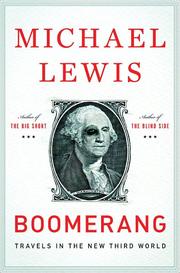
Michael Lewis · 2011

How Iceland, Greece, Ireland, Germany and California each spent cheap credit.

Eirikur Bergmann · 2014

Political economy of the boom, the Icesave dispute and the aftermath.

Valur Ingimundarson, Philippe Urfalino, Irma Erlingsdottir · 2016

Academic collection on blame, protest and institutional reconstruction after 2008.

Gudrun Johnsen · 2014

By an investigator on the Special Investigation Commission; connected lending and cross-ownership.

Jared Bibler · 2021

Insider account by the investigator who built the market-manipulation cases.
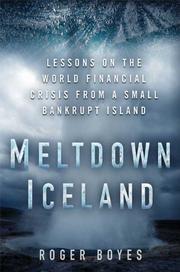
Roger Boyes · 2009

Contemporaneous reporting on the collapse and the Icesave dispute.

Where it sits in the reference 2

Geographies
Financial panics

Topics

Financial HistoryEconomics