Updates

  1. Person pages list letters, writing, profiles and links as sortable tables with filters, and show each person's companies as links; Fund letters show each letter's description in its own column.
  2. Experts show a checked job title and a short description of each person; 30 more people have photographs.
  3. Every company, fund, university and publication the experts work for has a page listing the people there.
  4. Fund letters show each letter's thesis and filter by it; 225 person pages list the essays, columns and newsletter issues the person wrote.
  5. Person pages list every essay and newsletter issue a person wrote, and their own books as a table in List view.
  6. Recommends shows the five largest kinds of book and the rest under More; browse pictures load sooner.
  7. Podcasts and talks link the original episode, filter by Audio and video or Press, and list each publisher once.
  8. Pages are wider, Recommends has List and Grid, and a filter clicked again turns off.
  9. Book cards sit in a ruled grid with Open Library and Goodreads links and each book's one-line note.
  10. Funds is now Investors; each investor's styles are buttons that filter the table.
  11. Podcasts and talks on a person's page filter by year and publisher and show as a list or a grid of pictures.
  12. Quotes show only people's own words: 472 summaries written by list sites are gone.
  13. Country pages open from Browse again, and every link on the shelf lands on a page.
  14. Subject and person pages show their sections as tabs, and each book appears once on a person's page.
  15. Book cards show the quote, who said it and the source; grids show five cards to a row.
  16. On a phone, a menu holds the sections, search, Updates, Feedback and dark mode.
  17. Feedback takes a screenshot of the page with no browser prompt, opens a screenshot full size when you click it, and clears itself once sent.
  18. Book cards are centred, search names the topic each book sits in, and any text cut short shows whole on hover.
  19. Search groups its results by kind: people, companies, geographies, subjects, topics, books, funds, fund letters and papers.
  20. The Books table lists who recommended each book by name, and the browser tab names the section you are in.
  21. Feedback can take a screenshot of the page, or one you paste or choose, and opens in the corner beside Updates.
  22. Each rail button reopens its section where you left it, and Browse, Table and People show on every book and subject page.
  23. Filters grey out choices that hold nothing instead of hiding them, and Books › People filters by authors or recommenders.
  24. Feedback takes a subject line and up to three screenshots.
  25. Biographies are grouped by the person they are about: 41 new pages, from Abraham Lincoln to Lee Kuan Yew.
  26. Sport splits into 23 sports, and Religion into one topic per faith.
  27. Book lists show as cards: the cover, one recommendation quote and every recommender by name.
  28. Seventeen subjects that had two or three pages under different names now have one page each.
  29. Every page lists its Experts as authors and recommenders, with a link to them on the Experts tab.
  30. Economics, Financial history, Financial panics and Accounting are subjects of their own, with one page per financial crisis.
  31. Book, person and subject pages open inside the app, so the tabs stay in view.
  32. 996 more book covers, and photographs or logos for 227 more people and companies.
  33. Books › Browse shows every subject as cards, and the rail holds Fund letters, Papers, Experts, Books and Funds.
  34. Every topic over 150 books splits into narrower topics, each with a page of its own.

Send feedback

What is it?
Screenshots, up to 3 (optional)
or paste one with Ctrl+V

We use your email only to reply to you.

Iceland's Financial Crisis

Iceland's Financial Crisis

Valur Ingimundarson, Philippe Urfalino, Irma Erlingsdottir
2016
T4 278 pages · about 4h 38m to read Open Librarygoodreads

Academic collection on blame, protest and institutional reconstruction after 2008.

Summary

The reference has not verified this book in detail; the summary states only what the title, author and subject establish.

This is an edited academic collection on the political and social aftermath of Iceland's 2008 banking collapse, assembled by Valur Ingimundarson with Philippe Urfalino and Irma Erlingsdottir. The contributors are political scientists, sociologists and legal scholars rather than banking economists, and the subject is the politics of reconstruction rather than the mechanics of the failure.

The chapters address the Special Investigation Commission and its report, the criminal prosecutions of bankers and of a former prime minister before the Landsdomur court, the protest movement known as the pots and pans revolution, the crowdsourced constitutional process that produced a draft the parliament never enacted, the capital controls, and the Icesave negotiations with Britain and the Netherlands. The volume asks what a democracy can actually do to hold financial and political elites accountable, and its general answer is that Iceland went further than any comparable country and still achieved less than its citizens demanded.

The reference has not yet verified the individual chapter arguments in detail, and this summary reflects the volume's stated scope and the well-documented events it covers rather than a close reading. Readers should treat it as an academic supplement to the narrative accounts rather than as a standalone history.

Key takeaways 6

  1. Iceland prosecuted senior bankers and a former prime minister, which makes it the clearest available test of criminal accountability after a banking crisis.
  2. The Special Investigation Commission produced an unusually detailed public record because parliament granted it wide access to bank and regulatory files.
  3. Popular mobilisation removed a government but did not produce the constitutional change the protesters sought.
  4. The crowdsourced constitutional draft failed at the parliamentary stage despite winning a consultative referendum.
  5. Capital controls imposed in 2008 lasted far longer than their designers intended and shaped domestic asset prices throughout.
  6. The Icesave dispute pitted European deposit-guarantee obligations against the limits of a small state's fiscal capacity.

Who should read it

Academics and policy readers studying post-crisis accountability, constitutional reform and the politics of bank resolution in a small democracy.

Similar books 6

Chosen by shared topics, the entries that hold them, and the people who recommended both.
Eirikur Bergmann · 2014

Political economy of the boom, the Icesave dispute and the aftermath.
Gudrun Johnsen · 2014

By an investigator on the Special Investigation Commission; connected lending and cross-ownership.
Roger Boyes · 2009

Contemporaneous reporting on the collapse and the Icesave dispute.
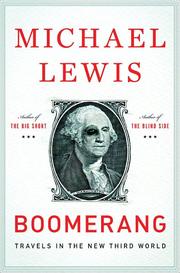
Michael Lewis · 2011

How Iceland, Greece, Ireland, Germany and California each spent cheap credit.

Ásgeir Jónsson · 2009

By Kaupthing's former chief economist; insider view of the funding model that failed.

Jared Bibler · 2021

Insider account by the investigator who built the market-manipulation cases.

Where it sits in the reference 2

Geographies
Financial panics

Topics

Financial HistoryEconomicsPolitics and GovernmentEurope, Britain and Russia