Updates

  1. Person pages list letters, writing, profiles and links as sortable tables with filters, and show each person's companies as links; Fund letters show each letter's description in its own column.
  2. Experts show a checked job title and a short description of each person; 30 more people have photographs.
  3. Every company, fund, university and publication the experts work for has a page listing the people there.
  4. Fund letters show each letter's thesis and filter by it; 225 person pages list the essays, columns and newsletter issues the person wrote.
  5. Person pages list every essay and newsletter issue a person wrote, and their own books as a table in List view.
  6. Recommends shows the five largest kinds of book and the rest under More; browse pictures load sooner.
  7. Podcasts and talks link the original episode, filter by Audio and video or Press, and list each publisher once.
  8. Pages are wider, Recommends has List and Grid, and a filter clicked again turns off.
  9. Book cards sit in a ruled grid with Open Library and Goodreads links and each book's one-line note.
  10. Funds is now Investors; each investor's styles are buttons that filter the table.
  11. Podcasts and talks on a person's page filter by year and publisher and show as a list or a grid of pictures.
  12. Quotes show only people's own words: 472 summaries written by list sites are gone.
  13. Country pages open from Browse again, and every link on the shelf lands on a page.
  14. Subject and person pages show their sections as tabs, and each book appears once on a person's page.
  15. Book cards show the quote, who said it and the source; grids show five cards to a row.
  16. On a phone, a menu holds the sections, search, Updates, Feedback and dark mode.
  17. Feedback takes a screenshot of the page with no browser prompt, opens a screenshot full size when you click it, and clears itself once sent.
  18. Book cards are centred, search names the topic each book sits in, and any text cut short shows whole on hover.
  19. Search groups its results by kind: people, companies, geographies, subjects, topics, books, funds, fund letters and papers.
  20. The Books table lists who recommended each book by name, and the browser tab names the section you are in.
  21. Feedback can take a screenshot of the page, or one you paste or choose, and opens in the corner beside Updates.
  22. Each rail button reopens its section where you left it, and Browse, Table and People show on every book and subject page.
  23. Filters grey out choices that hold nothing instead of hiding them, and Books › People filters by authors or recommenders.
  24. Feedback takes a subject line and up to three screenshots.
  25. Biographies are grouped by the person they are about: 41 new pages, from Abraham Lincoln to Lee Kuan Yew.
  26. Sport splits into 23 sports, and Religion into one topic per faith.
  27. Book lists show as cards: the cover, one recommendation quote and every recommender by name.
  28. Seventeen subjects that had two or three pages under different names now have one page each.
  29. Every page lists its Experts as authors and recommenders, with a link to them on the Experts tab.
  30. Economics, Financial history, Financial panics and Accounting are subjects of their own, with one page per financial crisis.
  31. Book, person and subject pages open inside the app, so the tabs stay in view.
  32. 996 more book covers, and photographs or logos for 227 more people and companies.
  33. Books › Browse shows every subject as cards, and the rail holds Fund letters, Papers, Experts, Books and Funds.
  34. Every topic over 150 books splits into narrower topics, each with a page of its own.

Send feedback

What is it?
Screenshots, up to 3 (optional)
or paste one with Ctrl+V

We use your email only to reply to you.

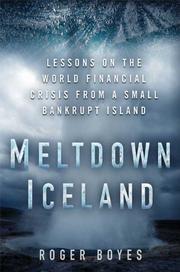
Meltdown Iceland

Meltdown Iceland

Roger Boyes
2009
T3 256 pages · about 4h 16m to read Open Librarygoodreads

Contemporaneous reporting on the collapse and the Icesave dispute.

Summary

Roger Boyes covered the Icelandic collapse for The Times and wrote this narrative account within a year of the October 2008 failures. It is journalism aimed at a general readership rather than financial analysis.

The narrative covers the privatisation of the banks in the early 2000s, the small group of businessmen who acquired and expanded them, the buying spree in British retail and property, the Icesave online deposit accounts, and the collapse of Glitnir, Landsbanki and Kaupthing within a week. Boyes gives substantial space to the social side: the fishing quota system that created the first Icelandic fortunes, the country's small elite and the personal connections within it, the currency carry trade that brought foreign money in, and the protests that followed the collapse.

The book was written fast and shows it. It predates the Special Investigation Commission report, the criminal prosecutions, and the detailed reconstruction of the banks' balance sheets, and it contains errors of detail that later accounts corrected. Readers wanting the mechanics should go to Jonsson and Sigurgeirsson or to Bibler; readers wanting the political aftermath should go to the academic collections. This is the readable contemporaneous narrative.

Key takeaways 7

  1. Iceland's transferable fishing quota system created the first concentrated private fortunes and the group that later bought the banks.
  2. The banks were privatised to politically connected buyers who lacked banking experience.
  3. High Icelandic interest rates attracted carry trade inflows that funded domestic credit expansion and made the currency vulnerable.
  4. Icesave retail deposits in Britain and the Netherlands funded Icelandic bank expansion and created cross-border liabilities the state could not cover.
  5. Icelandic businessmen used bank credit to acquire British retail and property assets at the top of the cycle.
  6. Boyes argues that the small size of Icelandic society removed the arm's-length relationships that supervision requires.
  7. The collapse of all three banks within a week shows they had been funding each other and holding each other's paper.

Who should read it

Readers wanting a readable contemporaneous narrative of the Icelandic collapse, with the more accurate technical accounts read afterwards.

Similar books 6

Chosen by shared topics, the entries that hold them, and the people who recommended both.
Gudrun Johnsen · 2014

By an investigator on the Special Investigation Commission; connected lending and cross-ownership.
Eirikur Bergmann · 2014

Political economy of the boom, the Icesave dispute and the aftermath.

Valur Ingimundarson, Philippe Urfalino, Irma Erlingsdottir · 2016

Academic collection on blame, protest and institutional reconstruction after 2008.
Fintan O'Toole · 2009

Ireland's crash was the product of its political culture, not global finance.
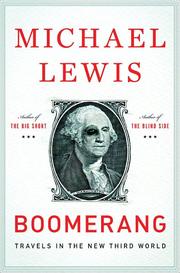
Michael Lewis · 2011

How Iceland, Greece, Ireland, Germany and California each spent cheap credit.

Jared Bibler · 2021

Insider account by the investigator who built the market-manipulation cases.

Where it sits in the reference 2

Geographies
Financial panics

Topics

Financial HistoryGeneral HistoryPolitics and GovernmentFinancial HistoryEurope, Britain and Russia